


Want to lock your mortgage rate now or bet it will fall while your house is built?
When you finance a home build, you choose between a construction-to-perm (one closing that becomes your mortgage) and a standard construction loan with a separate mortgage later (two closings).
The right choice comes down to one trade-off: rate certainty and simplicity versus flexibility and the chance to shop lenders.
This post walks through five clear factors to help you pick the best path for your project and budget.
Deciding Between Construction Loan Options for Your Build

When you’re financing a home build, you’ll pick between two main paths: a construction-to-permanent loan (one closing) or a standard construction loan plus a separate mortgage (two closings). The right choice depends mostly on whether you want simplicity and rate certainty now, or flexibility and the chance to shop for better mortgage terms after construction finishes.
Construction-to-permanent works for borrowers who want the whole process locked in from the start. One approval, one closing, and often the ability to lock your mortgage rate before you break ground. A standard construction loan fits borrowers who expect rates to drop during the build, want maximum control over their permanent financing, or need wiggle room for a complicated or evolving project. Both use the same draw-based funding and interest-only payments during construction. The big differences show up in cost, timing, and how much control you keep.
Here are the five biggest factors that shape your decision:
-
Willingness to manage two closings – One-time close saves you from duplicate closing fees and extra paperwork. Two-time close costs more but lets you shop lenders later.
-
Rate-risk tolerance – Locking your mortgage rate at approval protects you if rates climb during construction. Waiting to lock means you could benefit if rates fall or get hurt if they rise.
-
Project predictability – Straightforward builds with firm budgets and timelines fit neatly into construction-to-permanent. Custom or complex builds that might change benefit from the flexibility of separate financing.
-
Credit and financial strength upfront – Construction-to-permanent loans usually require stricter qualifications at application because you’re locking in everything early. Standard construction loans can be easier to qualify for initially since the permanent mortgage happens later.
-
Preference for simplicity versus control – One loan means less administrative burden and fewer decisions. Two loans mean more choices, more shopping opportunities, and more work managing the process.
Understanding Construction Loan Structure and Mechanics
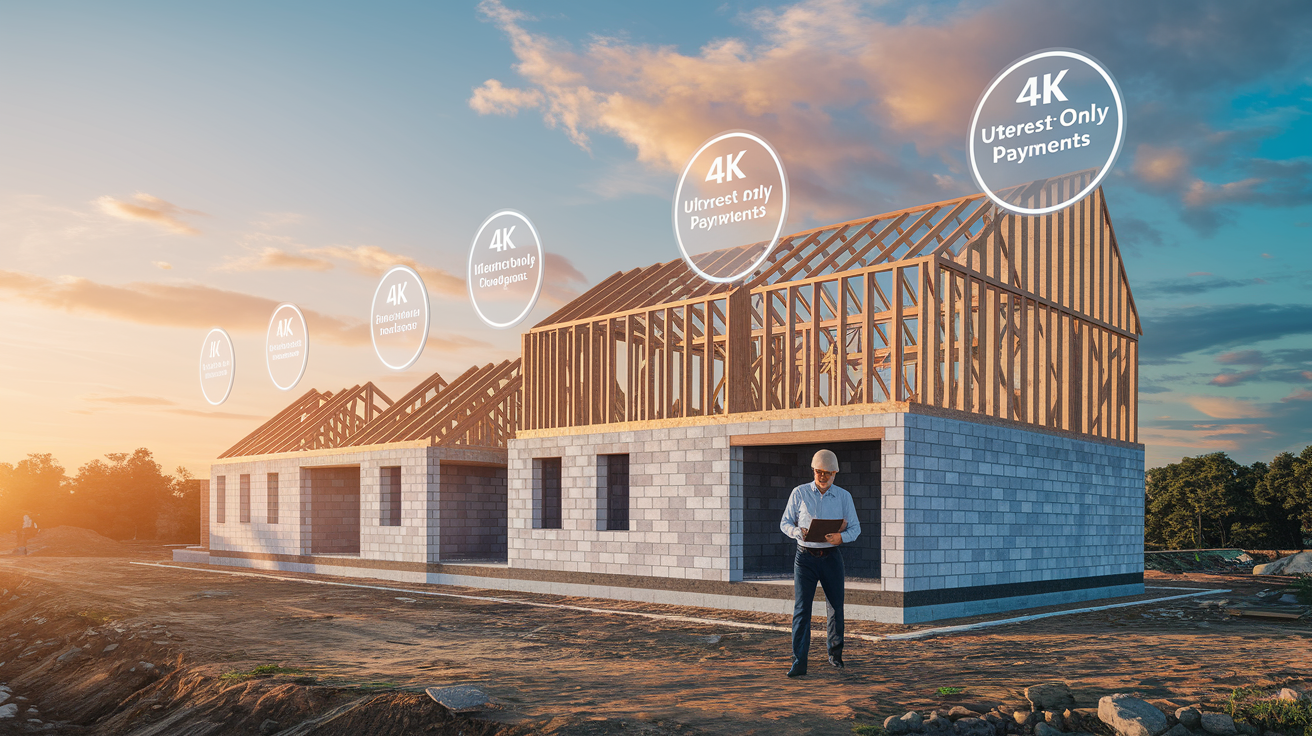
A standard construction loan is a short-term product, usually lasting 6 to 12 months, that funds your build in stages. The lender doesn’t hand you all the money at once. They release funds in draws tied to construction milestones like pouring the foundation, framing the walls, or finishing the roof. Before each draw, an inspector from the lender visits the site to confirm the work is done and matches the budget. You pay interest only on the amount of money actually disbursed, not the full loan amount. If the lender has released $100,000 so far and your construction-loan rate is 8%, you’re paying interest on $100,000 until the next draw goes out.
When construction wraps up, the construction loan comes due. You can’t just keep making interest payments forever. You need to pay it off by securing a separate, long-term mortgage. That means a second round of underwriting, a second appraisal of the finished home, and a second closing with another set of fees. This two-step process gives you the freedom to shop around for the best mortgage rate and terms after your house is done, but it also opens the door to rate risk. If mortgage rates jump between the day you start building and the day you apply for permanent financing, your monthly payment could be higher than you planned.
Typical construction milestones that trigger draws include:
Foundation and slab completion – First major disbursement after site prep and concrete work.
Framing and roof installation – Structure is enclosed and weatherproofed.
Mechanical rough-ins – Plumbing, electrical, and HVAC systems installed but not finished.
Interior finishes and final inspection – Drywall, flooring, fixtures, and final walk-through before the certificate of occupancy.
How Construction-to-Permanent Loans Work From Start to Finish
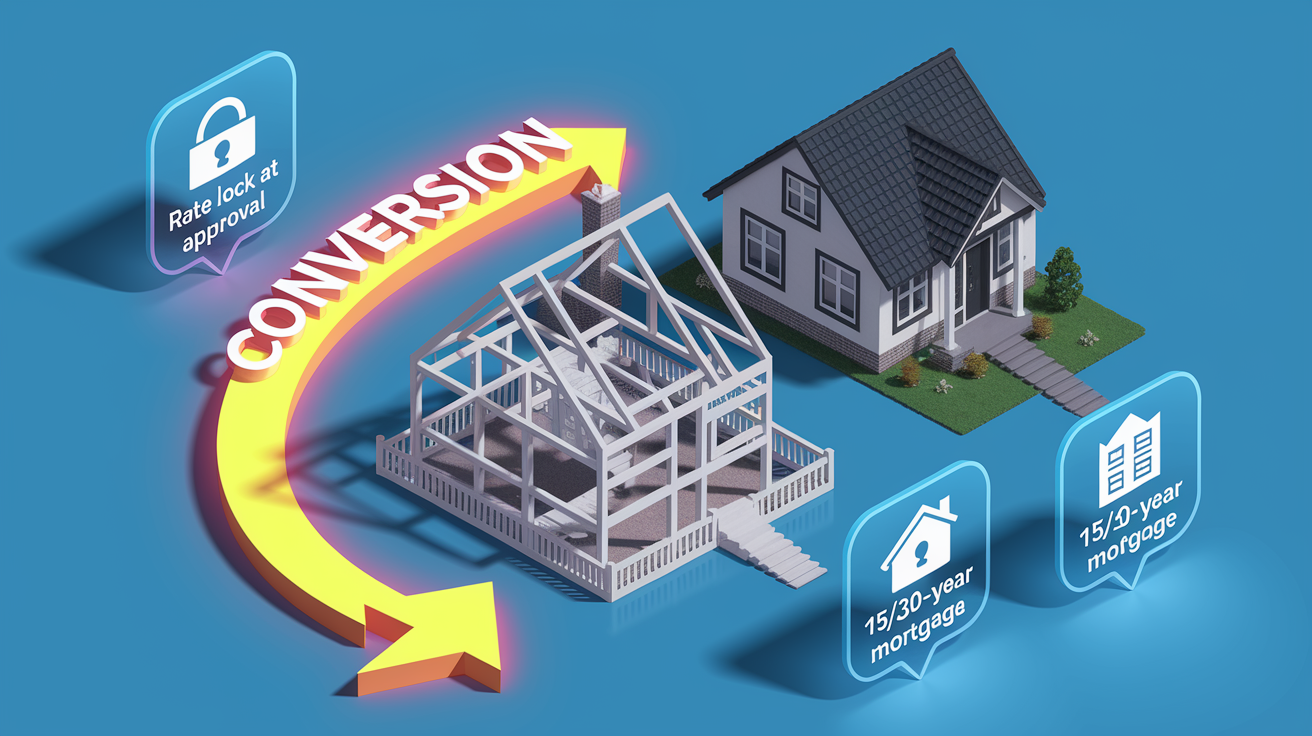
Construction-to-permanent loans, also called one-time close or single-close loans, combine the construction phase and the permanent mortgage into a single loan with a single approval and a single closing. You apply once, get approved once, and pay one set of closing costs. The lender funds your build using the same draw-and-inspection process as a standard construction loan. You still make interest-only payments on disbursed amounts during construction. The difference is what happens when the house is finished. Instead of scrambling to find a new lender and go through a second closing, your construction loan automatically converts into a traditional 15 or 30-year mortgage.
Many lenders let you lock your permanent mortgage rate at the time of approval, before construction even starts. That means you know your long-term monthly payment from day one, even if rates move during the build. Once construction is complete and the lender confirms everything meets code and matches the approved plans, the loan shifts from interest-only payments to regular principal-and-interest payments. Your payment goes up because you’re now paying down the loan balance instead of just covering interest.
Down payments for construction-to-permanent loans typically sit around 20% of the total project cost, though some lenders go as low as 5% depending on the borrower’s credit and the project. Underwriting is stricter upfront because the lender is committing to both phases at once. They’ll review your income, assets, credit score (often 680 or higher), debt-to-income ratio (usually 45% or lower), construction contract, detailed budget, timeline, and contractor credentials before approval. If anything changes significantly during construction, the lender may require updated documentation or even reapproval.
| Loan Phase | Key Features |
|---|---|
| Approval | Single application and underwriting. Lender reviews construction contract, budget, timeline, builder credentials, and borrower financials. Rate lock often available at this stage. |
| Draw Stage | Lender releases funds incrementally based on construction milestones. Borrower makes interest-only payments on amounts disbursed. Inspections verify work before each draw. |
| Inspection Requirements | Lender-ordered inspections at each milestone to confirm progress and budget compliance. Delays or scope changes may trigger additional reviews or approvals. |
| Conversion | Loan automatically converts to a permanent mortgage (15 or 30 years) once construction is complete and final inspection clears. Payments shift from interest-only to principal-and-interest. |
Comparing Construction Loan vs Construction-to-Perm: Key Differences
The clearest difference between a standard construction loan and a construction-to-permanent loan is the number of closings. With a two-time close, you go through the full closing process twice. Once for the construction loan and again for the permanent mortgage. That means two sets of application fees, appraisal fees, title fees, and lender charges. Construction-to-permanent consolidates everything into one closing, cutting out the duplicate costs and saving you money upfront. If closing costs run $5,000 to $8,000 per transaction, a single closing can save you thousands.
Rate-lock timing is another major divider. Construction-to-permanent loans often let you lock your permanent mortgage rate when you get approved, months before the house is done. If rates are climbing or you want certainty, locking early protects your long-term payment. With a standard construction loan, you don’t lock the permanent mortgage rate until after construction, when you apply for that second loan. If rates drop during your build, you win. If they rise, your monthly payment goes up. This trade-off between rate certainty and rate opportunity is one of the biggest decision points for borrowers.
| Feature | Standard Construction Loan (Two-Time Close) | Construction-to-Permanent Loan (One-Time Close) |
|---|---|---|
| Number of Closings | Two separate closings. One for construction, one for permanent mortgage | Single closing covering both phases |
| Closing Costs | Two full sets of closing fees. Higher total cost | One set of closing fees. Consolidated and lower overall |
| Rate-Lock Timing | Lock permanent rate after construction finishes. Exposes borrower to rate movement during build | Often allows locking permanent rate at approval. Rate certainty throughout construction |
| Lender Flexibility | Borrower can shop multiple lenders for permanent mortgage after build completes | Permanent mortgage stays with original lender. Less flexibility to switch or renegotiate |
| Administrative Load | Two separate applications, two underwriting processes, more paperwork and timeline coordination | Single application and approval. Streamlined process with less administrative burden |
| Qualification Strictness | Initial construction-loan approval can be easier. Permanent mortgage underwriting happens later | Stricter upfront underwriting because lender commits to both phases at once |
Pros and Cons of Each Loan Path for Real Borrowers
Both loan types use the same draw-based funding and interest-only payment structure during construction, so the real differences show up in cost, control, and convenience after the build starts.
Construction-to-Permanent Pros:
One closing saves thousands in duplicate closing fees. Single approval and underwriting process cuts down on paperwork and timing stress. Rate-lock option at approval protects against rising rates during construction. Automatic conversion to permanent mortgage means no need to reapply or hunt for a new lender. Predictable total cost from day one, easier to budget long-term payments. Simpler administrative process with fewer moving parts and deadlines.
Standard Construction Loan Pros:
Freedom to shop for the best permanent mortgage rate and terms after construction finishes. Potential to benefit if mortgage rates drop during the build. More flexibility to adjust loan structure or switch lenders based on changing financial circumstances. Easier initial qualification since permanent financing is evaluated separately later. Better fit for complex or evolving projects where scope, timeline, or budget might shift. Ability to delay permanent financing decisions until you see the finished home and market conditions.
The downsides of construction-to-permanent loans hit hardest when your financial picture or project scope changes mid-build. If you lose income, your credit drops, or construction costs balloon beyond the original budget, the lender may require updated approvals or even pull the conversion. You’re also locked into one lender for the permanent mortgage, so if another lender offers a better rate after construction, you can’t easily switch without refinancing later and paying another round of closing costs. Standard construction loans avoid that trap but expose you to rate uncertainty and the hassle of managing two separate loan processes. If rates spike or your financial situation worsens during construction, qualifying for the permanent mortgage can get harder or more expensive.
Credit, Down Payment, and Documentation Requirements That Influence Your Decision

Lenders treat construction-to-permanent loans as higher-commitment products, so they demand stronger financials upfront. A typical credit score floor sits around 680, and many lenders prefer 700 or higher. Debt-to-income ratios usually need to stay at or below 45%, meaning your total monthly debt payments (including the future mortgage) can’t exceed 45% of your gross monthly income. Down payments commonly run around 20% of the total project cost, though some programs drop to 10% or even 5% for well-qualified borrowers with excellent credit and solid reserves.
Standard construction loans can be easier to qualify for initially because the permanent mortgage underwriting happens later. If your credit is borderline or your income documentation is complicated, splitting the approvals into two stages gives you time to strengthen your profile before the second loan. That flexibility matters if you expect your financial situation to improve during the build. Maybe you’re paying off debt, boosting your credit score, or waiting for a raise to kick in.
Both loan types require a detailed construction contract, a line-item budget, a realistic timeline, and proof that your builder and any subcontractors are licensed, insured, and qualified. Lenders also want to see adequate reserves. Cash left over after the down payment and closing costs to cover unexpected expenses, change orders, or delays.
Required documentation typically includes:
Construction contract with scope, timeline, and payment schedule. Detailed budget breaking down materials, labor, permits, and contingencies. Builder and contractor credentials, including licenses, insurance, and references. Borrower income verification (pay stubs, W-2s, tax returns, bank statements). Appraisal or estimated valuation of the finished home to confirm the project makes financial sense.
Cost Differences: Closing Fees, Rate Risk, and Budget Impact

Closing costs on a standard construction loan followed by a separate mortgage can easily hit $10,000 to $15,000 total when you add both transactions together. Construction-to-permanent loans cut that in half by consolidating everything into one closing. If you’re budgeting tight, that upfront savings can free up cash for contingencies, upgrades, or reserves.
Rate risk works differently depending on which loan you pick. Construction-to-permanent locks your rate early (if you choose that option), so you know your monthly payment before construction starts. If rates climb 1% during your build, you’re protected. With a two-time close, you wait to lock the permanent mortgage rate until after construction. If rates drop 1%, you save money every month for 30 years. If they rise 1%, you could be looking at an extra $150 to $200 per month on a $300,000 loan.
Both loan types leave you exposed to cost overruns. If your budget says $350,000 and the final bill hits $375,000, that extra $25,000 is on you. Lenders don’t automatically increase the loan amount mid-build. You’ll need to cover overruns with cash, a separate loan, or by cutting scope. Construction-to-permanent loans can be stricter about budget changes because the lender committed to a total loan amount upfront. Standard construction loans offer slightly more room to negotiate adjustments, but you’ll still need lender approval and possibly a new appraisal.
Five cost variables to compare when deciding:
Total closing fees – One closing versus two. Expect to save $5,000 to $8,000 with construction-to-permanent.
Rate-lock cost and timing – Locking early may cost a fee but protects against rate increases. Waiting is free but exposes you to market movement.
Reserve requirements – Construction-to-permanent lenders often demand higher cash reserves upfront to cover the full project and post-construction expenses.
Contingency fund needs – Both loan types require a cushion for change orders, delays, or cost overruns. Plan for at least 10% to 15% of the construction budget in reserves.
Appraisal and inspection fees – Two-time close loans require two appraisals (one for construction, one for the permanent mortgage). One-time close consolidates appraisal costs into a single transaction.
Build Timeline, Project Complexity, and Change-Order Flexibility

Most construction loans cover a 6 to 12-month build period. If your project runs longer, you may need an extension, which can trigger additional fees, rate adjustments, or updated underwriting. Construction-to-permanent loans work best for straightforward builds with predictable timelines. Spec homes, standard floor plans, or projects with minimal customization. When the schedule is tight and the scope is clear, a single approval and automatic conversion make sense.
Complex or custom builds with evolving designs, high-end finishes, or frequent change orders fit better with a standard construction loan. If you’re the type of borrower who tweaks plans mid-build, swaps materials, or adjusts layouts as construction progresses, the flexibility of separate financing gives you breathing room. Construction-to-permanent lenders lock in the budget and timeline early, and any major changes may require reapproval, updated inspections, or even a new underwriting decision. That administrative burden slows things down and adds stress when you’re already managing a complicated build.
Timeline delays are common in construction. Weather, permit issues, material shortages, and contractor scheduling problems all push completion dates back. With a construction-to-permanent loan, delays can trigger lender reviews to confirm the project is still on track and the borrower’s financial situation hasn’t changed. If delays stretch beyond the lender’s comfort zone, you might face additional inspections or updated qualification checks. Standard construction loans handle delays more gracefully because the permanent mortgage underwriting doesn’t start until construction finishes. You can extend the construction loan, pay the extra interest, and deal with the permanent financing when the house is actually done.
Decision Framework: How to Choose the Right Loan Type for Your Situation

Choosing between a construction loan and a construction-to-permanent loan comes down to weighing control, cost, and convenience against your specific financial situation and project characteristics. Start by answering these eight questions honestly.
Do you want to lock your mortgage rate now or wait to see where rates go? If you’re worried about rising rates or want predictable payments from day one, construction-to-permanent with an early rate lock fits. If you think rates will drop or you’re willing to gamble, a two-time close gives you flexibility.
Can you handle two closings and two sets of fees, or do you need to minimize upfront costs? If cash is tight or you’d rather spend money on the build instead of duplicate closing fees, one-time close saves thousands.
How predictable is your build timeline and budget? Straightforward projects with firm plans and reliable contractors favor construction-to-permanent. Complex, custom, or evolving builds need the flexibility of separate financing.
Is your credit score and DTI strong enough to qualify for stricter upfront underwriting? If you’re borderline on credit or income, splitting the approvals into two stages may be easier than trying to lock in everything at once.
Do you want the freedom to shop for the best permanent mortgage after construction, or are you okay staying with one lender? Two-time close lets you compare lenders and negotiate. One-time close locks you in but saves administrative hassle.
How comfortable are you managing paperwork, deadlines, and two separate loan processes? If you want simplicity and fewer decisions, construction-to-permanent streamlines everything. If you don’t mind extra work for potential savings or better terms, two-time close is worth it.
Do you have adequate reserves to cover cost overruns, change orders, and unexpected delays? Both loan types require contingency funds, but construction-to-permanent lenders often demand higher reserves upfront because they’re committing to the full project early.
What does your rate outlook say about the next 6 to 12 months? If experts predict rising rates or you’re already seeing upward movement, locking early protects you. If rates are high now and expected to fall, waiting could save you money long-term.
Once you’ve answered these questions, look for patterns. If most of your answers point toward simplicity, rate certainty, and a predictable build, construction-to-permanent is the better fit. If you value flexibility, expect to shop rates later, or anticipate timeline or budget changes, a standard construction loan gives you more control. Neither option is objectively better. The right choice depends on your tolerance for risk, your financial strength, and how much complexity you’re willing to manage in exchange for potential savings or flexibility.
Final Words
You’ve seen the basics: construction loans give flexibility and let you shop lenders later, but they mean two closings and rate risk. Construction-to-perm bundles the build and mortgage into one closing with an early rate lock and stricter underwriting.
Use the checklist to weigh closings, rate outlook, project predictability, down payment, and change-order risk. That simple focus – one closing vs flexibility – is how to approach construction loan vs construction-to-perm how to decide. Either way, a clear checklist helps you move forward with confidence.
FAQ
Q: What is the difference between a construction loan and a construction to perm loan?
A: The difference is construction-only is a short, interest-only build loan with staged draws and two closings (exposes you to rate changes), while construction-to-perm is a single-close loan that converts to your mortgage and may lock a rate.
Q: What is the 3 7 3 rule in mortgage?
A: The 3 7 3 rule in mortgage is not a universal industry standard; it’s a local lender shorthand that can mean different things—ask your lender for their definition before you proceed.
Q: Why does Dave Ramsey not recommend a VA loan?
A: Dave Ramsey does not recommend VA loans because he prefers avoiding long-term mortgage debt and worries VA benefits can encourage buying a larger, more expensive home instead of using cash or smaller loans.
Q: Can a 70 year old woman get a 30 year mortgage?
A: A 70 year old woman can get a 30-year mortgage; lenders focus on credit, income, DTI, and reserves, so expect closer review of retirement income and possibly stricter underwriting or a co-signer requirement.