

Want to buy your business building with as little as 10% down and a long, fixed interest rate?
The SBA 504 loan can do that, but it uses a two-lender setup that confuses a lot of owners.
Think of it like two hands holding one big mortgage: your bank covers half, an SBA-backed CDC covers about 40%, and you bring the rest.
In this guide I’ll explain who qualifies, how the 50-40-10 split works, the fees and rules, and the quick checks to decide if a 504 loan fits your project.
What Is the SBA 504 Loan Program?
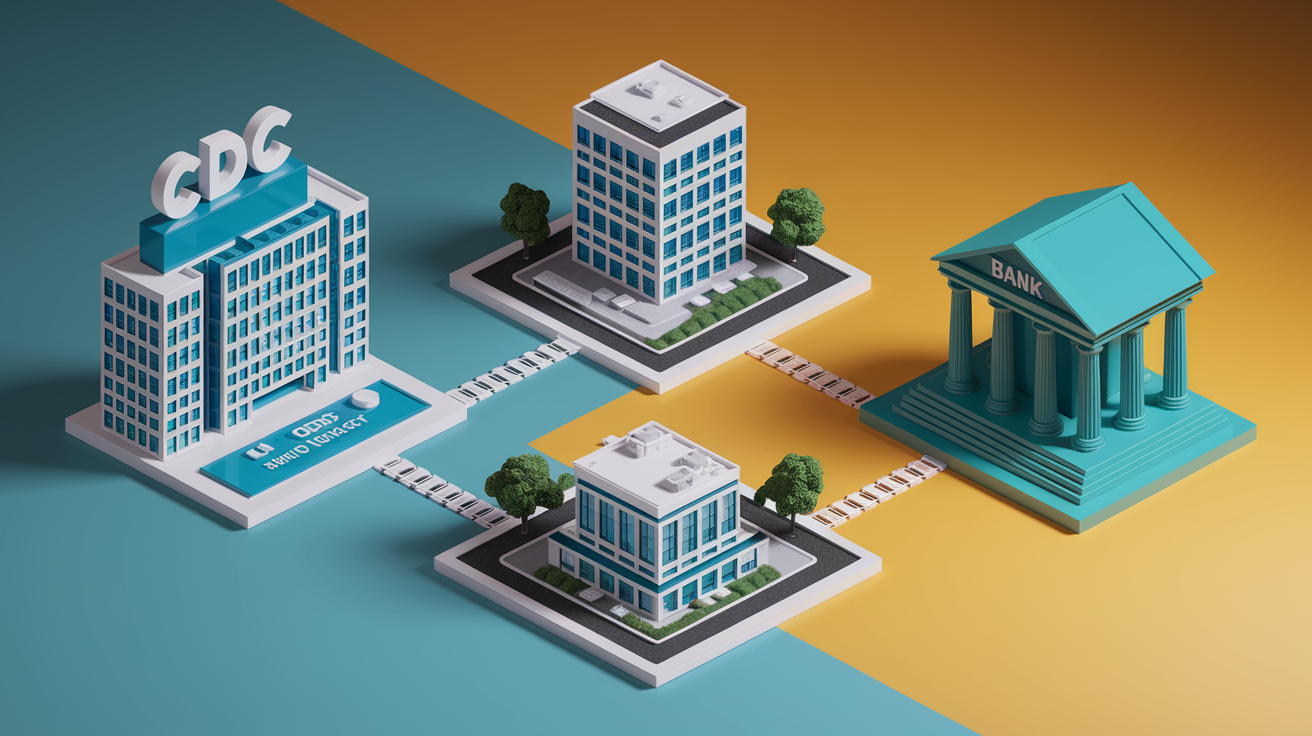
The SBA 504 loan program gives small businesses long-term, fixed-rate financing when they need to buy commercial real estate, build a new facility, or pick up heavy equipment. It’s part of the Small Business Administration’s lending toolkit, but it works a bit differently than other SBA loans because it splits the money between two lenders. One’s a Certified Development Company (CDC), which is a nonprofit lender the SBA approves. The other’s a regular bank or credit union that you pick.
The 504 is built for big, permanent purchases. Not working capital or short-term spending. It gives you access to long repayment schedules and fixed interest rates on a big chunk of the loan, which can make your monthly payment more predictable and easier to manage than what you’d get with a typical commercial loan. The whole point is to help businesses grow by making it easier to buy the buildings, land, and machinery they need without burning through all their cash.
Here’s what people usually use 504 loans for:
- Buying land and existing buildings for owner-occupied commercial space
- Constructing new facilities from scratch
- Renovating, modernizing, or expanding buildings you already own
- Purchasing long-life machinery and equipment (needs at least a 10-year useful life)
- Covering soft costs like appraisals, environmental reports, and construction interest when the property value can support it
The two-lender setup might sound weird, but there’s a reason for it. The CDC handles the SBA-backed piece and manages most of the federal paperwork. Your private lender provides the rest and works with the CDC. You make payments to your bank, and the CDC portion gets funded through SBA-guaranteed bonds called debentures. What you get is higher leverage and lower equity requirements than you’d normally see from a single lender.
Eligibility Requirements for the SBA 504 Loan
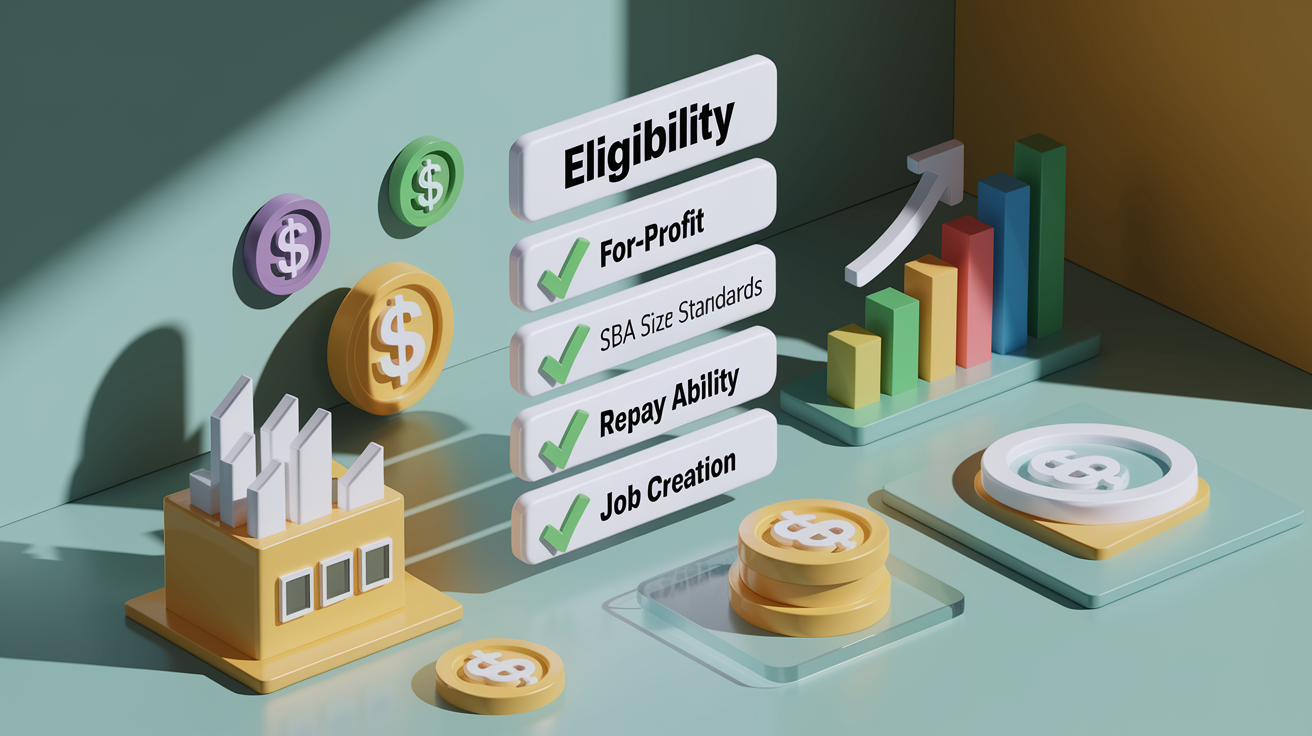
To qualify, your business needs to be organized for profit and meet the SBA’s size standards for your industry. Those standards aren’t one-size-fits-all. They’re based on employee count or average annual revenue depending on what you do. A manufacturer with 500 employees or a retailer doing $8 million in sales will usually fall within the limits, but you should double-check your specific category.
You also need to prove you can repay the loan. That means showing financial statements, tax returns, and realistic projections. The SBA won’t fund businesses that can’t demonstrate cash flow or equity. Beyond the numbers, you’ve got to either create or retain jobs, or meet a community development or public policy goal. Job creation is the most common path. Often that means one job created or kept for every $65,000 in CDC financing, though the exact number can shift.
Core eligibility rules:
- Operate as a for-profit business in the United States
- Meet SBA size standards for your industry
- Show ability to repay based on past performance and future projections
- Use the funds for eligible fixed assets (real estate, long-life equipment, or facility improvements)
- Create or retain jobs, or meet an approved community development goal
- Provide personal guarantees from owners holding 20% or more of the business
Loan Structure, Amounts, and Terms
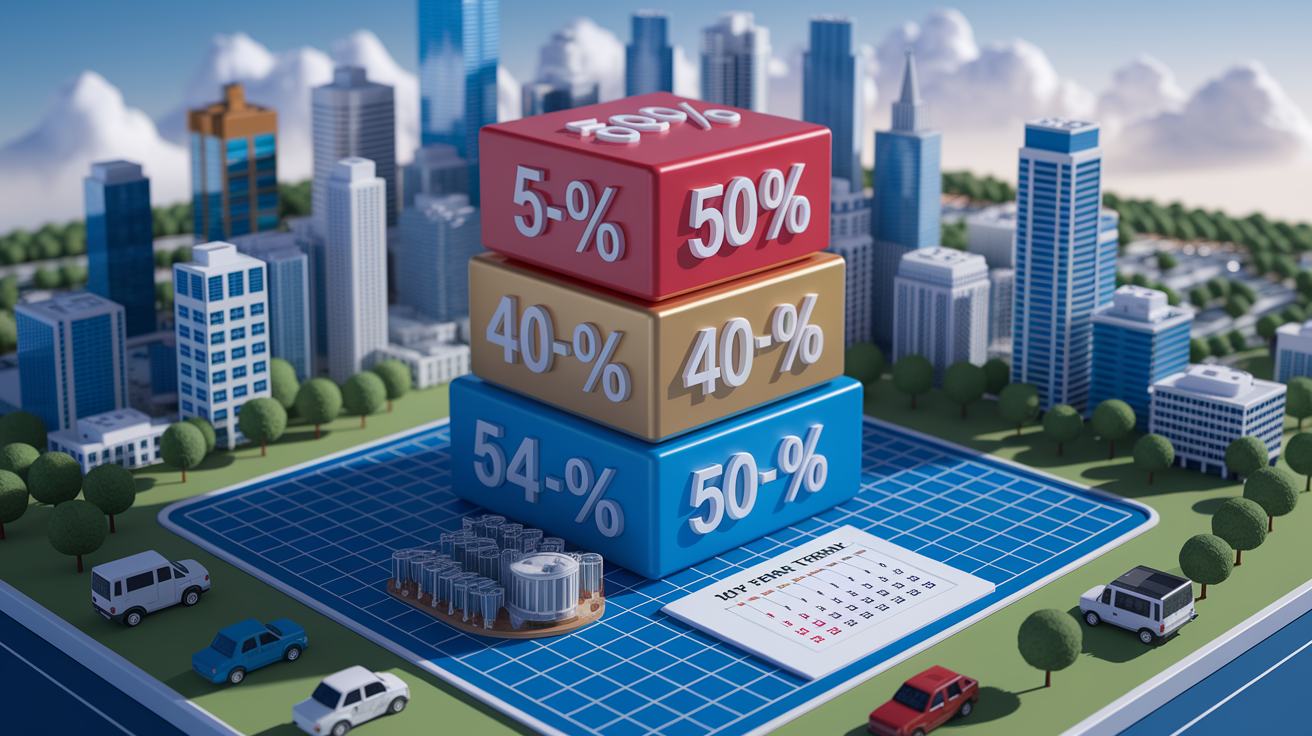
The 504 loan splits your project into three pieces. The standard model is 50-40-10. Your private lender covers 50% of the total project cost with a conventional first mortgage. The CDC provides 40% through an SBA-backed debenture. You put down 10% in cash or eligible equity. That setup gets you 90% financing on a major capital project, which is tough to find in conventional commercial lending.
The CDC portion can go up to $5 million for most projects. If you’re a manufacturer or your project includes certain energy-efficiency or renewable-energy improvements, the cap can stretch to $5.5 million. The private lender’s portion has no SBA limit. It’s based on what the bank’s willing to lend and what the collateral supports. In practice, total 504 projects usually range from $500,000 to several million dollars.
Terms on the CDC piece are long and fixed. You can pick 10, 20, or 25 years, and the interest rate locks in for the full term. The private lender sets its own rate and term, but it’s typically a shorter payback schedule or a floating rate. You make one combined payment to your bank, which splits the funds appropriately. The long fixed term on 40% of the financing is one of the program’s biggest advantages.
| Component | Percentage | Notes |
|---|---|---|
| Private Lender (First Mortgage) | 50% | Bank or credit union you select; sets its own rate and term |
| CDC (SBA-Backed Debenture) | 40% | Fixed rate, 10/20/25-year term; funded by SBA-guaranteed bonds |
| Borrower Equity | 10% | Cash or eligible equity; higher for startups or special-purpose buildings |
Interest Rates, Fees, and Down Payment Requirements
Interest rates on the CDC portion are fixed and tied to the current rate on U.S. Treasury securities with a comparable maturity, plus a small spread. The SBA publishes effective rates monthly, and they tend to compete with or beat conventional fixed-rate commercial mortgages. Your private lender sets its own rate separately, which could be fixed or variable depending on the bank’s preferences and your credit.
The program comes with several fees. The SBA charges a guaranty fee, currently around 3% of the CDC loan amount for most projects. There’s also a CDC processing fee, usually 1.5% to 2.5%, plus ongoing servicing fees over the life of the loan. Good news is that most of these fees can be rolled into the financing, so you don’t have to pay them all upfront. You will pay title insurance, recording costs, appraisal, and environmental reports out of pocket or from your equity contribution.
The standard down payment is 10% for an established business buying general-use real estate or equipment. If your business has been operating for less than two years, your equity requirement jumps to 15%. Same rule applies if you’re buying a special-purpose property, which the SBA defines as a building that’s hard to convert without major work. Think hotel, gas station, funeral home, amusement park, or hospital. If you’re both a startup and buying a special-purpose building, you’ll need 20% down.
Quick breakdown of common cost pieces:
- SBA guaranty fee – approximately 3% of the CDC debenture amount
- CDC processing fee – typically 1.5% to 2.5% of the CDC loan
- Ongoing servicing fee – charged annually over the life of the CDC loan
- Closing costs – title insurance, recording fees, appraisal, environmental reports (paid by borrower)
Eligible and Ineligible Uses of 504 Loan Funds

The 504 loan is built for fixed assets that stick around and support your business for the long haul. You can use it to buy land or an existing building, construct a new facility, or renovate and modernize a property you already own. You can also finance machinery and equipment, as long as the equipment has a useful life of at least 10 years. Soft costs tied directly to the project, like appraisals, environmental assessments, and construction-period interest, can be included if the collateral value allows.
What you can’t do is use 504 funds for working capital, inventory, or routine operating expenses. The program won’t cover debt refinancing unless the refinance is a small piece of a much larger expansion project, and even then it’s capped at 50% of the expansion cost. You also can’t use it for investment real estate or speculative land purchases. The property must be owner-occupied, meaning your business uses at least 51% of an existing building or 60% of new construction.
Eligible uses:
- Purchase of land and existing commercial buildings
- New construction of owner-occupied facilities
- Renovation, modernization, or expansion of existing buildings
- Machinery and equipment with a minimum 10-year useful life
- Soft costs such as appraisals, environmental studies, and interim interest (when collateral supports it)
Ineligible uses:
- Working capital, payroll, or inventory
- Debt refinancing (except limited refinancing tied to expansion)
- Investment or speculative real estate not occupied by the borrower
- Equipment or property with a short useful life
SBA 504 vs. SBA 7(a) and Conventional Loans
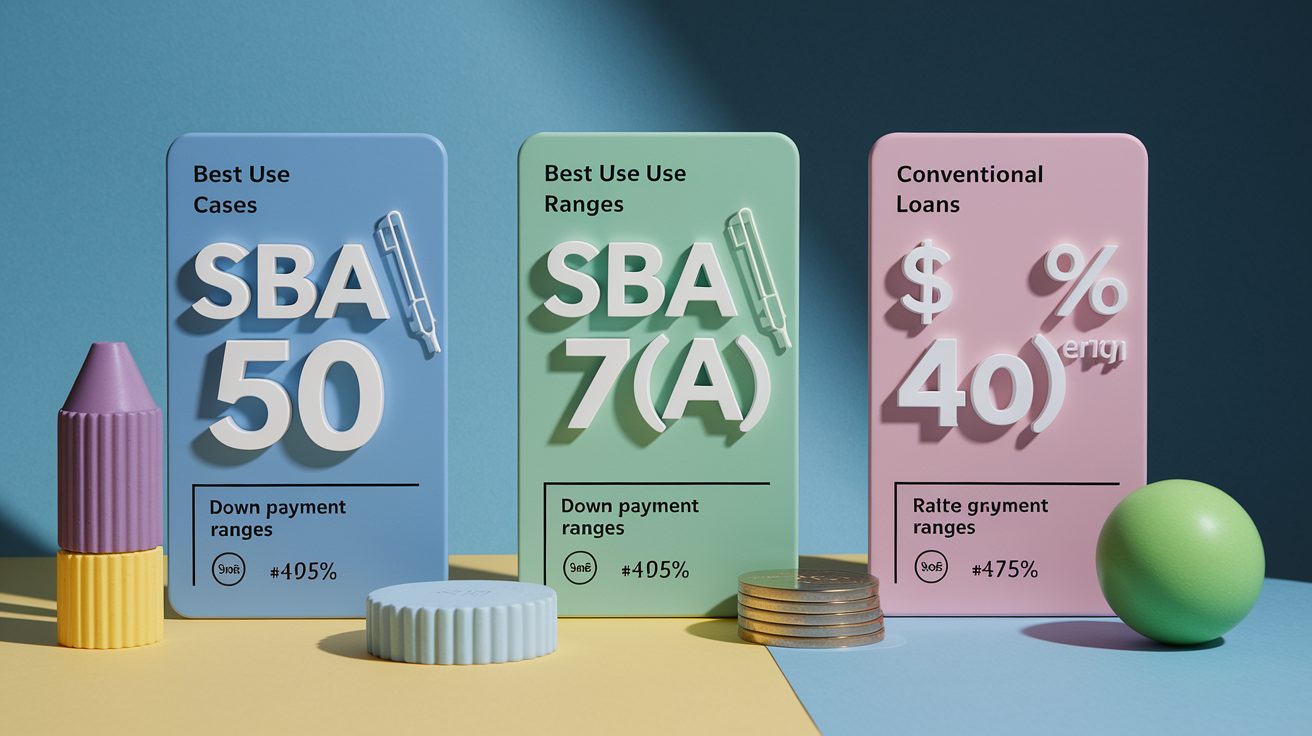
The SBA 504 and SBA 7(a) programs are both government-backed, but they serve different needs. The 504 focuses on fixed assets: real estate, construction, and heavy equipment. The 7(a) is more flexible. You can use 7(a) funds for working capital, inventory, business acquisitions, and debt refinancing, on top of real estate and equipment. If you need cash to keep operations running or you’re buying an existing business, the 7(a) is usually the better fit.
Down payment requirements also differ. A 504 loan typically requires 10% equity for established businesses, jumping to 15% or 20% in specific cases. The 7(a) often requires 10% to 20% down depending on use, lender comfort, and collateral. The 504’s big edge is the long fixed-rate term on 40% of the financing. The 7(a) usually comes with variable rates or shorter fixed periods, which can mean less payment stability over 20 years.
Conventional bank loans can close faster and involve fewer parties, but they typically require 20% to 30% down and offer shorter payback schedules or balloon payments. If you have strong cash reserves and want speed, conventional might work. If you want to preserve capital, lock in a low fixed rate, and you’re willing to wait 60 to 90 days for two-lender coordination, the 504 usually delivers better leverage and terms.
| Loan Type | Best Use Case | Down Payment Range | Rate Type |
|---|---|---|---|
| SBA 504 | Commercial real estate, facility construction, long-life equipment | 10%–20% | Fixed on CDC portion (40%) |
| SBA 7(a) | Working capital, inventory, business acquisition, flexible uses | 10%–20% | Variable or short fixed |
| Conventional | Established businesses, fast closing, strong cash reserves | 20%–30% | Variable or limited fixed |
Step-by-Step Application Process
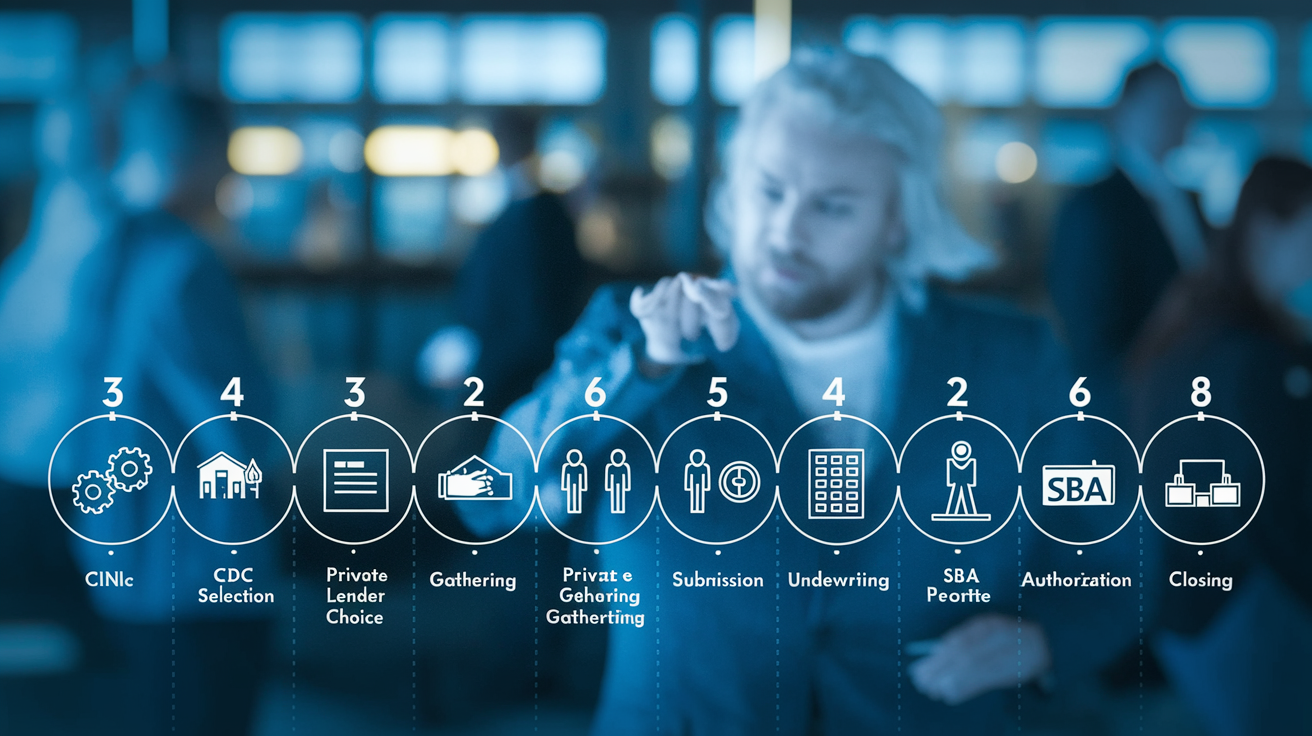
Applying for a 504 loan involves two lenders working in parallel, so expect more coordination and paperwork than a single-lender deal. The process typically takes 60 to 90 days from start to closing, though timelines can stretch if appraisals or environmental reports drag.
-
Select a Certified Development Company. Find a CDC that serves your area. There are more than 260 CDCs nationwide, each with a regional focus. Your bank may have a preferred CDC partner, or you can search the SBA’s CDC directory.
-
Choose your private lender. Pick the bank or credit union that will provide the first mortgage (the 50% piece). You control this decision, so compare interest rates, fees, and service.
-
Gather financial documents. You’ll need three years of business financials (balance sheets and income statements), three years of business tax returns, personal financial statements for all guarantors, and two years of personal tax returns for each guarantor.
-
Submit project details. Provide a detailed description of the project, including purchase agreements, contractor cost estimates, equipment quotes, and any appraisals or environmental assessments already completed.
-
Complete and sign the application. Both lenders will have application forms. The CDC often coordinates the paperwork and submits the SBA portion for approval.
-
Underwriting by both lenders. Your private lender underwrites the first mortgage. The CDC underwrites the SBA-backed debenture and submits the package to the SBA for final approval.
-
SBA authorization. The SBA reviews the CDC’s underwriting and issues an authorization number if the project meets all eligibility and policy requirements.
-
Closing and funding. Both loans close together, usually at the same title company. The private lender funds its piece right away. The CDC arranges interim financing or a bridge loan until the SBA debenture is sold, then the permanent CDC loan falls into place.
SBA 504 Loan Program FAQs

How long does 504 loan approval take?
Plan for 60 to 90 days from application to closing. The timeline depends on how fast you provide documents, how long appraisals and environmental reports take, and the workload at your lender and CDC. If your project is straightforward and your paperwork is complete, some deals close faster.
Can a startup qualify for a 504 loan?
Yes, but your equity requirement goes up to 15% if your business has been operating for less than two years. If you’re also buying a special-purpose property, you’ll need 20% down. Startups also face tighter scrutiny on projections and guarantor liquidity, so be ready to show a solid business plan and personal financial strength.
Are 504 loan interest rates fixed?
The CDC portion, which is 40% of the project, carries a fixed interest rate for the full term of 10, 20, or 25 years. The private lender’s portion (the other 50%) can be fixed or variable depending on what your bank offers. The fixed CDC rate is one of the program’s biggest selling points.
Can I use 504 funds to renovate an existing building I already own?
Yes, as long as the renovations are big enough to meet the program’s job-creation or community-development goals and the updated property will be used for business operations. Soft costs and construction-period expenses can be included if the collateral value supports the total financing.
Is refinancing allowed under the 504 program?
Refinancing existing debt generally isn’t an eligible use, with one exception. If you’re doing a major expansion and need to refinance a small portion of old debt to complete the project, the SBA allows refinancing up to 50% of the expansion cost. Pure refinancing without expansion doesn’t qualify.
What happens if I sell the property before the loan is paid off?
You’ll need to pay off both the private lender and the CDC portions in full when you sell. The CDC loan may carry a prepayment penalty if you pay it off early, especially in the first few years. Check the terms in your loan documents before you list the property for sale.
Final Words
You’ve seen how the 504 loan program works: long-term, fixed-rate financing split between a CDC and a private lender for real estate, equipment, and expansion.
We walked through who qualifies, the typical 50/40/10 structure, rates and fees, eligible uses, how it compares to 7(a) and bank loans, the step-by-step application, and common FAQs.
Next step: gather your financials, contact a CDC, and compare offers side‑by‑side. This option can make big projects doable—take it one clear step at a time.
FAQ
Q: Is it hard to get a 504 loan?
A: Getting a 504 loan is not usually hard if your business meets SBA size rules, shows repayment ability, and plans to use funds for fixed assets; expect CDC and lender underwriting, often 60–90 days.
Q: What is the difference between a 504 loan and a 502 loan?
A: The difference between a 504 loan and a 502 loan is that a 504 finances small‑business fixed assets via CDCs, while a 502 is a USDA rural home mortgage program for low‑income homeowners.
Q: What are the disadvantages of a 504 loan?
A: The disadvantages of a 504 loan are slower approval, limited uses to fixed assets, required down payment (often 10–20%), borrower guarantees and collateral, plus job‑creation or community development rules.
Q: What is the down payment for a 504 loan?
A: The down payment for a 504 loan is usually 10% of the project cost; it can rise to 15–20% for startups or special‑purpose properties, depending on lender and project risk.