

Think paying small balances every month will boost your credit score?
Not directly.
Credit scoring models don’t track how many payments you make in a month; they track whether payments are on time and what balance gets reported.
So the real benefit of extra small payments is indirect: they lower the balance shown at statement close and cut the chance you’ll miss a due date.
Carrying a small balance month to month won’t help your score and usually costs you interest; paying in full before the statement close is a cleaner way to improve it.
How Small Monthly Payments Affect Credit Score Outcomes
Paying small balances monthly doesn’t directly improve your credit score through frequency. Credit bureaus don’t record or score the number of payments you make each month. What counts? That every payment shows up on time and your reported balances stay low. Payment history sits at roughly 35% of your FICO score, making it the biggest single piece, while amounts owed (mostly credit utilization) grabs about 30%. Those two components control most of your score. Not the dollar amount or how often you send money.
Multiple small payments each month can help your credit score indirectly in two ways: they cut the risk of missing a due date and they drop your balance before your issuer reports to the bureaus. Most card issuers report your balance to Experian, Equifax, and TransUnion on your statement closing date (not your due date), so paying down your card before that closing date shrinks the balance that lands on your credit report and lowers your utilization ratio. Carrying a small balance month to month doesn’t help your score and only costs you interest. Paying in full gives the same or better scoring benefit without the expense.
Key impacts of small monthly payments:
On-time arrival: Each payment that posts before the due date protects your payment history and prevents a 30 day late mark, which can knock scores down by 100 points or more.
Lower utilization: Multiple payments before the statement closing date reduce the balance reported to bureaus and can push your utilization below 30% or 10%, where scores often improve.
No frequency bonus: Making five $50 payments versus one $250 payment doesn’t earn extra credit score points. The reported balance and payment history status are what count.
Interest reduction: Frequent payments lower the average daily balance during your billing cycle, cutting interest charges even if the total dollars paid each month stay the same.
Statement date reporting: Issuers typically report once per month at the statement close, so the balance on that date is what scoring models see. Paying after the close but before the due date doesn’t change the reported balance.
How Scoring Models Interpret Balance Patterns
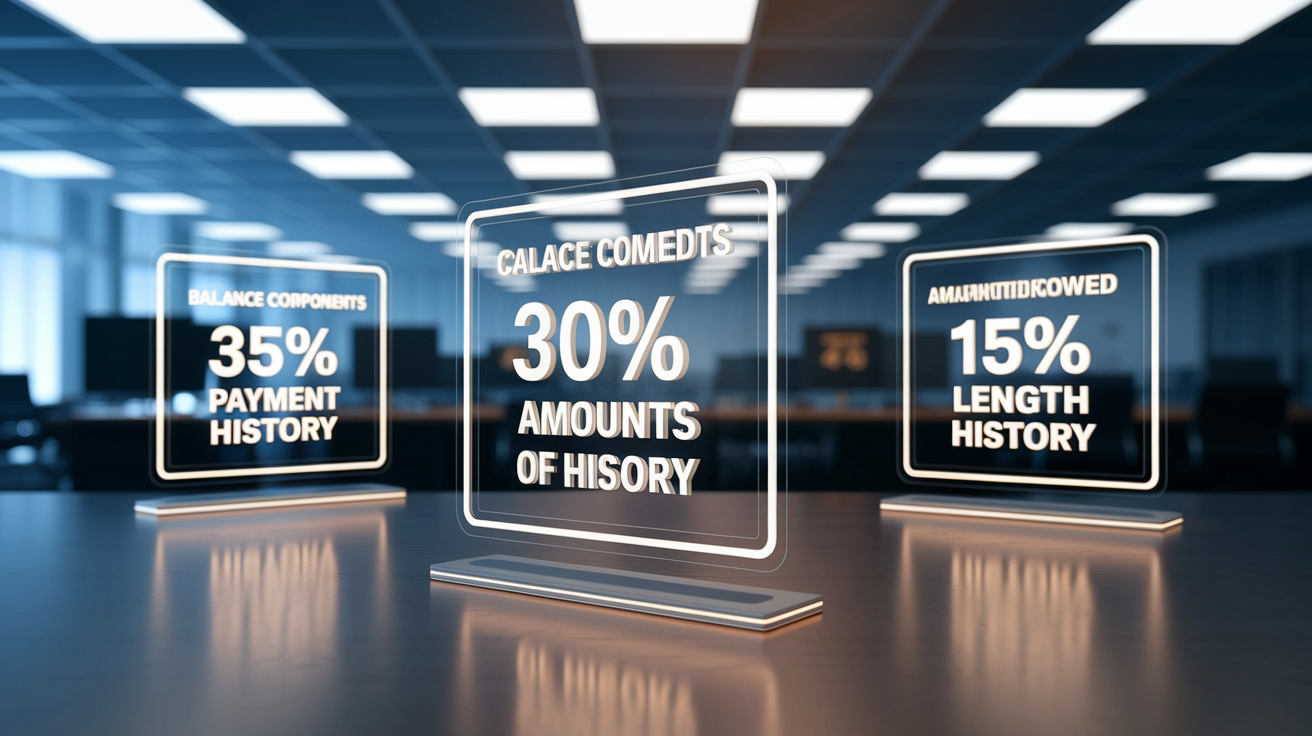
FICO Score 8, the most widely used credit scoring model, breaks down like this: 35% payment history, 30% amounts owed, 15% length of credit history, 10% credit mix, and 10% new credit. VantageScore uses a similar setup but groups things slightly differently. Neither model records the number of payments you make per month or the size of each one. They only see a snapshot of your account status when your issuer sends data to the bureaus. That snapshot includes your balance, your credit limit, and whether the minimum payment arrived on or before the due date.
Amounts owed covers more than just your utilization ratio. Scoring algorithms also look at the number of accounts with balances, the total dollar amount owed across all revolving and installment accounts, and the proportion of installment loans still outstanding. For credit cards specifically, the balance to limit ratio on each card and your aggregate revolving utilization both feed into the “amounts owed” category. Because most FICO versions use the most recent reported balance, a single high utilization month can temporarily drop your score even if you pay in full every other month.
Credit bureaus receive account data from issuers on a monthly cycle, and each issuer picks its own reporting date. Experian, Equifax, and TransUnion process these updates as batch files and typically reflect changes within a few days of getting the data. Scoring models don’t track trends in real time. They calculate a score based on whatever data exists the moment you or a lender requests it. FICO Score 10T is an exception because it looks at up to 24 months of balance history to reward consistently declining debt and penalize rising balances. For all other FICO versions, only the current reported balance matters, so timing your payments to land before the statement closing date can produce an immediate scoring benefit when the next report cycle runs.
Advanced Utilization Tactics Beyond Basic Balance Reduction

Keeping your aggregate revolving utilization below 30% is the standard advice, but individual card utilization can hurt your score even when your overall ratio looks fine. If one card sits at 90% utilization while three others are at 5%, scoring models may penalize the single high utilization account. To avoid this, spread new charges across multiple cards or make a mid cycle payment on the card approaching its limit before the statement closes. This tactic prevents any single account from reporting a high ratio and keeps both per card and aggregate utilization low.
Another move is to request credit limit increases on cards you already have in good standing. A higher limit with the same balance automatically lowers your utilization ratio. If your $1,000 balance becomes 20% instead of 40% after a limit increase, your score may rise without you paying a dollar. You can also open a new card to increase total available credit, but be aware that the hard inquiry and the reduction in average account age can temporarily offset the utilization benefit. Balancing these factors means knowing your statement closing dates across all accounts and paying down the cards with the highest utilization first, because the impact on your score isn’t linear. Dropping from 50% to 30% on a single card can produce a larger score gain than dropping from 10% to 0% on another.
| Action | Utilization Effect |
|---|---|
| Make a mid cycle payment before statement close | Lowers the balance reported to bureaus, reducing both per card and aggregate utilization |
| Request a credit limit increase on an existing card | Raises available credit without changing balances, instantly lowering utilization ratio |
| Shift spending from high utilization card to low utilization card | Prevents any single card from reporting above 30%, protecting per card utilization scores |
| Pay off card with highest utilization first | Produces the largest marginal score gain because high ratios are penalized more heavily |
| Open a new card to increase total available credit | Lowers aggregate utilization but may trigger a temporary score dip from the hard inquiry |
| Keep inactive cards open | Maintains higher total credit limit, keeping denominator in utilization formula larger |
Comparing Minimum Payments, Small Payments, and Full Payments
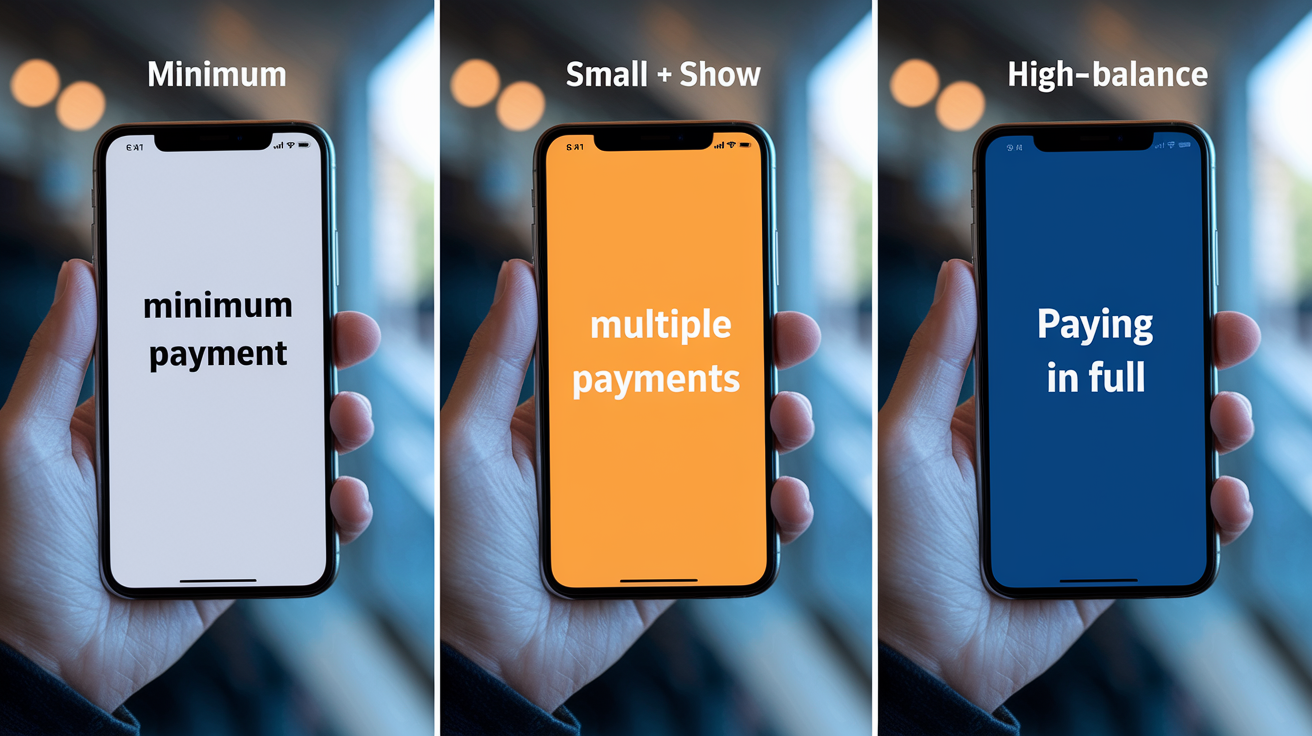
Minimum payments keep your account in good standing and prevent late marks from showing up on your credit report, but they leave most of your balance sitting there. That balance keeps accruing interest, and your utilization stays high, which can drag down your score. If you carry a $2,000 balance on a $5,000 limit and make only the minimum payment each month, your utilization hangs around 40%. That’s well above the 30% threshold where scores begin to drop. The interest you pay also compounds, turning a $2,000 balance into significantly more over time without any credit score benefit.
Making small payments beyond the minimum (an extra $50 or $100 before the statement closes) lowers the reported balance and can move your utilization into a better scoring band. These extra payments also reduce the average daily balance, cutting interest charges even if you don’t pay the statement in full. Paying the full statement balance every month avoids interest entirely and keeps your utilization at zero if you pay before the statement closing date, producing the strongest possible scoring outcome. The myth that carrying a small balance “shows activity” to lenders is false. Scoring models reward low utilization and on time payments, not interest payments.
Common payment mistakes to avoid:
Paying only the minimum when utilization is high: This preserves your payment history but leaves your score vulnerable to the 30% amounts owed penalty.
Making a payment after the statement closing date and expecting it to lower the reported balance: Only payments that post before the closing date reduce the balance that bureaus see that month.
Skipping extra payments because you plan to pay in full at the due date: If your utilization is above 30% at statement close, your score drops for that reporting period even if you pay in full three weeks later.
Believing that partial payments throughout the month earn extra credit: Scoring models don’t count the number of payments, only the balance at the statement close and whether the minimum arrived on time.
Debunking the Myth That Carrying a Small Balance Helps Credit Scores
A February 2023 survey found that 48% of consumers incorrectly believe that carrying a credit card balance from month to month improves their credit score. This myth likely comes from confusion between showing account activity and paying interest. Credit scoring models reward on time payments and low balances. They don’t reward interest payments or distinguish between a $50 balance carried for a month and a $0 balance after paying in full.
Carrying any balance costs you interest, and many cards begin charging interest on new purchases the moment you carry a balance forward, eliminating the grace period. For example, if you carry a $100 balance and then charge $200 in new purchases, you pay interest on the full $300 starting immediately, not just on the $100. Paying your statement balance in full every month preserves your grace period, avoids all interest charges, and produces equal or better credit score results compared to carrying a balance. A $0 reported balance isn’t penalized. It simply reflects 0% utilization, which is the ideal state for the “amounts owed” category.
Why carrying a balance doesn’t help:
No scoring advantage: FICO and VantageScore don’t give extra points for balances above $0. They penalize high utilization and reward on time payments regardless of balance size.
Interest cost: Carrying a balance means paying interest, which can total hundreds or thousands of dollars per year without any credit benefit.
Grace period loss: Once you carry a balance, new purchases often begin accruing interest immediately, compounding the cost.
Optimal Payment Strategies to Improve Scores Using Small Payments
The most effective payment strategy? Make at least one payment before your statement closing date that brings your balance below 10% of your credit limit, then set autopay to cover the remaining statement balance by the due date. This ensures your issuer reports a low utilization ratio to the bureaus and that your payment history record stays clean. If you can’t pay the full balance, prioritize paying enough to drop utilization below 30% before the statement closes. This single move can produce a noticeable score increase within one reporting cycle.
Making multiple small payments throughout the month offers two practical benefits beyond credit scoring: it aligns your credit card payments with your paycheck schedule, reducing the risk of overspending, and it lowers your average daily balance, which cuts interest charges even if you carry a balance. For example, paying $200 three times during the month results in less interest than paying $600 once at month end because interest is calculated daily on your outstanding balance. The frequency itself doesn’t improve your score, but the lower reported balance and reduced late payment risk do.
Five strategies to get the most from small payments:
Set autopay for at least the minimum: This prevents late payments and protects the 35% payment history component of your score, even if you forget to make extra payments.
Pay the highest utilization card first: If one card is at 60% utilization and another is at 10%, paying down the 60% card produces a larger marginal score gain.
Make a payment one or two days before your statement closing date: This ensures the payment posts in time to lower the balance reported to bureaus. Paying too early may post to the previous cycle.
Monitor your issuer’s reporting date: Most issuers report on the statement closing date, but you can verify by checking your credit report and noting when balances update.
Use budget aligned payment intervals: If you’re paid weekly or biweekly, schedule small card payments to match your pay schedule. Paying $100 every week (52 payments) puts $5,200 toward debt annually versus $4,800 if you pay $400 monthly (12 payments).
Best Timing for Small Payments
Your statement closing date is the day your issuer takes a snapshot of your balance and reports it to the credit bureaus. Your payment due date typically falls about 21 to 25 days later and is the deadline to avoid a late fee and a late mark on your credit report. A payment that posts after the statement closes but before the due date keeps your account in good standing, but it doesn’t reduce the balance already reported to the bureaus for that month. To lower your reported utilization, you must make the payment before the statement closing date. If your statement closes on the 15th and your due date is the 10th of the following month, a payment on the 14th lowers your utilization for that reporting cycle, while a payment on the 16th doesn’t.
Monitoring Credit Report Changes After Making Small Payments
Credit reports typically update once per month when your issuer sends new account data to Experian, Equifax, and TransUnion. The update reflects your balance and payment status as of your statement closing date, so you should expect to see changes approximately 30 days after you make a payment that lowers your reported balance. If you paid your card down from $3,000 to $500 before the statement closed on March 15, your credit report should show the $500 balance by mid April, and your credit score will recalculate based on that new utilization ratio the next time a lender or monitoring service pulls your report.
Regularly checking your credit reports helps you verify that your payments are being reported correctly and that your utilization improvements are reflected. You’re entitled to one free credit report per year from each of the three major bureaus at AnnualCreditReport.com, and many credit card issuers and monitoring services provide free monthly score updates. If you notice that a payment posted on time but your report still shows a high balance or a late mark, contact your issuer to confirm the reporting date and dispute any errors with the bureau directly.
| Item | Description |
|---|---|
| Balance | Snapshot of your outstanding balance as of the statement closing date, updated monthly |
| Payment status | Record of whether the minimum payment was received on time, updated monthly after the due date |
| Credit limit | Your total available credit on the account, updated whenever your issuer changes the limit |
Final Words
We covered how small monthly payments affect your score: payment history is about 35% of a FICO score, and credit utilization is about 30%. On-time payments matter more than payment size, and issuers usually report the statement closing balance.
Paying before the statement closes or making mid-cycle payments can lower the reported balance and cut interest. Frequency isn’t scored, and carrying a small balance doesn’t help.
So, can paying small balances monthly improve my credit score? Yes, if you keep utilization low and pay on time, you’ll likely see steady improvement.
FAQ
Q: How to get a 700 credit score in 30 days fast? Can my credit score go up 100 points in 2 months?
A: Getting a 700 score in 30 days or gaining 100 points in two months is rare; it can happen if you fix major errors, pay down high card balances before statement close, and stop late payments.
Q: What is the biggest killer of credit scores?
A: The biggest killer of credit scores is missed or late payments. Payment history makes up about 35% of FICO, and late marks hurt your score far more than small balances do.
Q: Can you build credit if you pay off every month?
A: You can build credit by paying off every month: on-time full payments improve payment history and low utilization, especially when you pay before the statement closing date so a lower balance is reported.