


Think asking for a higher credit limit will instantly boost your score? Not always—but it can help fast.
When your limit goes up and you keep the same balance, your credit utilization (balances ÷ limits) falls, and utilization counts for roughly 30% of many credit scores.
So yes: a limit increase often improves utilization rates, but only if you don’t charge more and the issuer doesn’t use a hard inquiry.
This post shows the math, the timing tricks, and the red flags to watch.
How a Credit Limit Increase Directly Affects Credit Utilization

When you raise your credit limit and keep balances where they are, your utilization rate drops automatically. Credit utilization gets calculated as (total revolving balances ÷ total revolving credit limits) × 100, and it’s worth roughly 30 percent of your FICO score. The math works in your favor: same numerator, bigger denominator, smaller percentage. If you’re using $6,500 on a $10,000 limit and the issuer bumps you to $15,000, your utilization falls from 65 percent to 43.33 percent without any change in spending.
Most credit scoring models treat utilization below 30 percent as a positive signal. Anything above 30 percent? That’s a potential risk marker. A higher total credit limit lowers the ratio right away, provided you don’t charge more. That’s the core reason a limit increase can help your score before you pay down a dollar of debt.
The improvement scales up when you apply the increase across multiple cards. Say you’ve got $1,500 in balances spread across cards totaling $5,000 in limits. You’re sitting at 30 percent overall utilization. Request increases that push your total limits to $10,000, keep the same $1,500 in balances, and utilization drops to 15 percent. Many lenders view that as low risk. Here’s how the numbers shift:
- $6,500 balance on a $10,000 limit → 65% utilization
- $6,500 balance after limit raised to $15,000 → 43.33% utilization
- $6,500 balance after limit raised to $20,000 → 32.5% utilization
How Reporting Timing Affects Your Utilization Numbers

Issuers report balances and limits to credit bureaus on or around your statement closing date, not in real time. The balance printed on that month’s statement is what lands on your credit report and feeds into your score. If you’re carrying a $2,000 balance the day after you get paid but make a $1,500 payment the day before the statement closes, only $500 appears on your report for that cycle.
Timing a limit increase or an extra payment to arrive before the statement closing date can push a lower utilization number onto your report sooner. Multiple factors determine what the bureaus see each month:
- Statement closing date: the snapshot moment when balances get logged for reporting
- Partial payments made before closing: reduce the reported balance without waiting for the next cycle
- Multi-card totals: overall utilization is the sum of all balances divided by the sum of all limits, not card by card averages
- Per card utilization versus aggregate: some models weigh individual card ratios separately, so keeping each card under 30 percent can matter more than just the total
How Credit Limit Requests Affect Your Score Beyond Utilization
Requesting a credit limit increase can trigger a hard inquiry, which stays on your credit report for two years but usually affects your score for about twelve months. The impact is often small, frequently under five points, but it still registers as a temporary score drop. Multiple hard inquiries in a short window can compound the damage and signal to lenders that you’re seeking credit aggressively.
Not every limit increase request generates a hard inquiry. Some issuers run a soft inquiry to review your account internally. Soft inquiries never affect your credit score. Automatic credit limit increases, when the issuer raises your limit without you asking, typically use a soft check or no check at all. They avoid the short term impact entirely.
Before you request, ask the issuer whether a hard or soft inquiry will occur. Many customer service reps can confirm the policy over the phone or through online chat. Knowing the inquiry type ahead of time lets you weigh the utilization benefit against the temporary inquiry cost.
| Inquiry Type | Score Impact | Typical Duration |
|---|---|---|
| Hard inquiry | Small temporary drop, often under 5 points | Up to 12 months of score effect; stays on report for 2 years |
| Soft inquiry | None | Not factored into scoring |
| Automatic increase | None or soft check only | No score effect |
Timing Strategies to Maximize Utilization Benefits After a Limit Increase
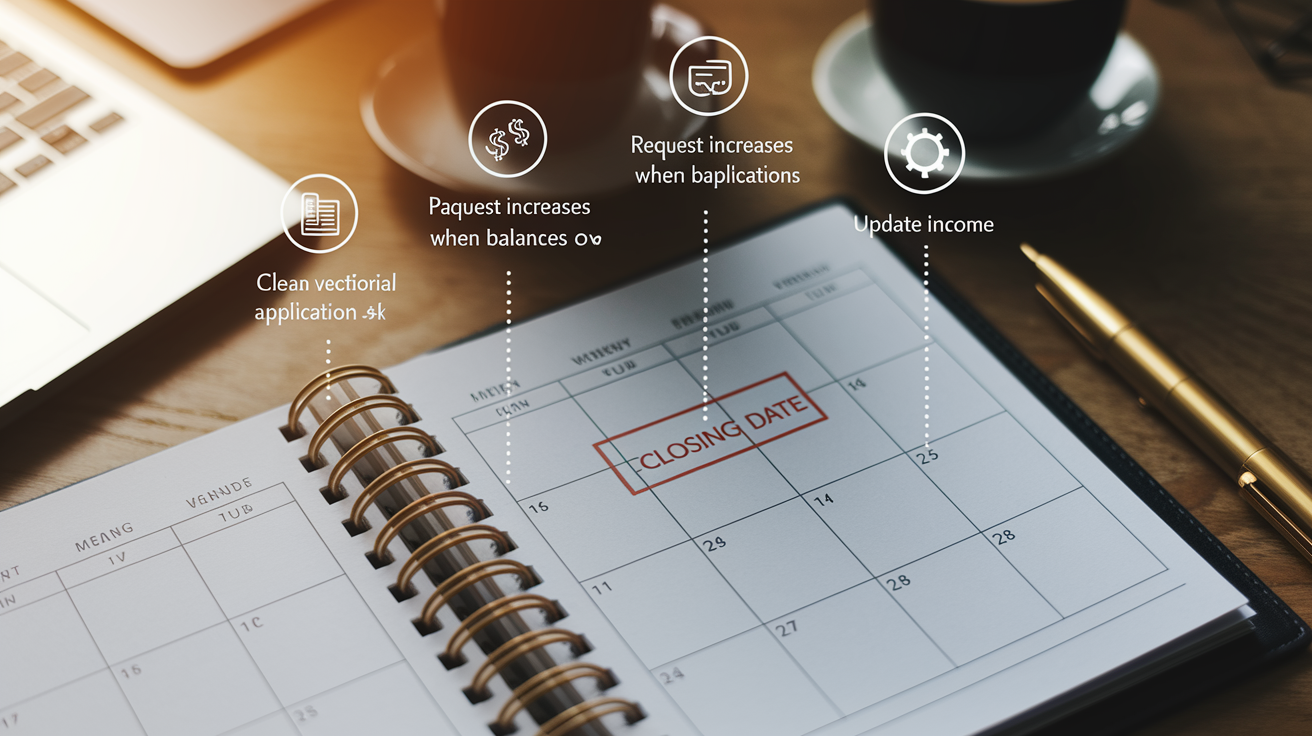
To see the lower utilization reflected in your credit score as soon as possible, coordinate your request and any balance paydowns with your statement closing date. Requesting an increase a week or two before the statement closes gives the issuer time to approve and report the new limit before that cycle’s snapshot. If you also pay down balances before closing, both changes show up together on your next credit report.
Aim for a utilization threshold below 30 percent overall. Whenever possible, target 10 to 15 percent. Those lower ranges tend to deliver the largest scoring improvements. Score changes usually appear within one to two billing cycles after the lower utilization gets reported, so patience helps. Credit models need at least one updated report to recalculate your score.
Here are four timing strategies that help you get the most benefit:
- Pay down balances before the statement closing date so the reported number is as low as possible even before a limit increase
- Request a limit increase when your current balances are low to minimize the chance that high utilization on your report triggers a denial
- Avoid requesting shortly after recent credit applications because a fresh hard inquiry on your report can reduce approval odds and add a second temporary score dip
- Update your income information with the issuer before you request so the system sees higher capacity to support a larger line
Best Practices for Requesting a Credit Limit Increase Without Hurting Credit
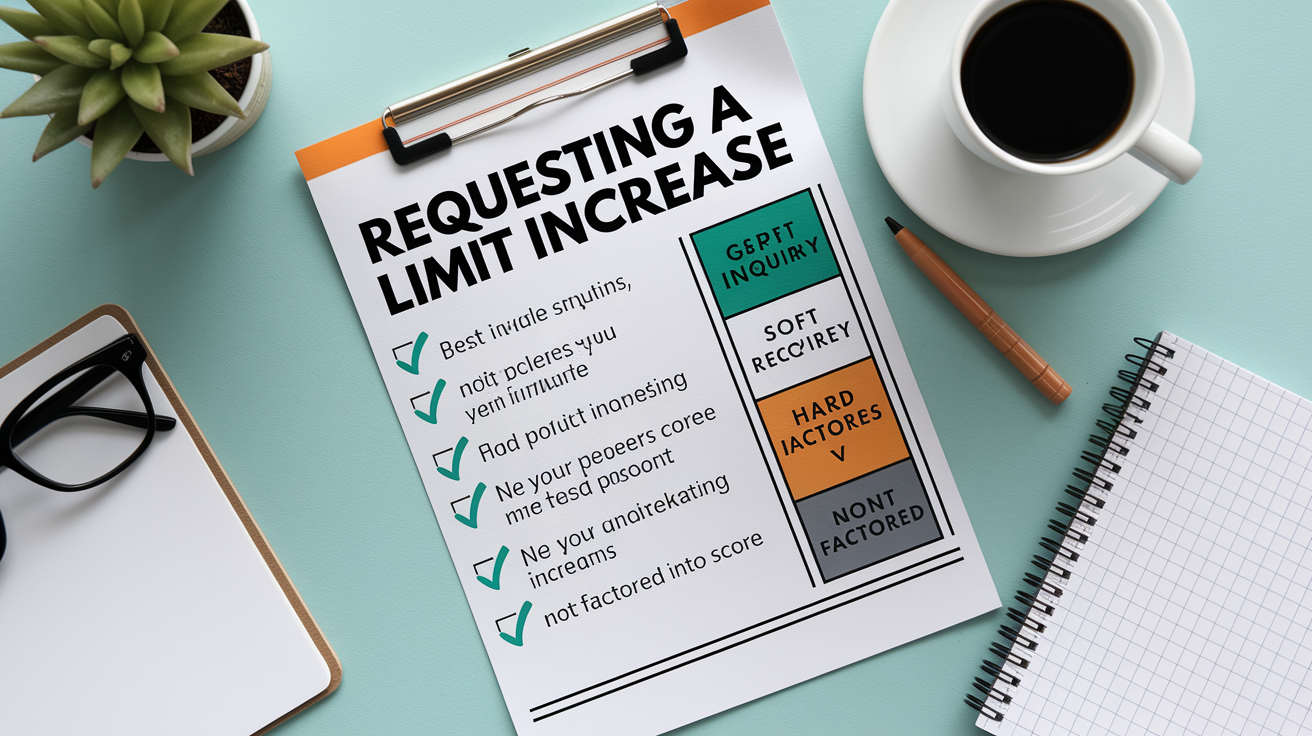
Issuers evaluate payment history, current utilization, income stability, and the age of your account when deciding whether to approve a limit increase. The strongest requests come after months of on time payments, low balances, and no recent credit seeking behavior that would raise red flags. Responsible credit use, charging only what you can pay in full each month, signals that a higher limit won’t lead to maxed out cards.
Before you submit the request, confirm the issuer’s credit review process and whether a hard inquiry will occur. Some banks let you check online or through their mobile app without committing to a pull. If the issuer requires a hard inquiry and you’ve already applied for other credit in the past few months, wait until those inquiries age off the most recent scoring window to avoid compounding the impact.
Closing older accounts after receiving a limit increase shrinks your total available credit and can erase the utilization benefit you just gained. Keep those accounts open and active with small recurring charges to preserve the higher aggregate limit. Here are six steps to prepare:
- Verify inquiry type: call or check online to confirm hard versus soft pull before requesting
- Reduce balances: pay down cards as much as possible so your reported utilization is already low
- Update income: log raises, bonuses, or new job income in your online account profile or by calling the issuer
- Avoid recent applications: wait at least two to three months after opening a new card or loan before requesting a limit increase
- Keep older accounts open: closing accounts lowers total available credit and can raise utilization even if balances don’t change
- Maintain on time payments: even one late payment in the past six months can trigger an automatic denial
Example Scenarios Showing Utilization Before and After a Credit Limit Increase
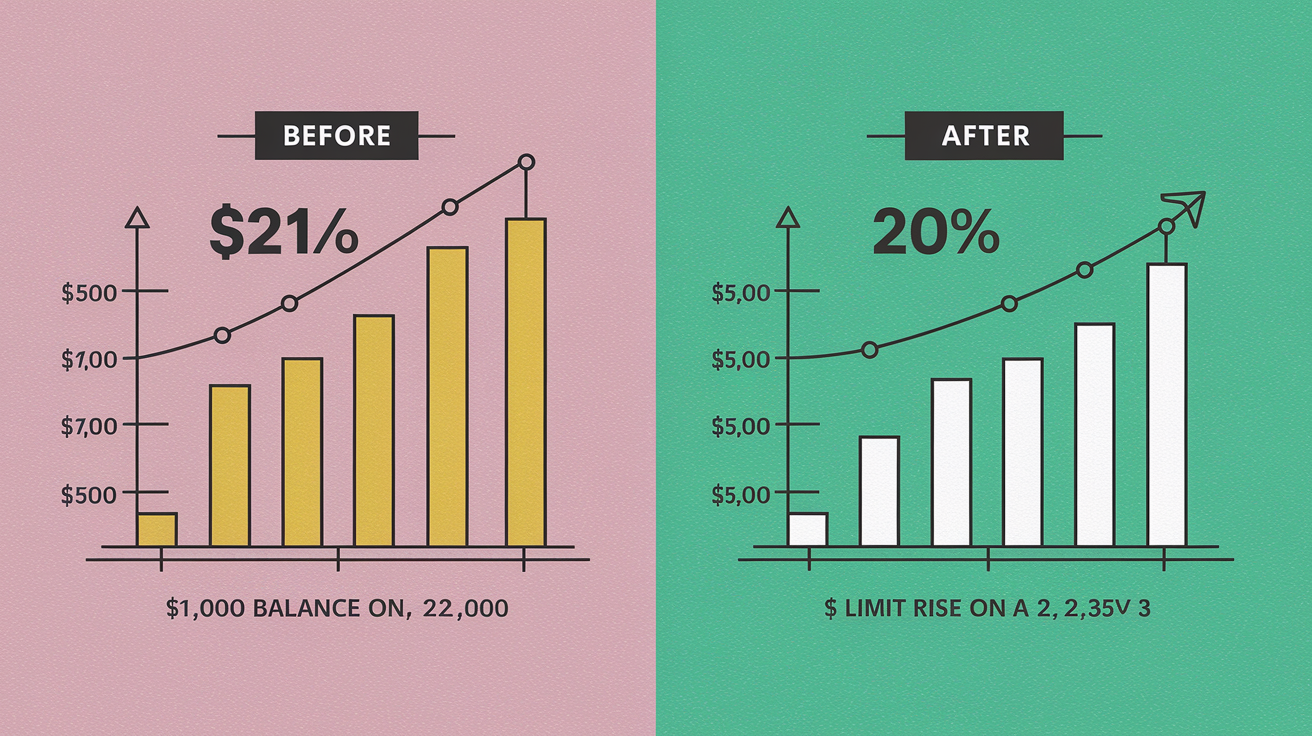
Walking through real numbers makes the math clear. A single card scenario where you carry a $1,000 balance on a $2,000 limit puts you at 50 percent utilization. When the issuer raises the limit to $5,000 and you keep the same $1,000 balance, utilization drops to 20 percent. That’s well below the 30 percent threshold that most scoring models reward. Multi card examples work the same way. If you have $1,500 in total balances spread across cards with a combined $5,000 limit, you’re at 30 percent. Increasing total limits to $10,000 while keeping balances at $1,500 cuts utilization in half to 15 percent.
The opposite can happen if you treat a higher limit as permission to spend more. Imagine your limit rises from $2,000 to $4,000, but your balance climbs from $500 to $3,000 because you charged a vacation and furniture. Your utilization jumps from 25 percent to 75 percent, and your score will drop despite the higher limit. The best case scenario pairs a limit increase with a balance paydown. Raising the denominator and lowering the numerator at the same time delivers the steepest utilization improvement.
| Scenario | Balance | Limit | Resulting Utilization |
|---|---|---|---|
| Single card improvement | $1,000 | $5,000 (raised from $2,000) | 20% |
| Multi card improvement | $1,500 total | $10,000 total (raised from $5,000) | 15% |
| Negative impact overspending | $3,000 (increased from $500) | $4,000 (raised from $2,000) | 75% |
| Best case: limit increase + lower balance | $500 (paid down from $1,500) | $10,000 (raised from $5,000) | 5% |
Alternatives to Lower Utilization Without Requesting a Limit Increase
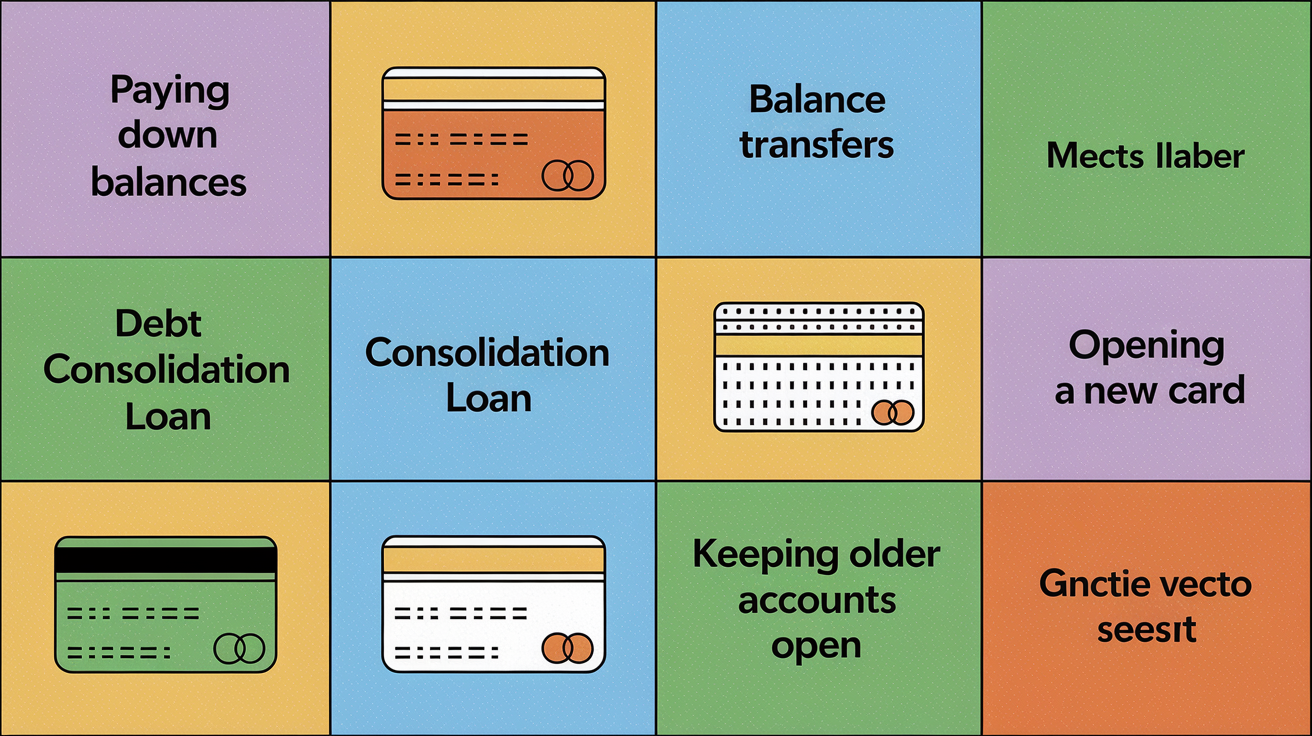
Paying down balances before your statement closing date is the fastest way to lower utilization without any inquiry risk or issuer approval. Even a $100 or $200 extra payment can push you under a scoring threshold if you’re hovering near 30 percent. This method gives you full control and doesn’t depend on the issuer’s decision timeline or credit check policy.
Balance transfers shift debt from one card to another, sometimes onto a card with a higher limit or a promotional zero percent rate. The transfer itself doesn’t lower your total balances across all accounts, but it can redistribute utilization so no single card is maxed out. Watch out for balance transfer fees. And remember that opening a new card for the transfer may trigger a hard inquiry.
Debt consolidation loans move revolving credit card balances into an installment loan. Because installment loans don’t count toward revolving utilization, your credit utilization ratio drops to zero or near zero as soon as the loan pays off the cards. This option works best when you can secure a lower interest rate on the loan than you’re paying on the cards, and when you can commit to not running up new card balances after consolidation. Here are five alternatives that don’t require a limit increase:
- Make an extra payment before the statement closing date to reduce the reported balance
- Open a new credit card to add available credit, though this triggers a hard inquiry and requires responsible management of the additional account
- Use a balance transfer to shift debt onto a card with unused capacity or a zero percent promotional period
- Take out a debt consolidation loan to convert revolving debt into an installment account that doesn’t affect utilization
- Avoid closing older accounts because each closed card removes available credit and raises your utilization percentage on remaining cards
Final Words
Yes, does requesting a credit limit increase improve utilization? It does, as long as your balances stay the same.
The math is simple. Higher limit, same balance, lower percentage reported to the credit bureaus.
But timing matters. Pay down balances before your statement closes, verify whether your issuer pulls hard or soft, and don’t let a bigger limit tempt you to spend more.
If your goal is better credit scores and lower borrowing costs down the road, keeping utilization below 30 percent (ideally under 10) is one of the fastest moves you can make.
FAQ
Q: Should I increase my credit limit to lower my utilization?
A: Increasing your credit limit will lower your utilization if your balances stay the same, which can help your score since utilization matters a lot; just check for hard pulls and avoid extra spending.
Q: Is there a downside to requesting a credit limit increase?
A: Requesting a credit limit increase can trigger a hard inquiry that may briefly drop your score a few points; some issuers use soft pulls or automatic increases without any score effect.
Q: What is the biggest killer of credit scores?
A: The biggest killer of credit scores is high credit utilization—carrying large balances compared to your limits harms scores faster than many other factors, especially above about 30 percent.
Q: What is the 2 2 2 credit rule?
A: The 2-2-2 credit rule is a common tip meaning keep balances very low, make two payments each billing cycle, and wait about two months to see any resulting score improvement.