


Think paying a collection makes it vanish from your credit report?
It doesn’t — the account can stay for seven years even after you pay, and that surprises a lot of people.
But you do have options: dispute errors with the credit bureaus, demand proof from the collector, or negotiate a pay-for-delete agreement before sending any money.
This post shows simple, step-by-step dispute and validation letters plus scripts for asking for deletion, so you can act with confidence.
Follow these steps in order and you might get that collection off your report without paying extra or restarting the clock.
How to Remove Collection Accounts From Your Credit Report (Start Here)

Paying a collection doesn’t make it disappear. The account stays on your credit report for seven years from the date you first missed a payment, whether you pay it or not. That’s a shock for a lot of people who thought settling would fix everything. It won’t.
You can remove collection accounts in three ways. First, dispute errors with the credit bureaus. Second, ask the collector to prove the debt is real. Third, negotiate a pay for delete agreement before you send any money. None of these are guaranteed, but they work when the facts are on your side.
Here’s what to try, in order:
-
Dispute inaccuracies with Equifax, Experian, and TransUnion. If the balance, date, or account details are wrong, the bureaus have to investigate. If they can’t verify it within 30 days under the Fair Credit Reporting Act, they delete it.
-
Request debt validation from the collection agency. Collectors have to prove they own the debt and that the amount is correct. If they can’t, the account comes off.
-
Negotiate a pay for delete agreement in writing before payment. Some collectors will remove the account if you pay in full or settle. Get it in writing first or you’re just paying to keep a problem on your report.
How to Identify Errors in a Collection Account

Pull your reports from all three bureaus through the official free annual report program. Look at each collection account closely. The details matter because even small mistakes give you grounds to dispute.
Here’s what to check:
Wrong balance or payment status. If you paid the debt but it still shows unpaid, that’s an error.
Account older than seven years from the original delinquency date. Anything past that cutoff has to come off, no exceptions.
Account that doesn’t belong to you. Common with mixed files or identity theft.
Duplicate entries. The same debt listed twice, sometimes by the original creditor and the collection agency.
Debt you already settled or disputed. If you have proof of payment or a settlement letter, the report should reflect that.
Medical debt under $500. Bureaus stopped reporting these in 2023.
One frequent mistake? The delinquency date. If a collector lists the date they bought the debt instead of the date you first missed a payment, the seven year clock gets reset illegally. That’s fixable with a dispute.
Disputing a Collection With the Credit Bureaus

You can dispute collections directly with Equifax, Experian, and TransUnion online, by mail, or by phone. Online is fastest, but mail gives you a paper trail. Under the Fair Credit Reporting Act, the bureau has 30 days to investigate your dispute and either correct the account, delete it, or confirm it’s accurate.
The investigation works like this: the bureau contacts the creditor or collector that reported the account and asks them to verify. If the creditor can’t prove the information is correct, the bureau has to remove it. If they verify it, the account stays. If they don’t respond at all within that 30 day window, it comes off.
Here’s how to file the dispute:
Pull your credit reports and locate the collection account. Write down the account number, creditor name, and the error you’re disputing.
Gather supporting documents. Include copies (never originals) of canceled checks, bank statements showing payment, settlement letters, or anything that proves your case.
File a dispute with each bureau that lists the account. You have to dispute separately with all three because they don’t share dispute information.
Explain the specific error clearly. Say “This account shows a balance of $800, but I paid in full on March 15, 2024, as shown in the attached receipt.” Don’t be vague.
Wait for the bureau’s response. They’ll mail you results, usually within 30 to 45 days. If they side with the creditor, ask for verification documents.
Follow up if the error remains. If the bureau confirms inaccurate information, escalate with a second letter referencing your original dispute and the FCRA’s accuracy requirements.
Save all letters and responses. If a bureau ignores your dispute or keeps reporting something you’ve proven wrong, you may have grounds for a legal claim.
Requesting Debt Validation From the Collection Agency

Disputing with the bureaus only gets you halfway. You can also go straight to the collection agency and demand that they prove the debt. Under the Fair Debt Collection Practices Act, collectors must validate the debt if you request it in writing within 30 days of their first contact. Even after that window, you can still ask. It’s just not automatic anymore.
A validation request forces the collector to show proof they own the debt, the amount is correct, and they have the right to collect. If they can’t prove all three, they’re not supposed to keep reporting it to the bureaus. Many can’t, especially if the debt has been sold multiple times.
Send a debt validation letter that includes:
Your full name and address. Make it easy for them to match your request to the account.
The collection account number from your credit report or their letter.
A clear request for validation. Say “I am requesting that you provide verification of this debt as required under the FDCPA.”
A demand for proof of ownership. Ask for documentation showing they purchased the debt and have authority to collect.
A request to cease reporting if they cannot validate. State “If you cannot validate this debt, remove it from my credit reports immediately.”
Send the letter certified mail with return receipt so you have proof they received it. The collector has 30 days to respond. If they don’t, or if they send a generic letter without real proof, they can’t legally keep collecting or reporting the account. At that point, dispute it with the credit bureaus and attach the validation letter and lack of response as evidence.
Negotiating a Pay for Delete Agreement

Some collection agencies will remove an account from your credit report if you pay the balance in full or agree to a settlement. This is called pay for delete. It’s not a legal requirement, and plenty of collectors won’t do it, but it’s worth asking before you send money. Once you pay without an agreement, you lose all your negotiating power.
Start by calling the collection agency and asking if they offer pay for delete. If they say yes, get it in writing before you pay a dollar. Never trust a phone promise. The agreement should state that once your payment clears, they will request deletion of the account from all three credit bureaus. If they refuse to put it in writing, walk away or try a different approach.
Here’s how to improve your chances:
Offer a lump sum payment. Collectors are more willing to delete if you pay in full right away instead of monthly installments.
Be polite but firm. Say something like “I’m willing to settle this today if you agree to remove it from my credit reports. Can you send that in writing?”
Negotiate the amount if the debt is old. Collectors often buy old debts for pennies and will accept 30 to 50 percent of the balance.
Keep all proof. Save the written agreement, payment confirmation, and follow up after 30 days to make sure the account is gone.
Paying a collection usually doesn’t help your credit score much if the account stays on your report. Newer scoring models like FICO 9 and VantageScore 3.0 ignore paid collections entirely, but older models still count them. That’s why deletion is the goal, not just payment.
How Long Collections Stay on Your Credit Report
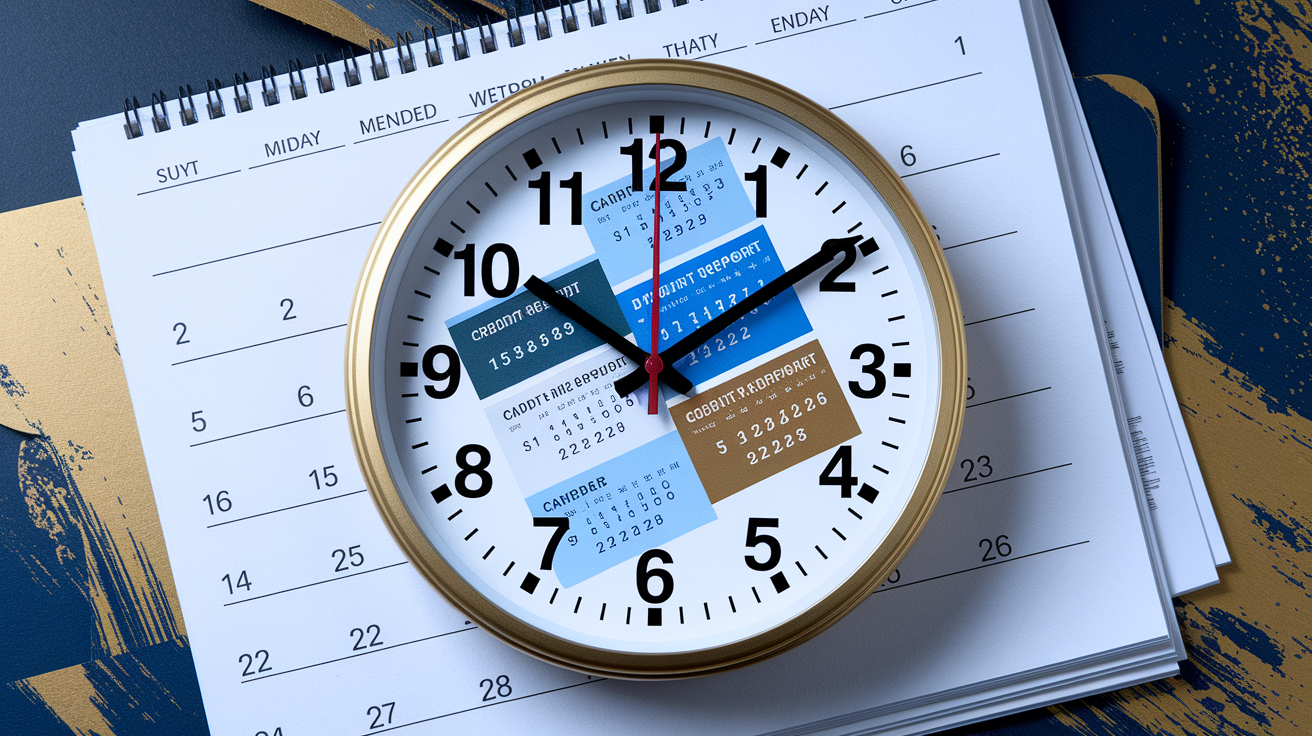
Collection accounts stay on your credit report for seven years from the date of first delinquency. That’s the date you first missed a payment to the original creditor, not the date the account went to collections or the date you paid it. If you missed a payment in March 2022, the account comes off your report in March 2029, even if a collector didn’t buy the debt until 2024.
Paying the collection doesn’t restart the clock. A lot of people worry that paying will add another seven years, but that’s not how it works. The reporting period is locked to the original delinquency date. Once seven years pass, the account has to be removed automatically. If it’s still there, dispute it with the credit bureaus and provide the timeline showing it’s past the legal limit.
One exception: if you’re sued and a court enters a judgment against you, that judgment can stay on your report for seven years from the filing date, which might be later than the original delinquency. Check your state’s rules, because some states allow longer reporting for judgments.
Sample Letters for Disputes, Validation, and Pay for Delete
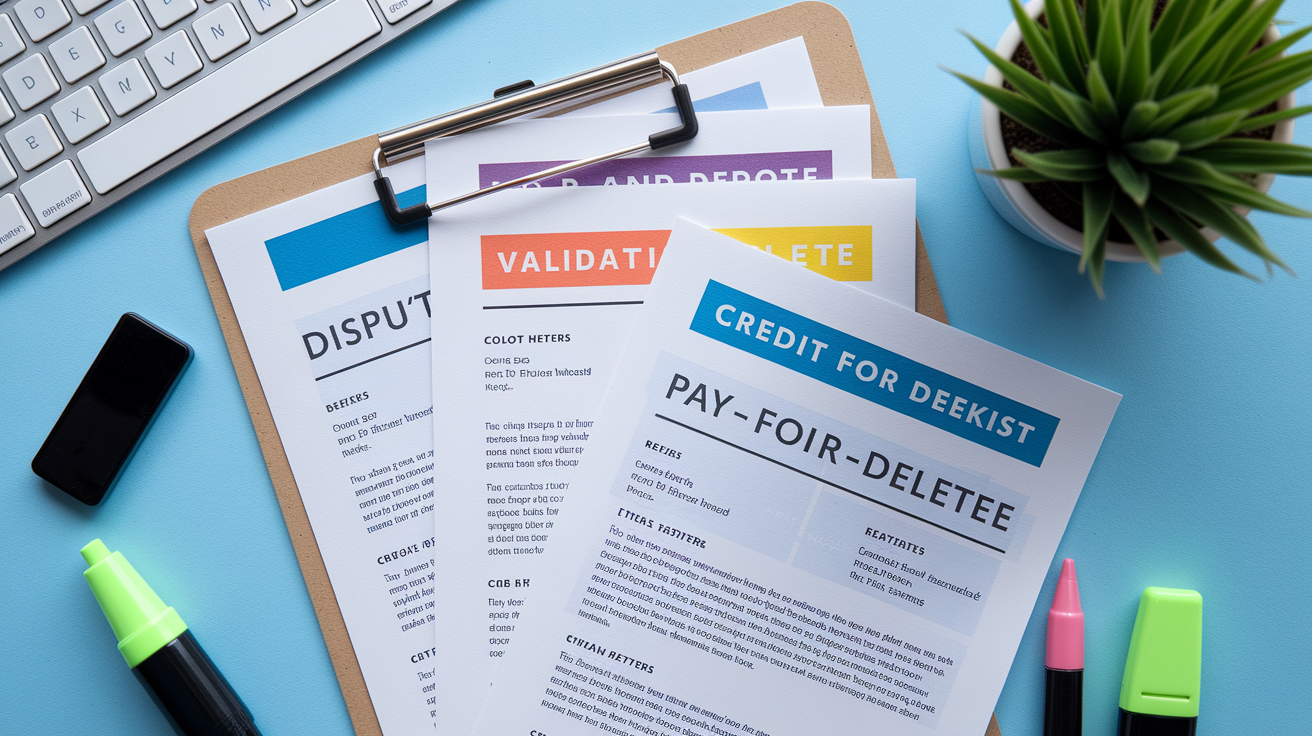
Each type of letter serves a different purpose. Keep them short, factual, and focused on the specific action you want the recipient to take.
Dispute Letter to Credit Bureau
Use this when the collection account on your credit report contains incorrect information. Send it to whichever bureaus list the error.
Your full name, current address, and the last four digits of your Social Security number
The name of the collection agency and account number as it appears on your credit report
A clear statement of the error (for example, “This account shows a balance of $600, but I paid in full on January 10, 2024”)
Copies of supporting documents, such as a receipt, settlement letter, or bank statement
A request to investigate and correct or delete the account
Debt Validation Letter to Collection Agency
Use this to force the collector to prove they own the debt and the amount is correct.
Your full name and address
The collection account number
A statement that you are requesting validation under the Fair Debt Collection Practices Act
Specific requests: proof of the original creditor, proof the collector owns the debt, an itemized accounting of the balance, and verification that the debt is within the statute of limitations
A demand that they cease reporting to credit bureaus if they cannot validate
Pay for Delete Letter to Collection Agency
Use this after you’ve agreed on an amount and want written confirmation they will delete the account after payment.
Your full name, address, and the account number
The agreed payment amount and payment date
A clear request: “In exchange for payment of $[amount] by [date], [Collection Agency Name] agrees to request deletion of this account from Equifax, Experian, and TransUnion within 30 days of payment”
A request for a signed copy of the agreement before you send payment
Your Legal Rights Under the FCRA and FDCPA

The Fair Credit Reporting Act gives you the right to dispute inaccurate information on your credit report. Credit bureaus have to investigate within 30 days, and if they can’t verify the information, they must remove it. You also have the right to see your credit report for free once a year from each bureau and to know who accessed your report in the past two years.
The Fair Debt Collection Practices Act protects you from abusive, deceptive, or unfair collection tactics. Collectors can’t call you before 8 a.m. or after 9 p.m., contact you at work if you’ve told them not to, or harass you with repeated calls. They can’t lie about how much you owe, threaten legal action they don’t plan to take, or discuss your debt with anyone except you, your spouse, or your attorney.
If a collector violates either law, you can file a complaint with the Consumer Financial Protection Bureau or your state attorney general. You can also sue the collector or the credit bureau for damages. Keep records of every call, letter, and dispute. If a bureau refuses to remove inaccurate information after you’ve proven it wrong, or if a collector keeps calling after you’ve sent a cease and desist letter, those records become evidence.
When to Seek Professional Credit Help

Most people can dispute collections and request validation on their own. You don’t need to pay someone to send letters you can write yourself. But there are a few situations where hiring help makes sense.
Consider professional assistance if:
You’re dealing with identity theft or a mixed credit file. Cleaning up fraud takes documentation, police reports, and sometimes affidavits. A credit attorney can speed up the process.
A collector or bureau violated the FCRA or FDCPA and you want to sue. Consumer rights attorneys often work on contingency, meaning you don’t pay unless you win.
You’ve disputed the same error multiple times and the bureau keeps ignoring it. An attorney’s demand letter gets faster responses than another consumer dispute.
Avoid credit repair companies that charge monthly fees and promise to remove accurate information. They can’t do anything magical. If the collection is real and within the seven year window, it’s staying unless the collector agrees to delete it. No company can change that, and paying $100 a month for disputes you could file yourself is a waste.
Final Words
In the action, you learned three practical ways to remove collections: dispute errors with the credit bureaus, ask the collector for debt validation, or negotiate a pay-for-delete agreement. You also saw how to spot common mistakes, the 7-year reporting rule, sample letters, and your rights under the FCRA and FDCPA.
Start by pulling your reports, pick the route that fits your situation, and send clear, documented requests. You can make real progress on how to remove collections from my credit report, one step at a time.
FAQ
Q: Can you permanently remove collections from a credit report?
A: You can sometimes permanently remove collections from a credit report by disputing errors with the bureaus, requesting validation from the collector, getting a written pay‑for‑delete, or waiting out the seven‑year reporting period.
Q: How to remove collections from credit report fast?
A: To remove collections from your credit report fast, dispute inaccurate entries with the credit bureaus, send a debt validation letter to the collector, or negotiate a written pay‑for‑delete and keep proof of everything.
Q: Can I have a 700 credit score with collections?
A: You can have a 700 credit score with collections, but it depends on how many, how recent they are, and your other accounts; steady on‑time payments and low balances help reach 700.
Q: What is the 7 7 7 rule for collections?
A: The 7 7 7 rule for collections means a collection stays on your credit report seven years from the date of first missed payment; paying it doesn’t restart the clock, and it must be removed after seven years.