


Think a thin credit file dooms you to the worst interest rates?
Not true, but you do need a plan to avoid hidden fees and long terms that multiply what you owe.
This post shows the quick checks that matter first, like APR, origination fee, and total cost, plus how to prequalify with at least three lenders and whether a secured loan or a cosigner could save you hundreds.
Focus on those numbers and make sure the lender reports to all three bureaus so your payments build credit, not just debt.
Key Steps to Selecting a Loan With Limited or Thin Credit
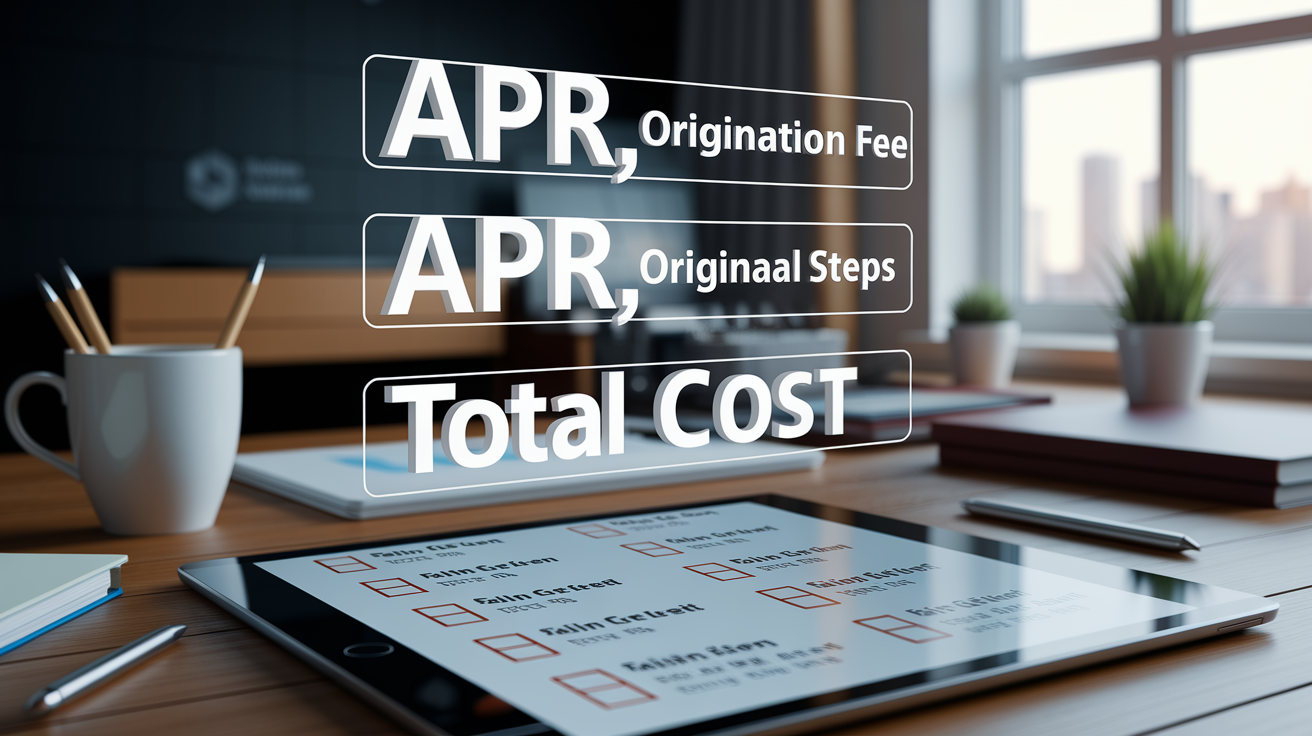
Start with three numbers: the APR, the origination fee, and the total you’ll pay over the loan’s life. Those determine real cost. Not the marketing pitch.
APRs for thin-file borrowers usually fall between 6.25% and 35.99%, with terms from 12 to 120 months and amounts from $1,000 to $250,000. If you’re only looking at monthly payment, you’re missing expensive fees and long repayment stretches that multiply what you owe.
Before you accept anything, do this: prequalify with at least three lenders so you can see rate estimates without a hard pull. Request written breakdowns of fees and payment schedules. Confirm the lender reports to all three bureaus (Experian, Equifax, TransUnion). If they won’t give you details upfront or rush you to sign, leave.
Thin-file borrowers get targeted with hidden fees and murky terms because lenders assume you don’t have options.
Two quick questions tell you whether an offer works: Can I afford this payment if my income drops 10% for a month or two? Will this loan build my credit or just drain my bank account? If either answer is no, keep shopping or wait until you’ve improved your file.
Practical steps for choosing a loan:
- Gather income proof (recent pay stubs, bank statements covering three to six months of deposits) before you shop.
- Use prequalification to compare APRs and terms without hurting your credit.
- Compare APR and total cost, not monthly payment. Add up every fee and interest charge.
- Check that the lender reports to all three bureaus so your on-time payments actually build your file.
- Decide whether you need a secured loan (backed by deposit or collateral) or can find a cosigner to lower your rate and improve approval odds.
Understanding What a Thin Credit File Means for Loan Choices

A thin file usually means fewer than five accounts on your report, or less than six to 12 months of recorded payment activity. Lenders use your report to predict how reliably you’ll repay. When there’s not enough data, they can’t calculate a traditional score.
That absence doesn’t mean you’re risky. It means you’re invisible to the automated systems most lenders use.
Lenders typically treat thin files like poor credit. They assume higher risk and either deny you or charge higher rates and fees. Some will look beyond your report and consider other proof of responsibility, like steady income or on-time rent payments. But you need to find those lenders and provide the right documentation.
Common reasons borrowers have thin files:
- Young adults or new users who haven’t opened cards or loans in their own name.
- Recent immigrants with credit history in another country but nothing reported to U.S. bureaus.
- People who’ve used cash or debit for most purchases and never applied for credit.
- Borrowers whose old accounts closed or got removed, leaving too few active tradelines to generate a score.
Loan Options Suitable for Borrowers With Limited Credit History
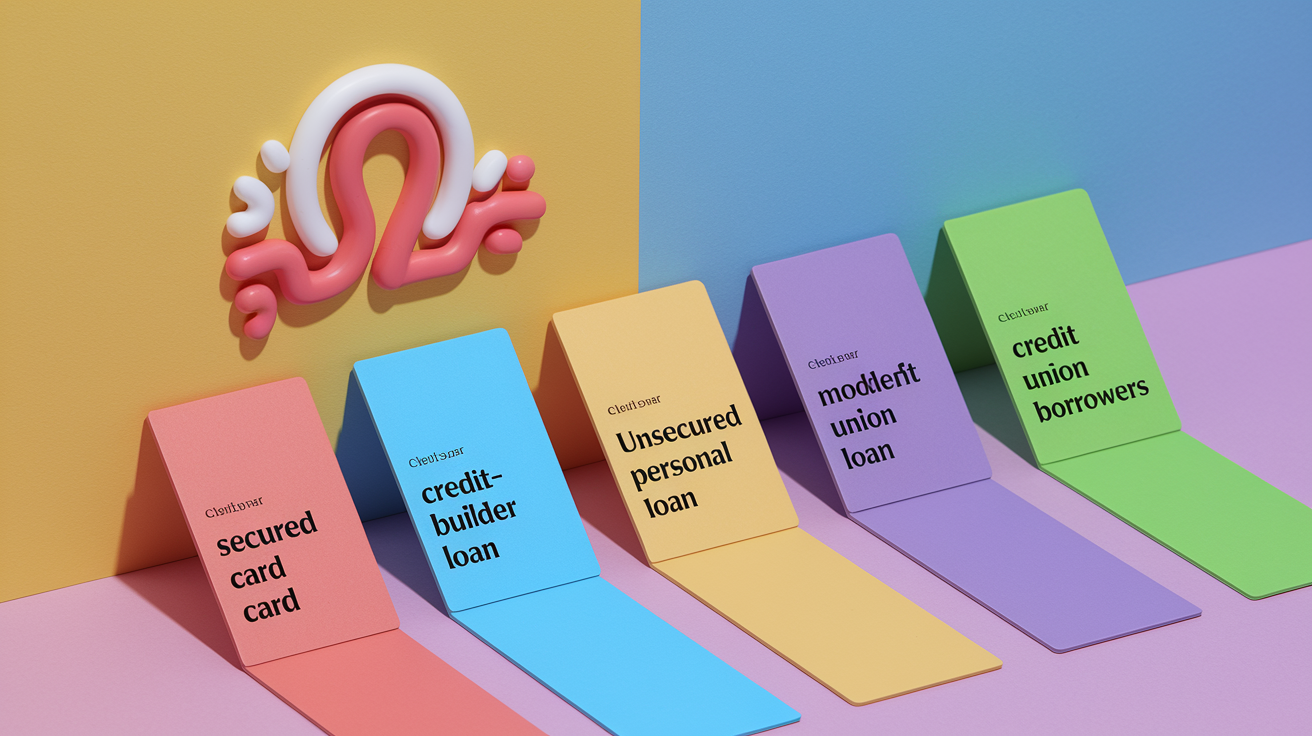
Thin-file borrowers can access several types, but costs and risks swing widely. Secured loans require you to put up a deposit or collateral (savings account, vehicle), which lowers the lender’s risk and often drops your APR. Credit-builder loans work differently. The lender holds the loan amount in an account while you make payments, then releases funds when you’ve paid it off. This builds history without giving you cash upfront.
Unsecured personal loans from online lenders or peer-to-peer platforms may approve thin files if you have steady income and low debt, though APRs land on the higher end.
Credit unions and community banks bend more for thin files than large national banks because they use manual underwriting and consider your relationship with the institution, not just your score. Nonprofit lending circles pool small amounts from members, rotate access to interest-free loans, and report payments to bureaus. Timing depends on your position in the circle, but there’s no credit requirement and no interest.
Avoid payday loans and auto title loans unless you’re in a genuine emergency. These charge extremely high fees, offer short windows, and can trap you in cycles of re-borrowing.
High-rate installment lenders market heavily to thin-file and bad-credit borrowers. They approve more applications, but APRs can hit 35.99% or higher, with origination fees between 1% and 8%. Buy Now, Pay Later services let you split purchases into installments, often interest-free for short terms, but they’re designed for spending, not building a general file. Experian: Where to Get a Loan With a Thin Credit File
| Loan Type | Typical APR Range | Key Risks/Benefits |
|---|---|---|
| Secured credit card | 15%–30% | Requires deposit; builds credit if reported to bureaus; low risk of debt spiral. |
| Credit-builder loan | 6%–25% | Builds credit while you save; no upfront cash; must confirm reporting to all three bureaus. |
| Credit union personal loan | 8%–18% | Lower rates for members; requires membership/local ties; manual underwriting. |
| Alternative-data online lender | 10%–36%+ | Approves with limited credit; may accept bank/income data; higher APRs for thin files. |
| Payday loan | Effective 300%–400%+ APR | No credit check; very short terms; extremely high fees; last resort only. |
| Auto title loan | Effective 100%–300% APR | Uses vehicle as collateral; high fees; risk of losing vehicle; avoid if possible. |
How Lenders Evaluate Thin Credit Files Beyond Your Score
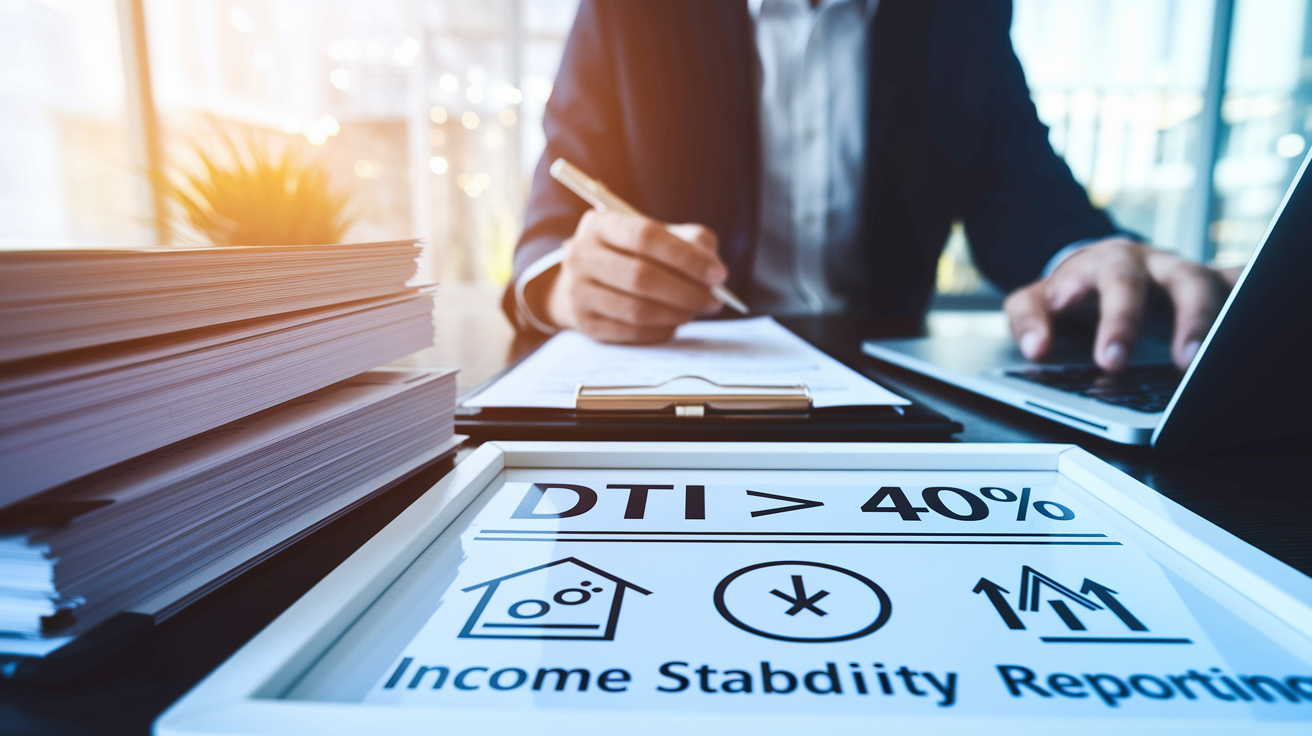
When lenders can’t generate a score from your report, many manually review other financial indicators. Income stability is first. Most want three to 12 months of consistent earnings documented with pay stubs, W-2s, or tax returns. They’ll also calculate debt-to-income ratio (DTI): if total monthly debt payments divided by gross monthly income land below 40%, you’re more likely to get approved. Above 50%, you face denials or much higher rates.
Employment history matters. Lenders prefer applicants who’ve been with the same employer or in the same field for at least three to six months because frequent job changes signal instability. If you’re self-employed or work gig jobs, you’ll need bank statements showing regular deposits over several months.
Some lenders review your bank account transaction history for patterns: consistent positive balances, direct deposits, low overdraft fees, and evidence of regular bill payments can improve your odds.
Alternative-data lenders go further by analyzing cash flow and spending patterns from linked accounts. They check whether utility, phone, and streaming bills are paid on time. Some let you add rent payment history. This approach lets them approve borrowers who have thin reports but solid habits.
If you have six to 12 months of on-time rent and utility payments, gathering documentation or using a rent-reporting service before you apply can improve your approval chances.
Alternative proof lenders may accept:
- Bank statements showing three to 12 months of positive balances and direct deposits.
- Rent receipts or landlord verification letters documenting on-time monthly payments.
- Utility and phone bills paid on time for six months or more (some lenders accept third-party reporting services).
- Employer verification or offer letters confirming steady income and job tenure.
Comparing Loan Terms to Make the Best Choice With a Thin Credit Profile
Comparison starts with APR because it includes both interest rate and most mandatory fees, giving you the all-in annual cost. A loan advertising 10% interest but charging a 6% origination fee may cost more than a 12% APR loan with no origination fee.
In the marketplace for borrowers with limited credit, APRs commonly range from 6.25% to 35.99%. The lower end goes to applicants with some credit, strong income, and low DTI. If you’re seeing offers above 25%, compare carefully. You may pay an extra $500 to $1,500 in interest and fees on a $5,000 loan.
Repayment terms change your total cost and monthly payment. Loans for thin-file borrowers typically offer 12 to 120 months. Longer terms lower monthly payment but increase total interest over the life of the loan. Shorter terms raise monthly payment but reduce total cost.
Borrowing $5,000 at 20% APR for 24 months costs roughly $1,100 in interest and creates a monthly payment around $255. Stretching to 60 months cuts payment to about $132 but raises total interest to nearly $2,900.
Check whether the loan includes prepayment penalties. Some lenders charge fees if you pay off early, which locks you into long-term cost even if your finances improve.
| Term Factor | What It Means | Typical Range | What Thin-File Borrowers Should Watch For |
|---|---|---|---|
| APR | Annual cost of loan including interest and fees | 6.25%–35.99% | Offers above 25% are expensive; compare total interest paid, not just monthly payment. |
| Origination fee | Upfront charge to process the loan | 1%–8% of loan amount | Deducted from loan proceeds; raises effective cost; confirm whether it’s included in APR. |
| Repayment term | Number of months to repay | 12–120 months | Longer terms lower monthly payment but multiply total interest; shorter terms save money. |
| Prepayment penalty | Fee charged if you pay off loan early | Varies or none | Avoid if possible; locks you into long-term cost even if you refinance or pay early. |
Improving Your Approval Odds Before Applying for a Loan

You can boost approval chances within weeks by gathering the right documents and adding alternative payment history to your file. Start by collecting three to six months of pay stubs, bank statements showing consistent deposits, and any landlord or utility payment records you have. Lenders using manual underwriting will review these even if your report is thin. Having everything organized speeds up approval and reduces verification delays.
Secured credit cards are one of the fastest ways to start building a file. You’ll deposit between $200 and $2,500 into a savings account held by the card issuer. That deposit becomes your credit limit. Most secured cards report payment activity to all three bureaus, so on-time monthly payments will start thickening your file within three to six months. Just confirm before you apply that the issuer reports to Experian, Equifax, and TransUnion. Some prepaid or “credit-building” cards don’t report, which means they won’t help you.
Credit-builder loans work similarly but with different structure. You borrow a small amount (typically $300 to $5,000) and the lender holds the money in a savings or escrow account while you make monthly payments. Payments get reported to bureaus. Once the loan is paid off, you receive the full amount. APRs usually fall between 6% and 25%, and some charge small origination fees. The benefit is building credit and saving at the same time, with no upfront cash requirement.
Rent and utility reporting services let you convert months of past on-time payments into new tradelines on your report. Services like Experian Boost let you link bank accounts and utility bills to add six to 12 months of payment history instantly. This can push your file from “too thin to score” to scoreable. It costs nothing to try. Some landlords and property management companies also report rent payments directly, so ask if yours participates.
Six approval-boosting strategies:
- Gather three to six months of income documentation (pay stubs, bank statements, W-2s) before applying.
- Use prequalification tools to check rates without a hard inquiry. Apply only after comparing offers.
- Open a secured card or credit-builder loan and make at least three to six months of on-time payments before applying for larger loans.
- Add rent and utility payment history using reporting services to thicken your file quickly.
- Lower your DTI by paying down existing debts or increasing documented income. Aim for DTI below 40%.
- Ask to become an authorized user on a family member’s card with long positive history, but confirm the issuer reports authorized users to all three bureaus.
Short-Term (0–3 Month) Prep Steps
In the first three months, focus on documentation and adding alternative data. Set up online access to your bank accounts and download statements showing at least three months of activity with consistent deposits and minimal overdrafts. Contact your landlord or property manager and request written proof of on-time rent payments, including dates and amounts paid. Sign up for a rent-reporting service if your landlord doesn’t report directly. Link any utility or phone accounts that have been active and paid on time for at least six months.
Use this period to prequalify with multiple lenders: credit unions, online alternative-data lenders, and any fintech platforms advertising approval for limited credit. Prequalification uses a soft check, so it won’t hurt your score. It shows you which lenders are willing to work with your profile and what rates they’ll offer. Don’t apply for actual loans yet. Just gather prequalification offers so you can compare terms side by side before committing to a hard inquiry.
When to Use a Cosigner, Collateral, or Joint Application

A cosigner can dramatically improve approval odds and lower your APR because the lender evaluates both your income and the cosigner’s full profile. If your cosigner has good credit and stable income, some lenders will reduce your rate by several percentage points, saving you hundreds or thousands over the loan’s life.
The tradeoff is that the cosigner is fully liable. If you miss a payment or default, it damages their credit and they’re legally responsible for the entire debt. Only ask someone to cosign if you’re confident you can make every payment on time. Put a written agreement in place about what happens if your financial situation changes.
Collateral works differently. When you pledge an asset (car, savings account, certificate of deposit) as security, the lender can seize it if you don’t repay. This reduces lender risk, which often results in lower APRs and higher approval rates for thin-file borrowers. Secured loans and secured cards both use this model.
The danger is obvious: if you fall behind, you lose the asset. For auto title loans, that can mean losing your only transportation.
Four options and their differences:
- Cosigner: Another person with good credit signs the loan and is fully liable; improves approval odds and lowers APR; damages both parties’ credit if payments are missed.
- Guarantor: Similar to cosigner but only becomes liable if you default; less common in consumer loans; doesn’t always lower APR as much.
- Collateral: You pledge an asset (vehicle, savings, property) to secure the loan; lender can seize asset on default; usually lowers APR significantly.
- Joint loan application: Both applicants are co-borrowers with equal responsibility and ownership; both incomes and credit profiles are considered; useful when both parties need loan proceeds.
Red Flags and High-Risk Loan Types Thin-File Borrowers Should Avoid

Payday loans and auto title loans charge extremely high fees for very short windows, often two weeks to one month. Payday lenders may advertise “no credit check” and “guaranteed approval,” but effective APR can reach 300% to 400% or higher. If you borrow $500, you might owe $575 or $600 in two weeks. If you can’t pay that in full, you’ll be pressured to roll the loan over and pay another fee, trapping you in a cycle that costs hundreds or thousands in fees alone.
Auto title loans are similarly risky. You hand over your vehicle title to the lender, who holds it as collateral while you repay a short-term loan at effective APRs often between 100% and 300%. Miss a payment or two, and the lender can repossess your car, leaving you without transportation to get to work.
High-rate installment lenders are a step less dangerous but still expensive. APRs above 25% mean you’re paying a lot for access to cash. Some of these lenders don’t report positive payment history to bureaus, so you won’t even build credit while you pay.
Five common red flags:
- Lender refuses to provide a written loan estimate or itemized fee breakdown before you sign.
- “Guaranteed approval” or “no credit check” claims paired with very short repayment terms and high fees.
- Pressure to sign immediately without time to review terms or compare other offers.
- Lender doesn’t report payments to all three bureaus. Your on-time payments won’t help build your file.
- Hidden or vague fees in the contract; origination fees above 8%, monthly service fees, or prepayment penalties not disclosed upfront.
Smart Borrowing Habits After You Get Approved

Once your loan is approved and funded, your priority is making every payment on time. This is what builds positive history. Most lenders report payment activity to bureaus within 30 days of each due date, so on-time payments will start appearing on your report within three to six months. Missed or late payments also get reported and can damage your thin file significantly. Set up automatic payments or calendar reminders to avoid forgetting a due date.
Keep your loan balance and any new credit accounts well below their limits. For revolving credit like cards, aim to use less than 10% to 30% of available credit each month. This is credit utilization, and it’s one of the factors that determines your score once your file thickens.
If your loan has no prepayment penalty and you receive extra income (tax refund, bonus, side job earnings), consider making extra payments to reduce your balance faster and save on interest.
Four repayment habits that build credit:
- Make every monthly payment on time, even if it’s just the minimum. Payment history is the most important factor once your file generates a score.
- Set up automatic payments or reminders to avoid accidental late payments. Even one missed payment can stay on your report for seven years.
- Pay more than the minimum when possible to reduce total interest and shorten the loan term.
- Monitor your credit report every few months to confirm payments are being reported correctly and to catch any errors or fraud early.
Final Words
In the action, this guide gave a step-by-step roadmap: clarify APR, fees, and total cost; prequalify and gather proof of income; compare terms and check who reports to the credit bureaus. It also covered loan types, how lenders look beyond scores, and ways to boost approval odds quickly.
If you’re still wondering how to choose a loan when you have a thin credit history, focus on total cost, safety, and building history with on-time payments.
Small steps now make better offers possible soon.
FAQ
Q: How to get a loan with minimal credit history?
A: To get a loan with minimal credit history, prequalify, show steady income and bank statements, choose secured or credit‑builder loans, use a cosigner or credit union, or try alternative‑data lenders.
Q: What is the biggest killer of credit scores?
A: The biggest killer of credit scores is missed or late payments. Payment history matters most. Late payments or collections lower scores quickly, so pay on time or arrange payment plans.
Q: What is considered thin credit history?
A: A thin credit history means fewer than five reported accounts or less than six to 12 months of credit activity. Lenders often can’t create a reliable score from it.
Q: How much would a $10,000 loan cost per month over 5 years?
A: A $10,000 loan over 5 years would cost about $194 per month at 6.25% APR and about $361 per month at 35.99% APR, total paid roughly $11,640–$21,660.