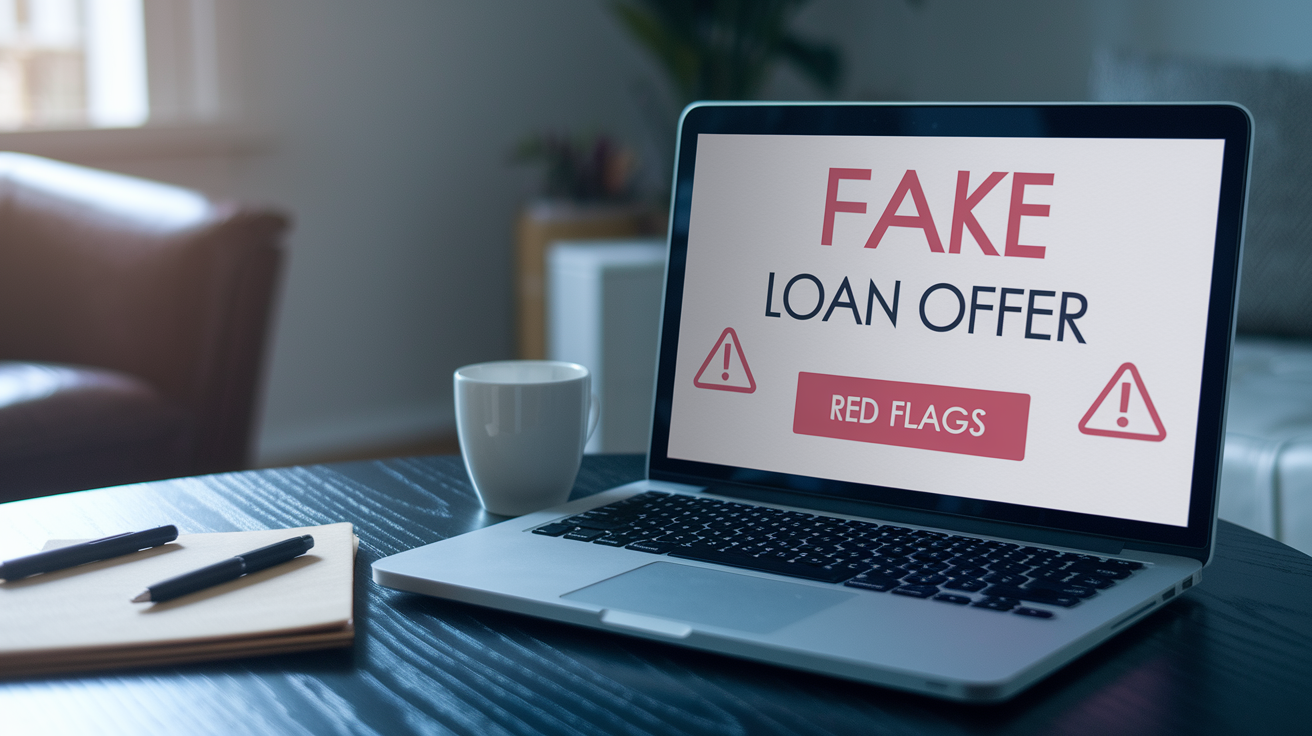

Is that ‘guaranteed’ loan a lifeline or a trap?
Scammers build slick sites that promise fast approvals and demand payment up front.
People lost $1.9 billion to fraud in 2019, and loan scams take a big slice of that.
This post lays out the key red flags, like no credit check, upfront fees, fake addresses, and urgent pressure, so you can spot fake offers fast.
Read on to learn what to check before you give out your Social Security number or bank details.
Key Warning Signs to Identify a Fake Loan Offer Online
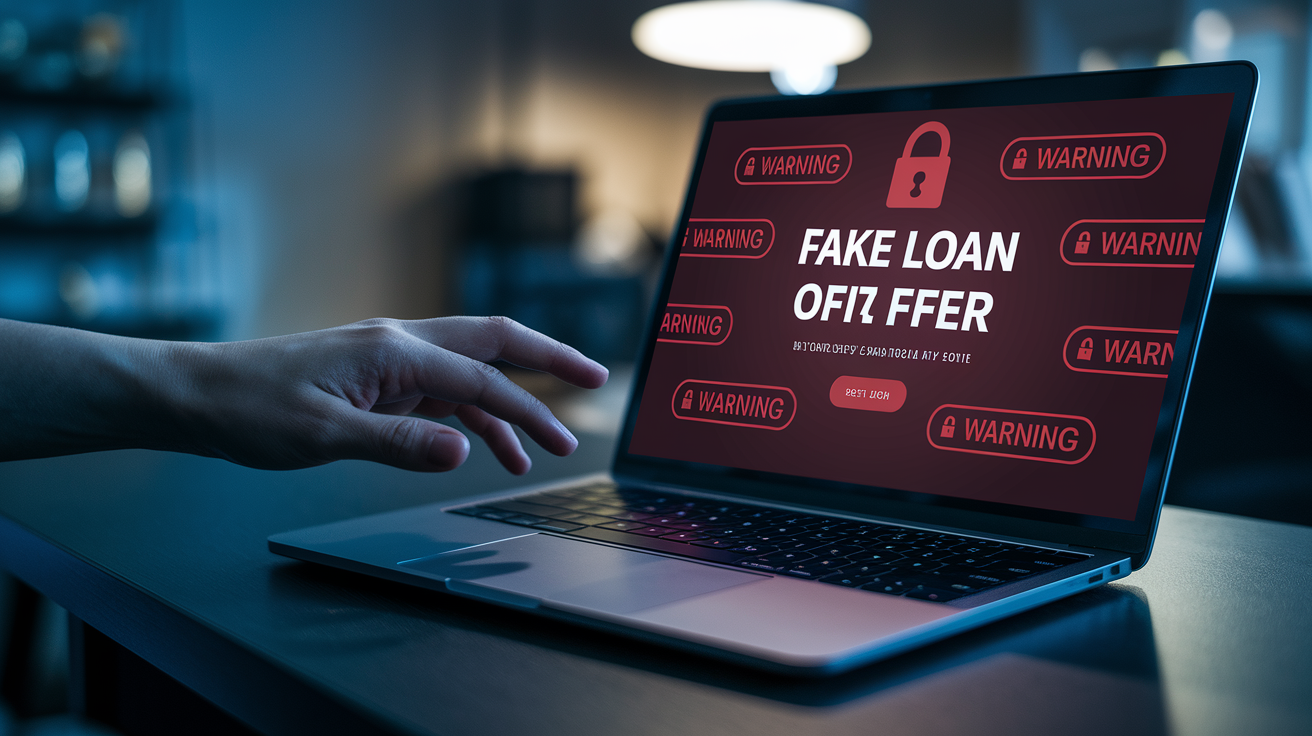
Scammers show up when you’re low on cash. You’ve been turned down by a bank, maybe two. You need money this week, not next month. They know that. They’ve built sites that look professional, sent you messages that feel urgent, and they’re promising approvals nobody else will give you. The FTC says people lost $1.9 billion to fraud in 2019. A huge part of that? Loan scams targeting borrowers who ran out of options.
These scams work because they skip everything a real lender does to protect you and themselves. A real lender pulls your credit. They check your income, ask about your job, want to see pay stubs. A scammer doesn’t care if you’ve ever paid a bill on time. They don’t want to lend you anything. They want your upfront fee or your identity.
When you’re looking at offers, you need to spot the patterns that separate actual loan companies from thieves. Here are the nine biggest red flags that keep showing up:
-
No credit check – If they promise approval without pulling from Equifax, TransUnion, or Experian, something’s off. The only exception is payday loans, which are short term, sky-high interest, and risky in their own way.
-
Upfront fees – Any payment before you get your loan is a scam. That includes prepaid debit cards, gift cards, wire transfers, or crypto labeled “collateral,” “processing,” or “insurance.”
-
No state registration – The FTC makes lenders and brokers register in every state they operate. If the site doesn’t list states or you can’t confirm registration with your Attorney General or Department of Banking, don’t go further.
-
Unsecured website – Pages collecting personal info need “https” in the URL and a padlock in your browser. If you only see “http,” your data isn’t encrypted. Scammers can grab everything you type.
-
No verifiable physical address – A P.O. box or an address that goes to an empty lot means there’s no real office. Actual companies give you a street address you can check on Google Maps.
-
High pressure urgency – Stuff like “act now,” “offer expires today,” or “limited spots available” is designed to stop you from checking anything. Real lenders give you weeks to decide, not hours.
-
Guaranteed approval claims – No legitimate lender promises approval before reviewing your credit, income, job, and debt. “100% guaranteed” or “bad credit? no problem, approved!” is always fake.
-
Hidden or surprise fees – Real lenders show you application fees, credit report costs, and origination charges upfront. Usually they deduct those from your loan. If new fees pop up after you’re “approved,” especially ones called “processing” or “paperwork,” it’s a scam.
-
Unsolicited contact – Phone calls, texts, emails, or someone at your door offering a loan you didn’t apply for is illegal if they want payment before giving you money. The FTC bans companies from requesting payment over the phone before delivering a loan.
Verifying Lender Legitimacy When Checking for Fake Loan Offers

Before you type your Social Security number or bank details anywhere, take ten minutes to confirm the lender is real. Scammers build professional sites in hours, but they can’t fake the paper trail legitimate companies leave with regulators, review sites, and government databases. Start simple. Does the site use HTTPS? Does it list a real address and phone number? Can you find the company registered with your state’s Attorney General or Department of Banking? If any of those fail, stop there.
Next, dig into reviews and third-party records. Search the lender’s name on Google, the Better Business Bureau, and Yelp. Look for patterns in complaints. If multiple people mention upfront fees, refused refunds, or identity theft, you’ve got your answer. Use a WHOIS lookup tool to check domain age. Scam sites often get registered days or weeks before they start advertising. A domain that’s two months old claiming “20 years of trusted service” is lying. Legitimate lenders have years of history, real customer feedback, and regulatory oversight you can confirm in minutes.
| Verification Step | What to Look For | Why It Matters |
|---|---|---|
| State license check | Confirm registration with your state Attorney General or Department of Financial Regulation | Unlicensed lenders can’t legally operate in your state and have no oversight to stop fraud |
| SSL/HTTPS check | Look for a padlock icon and “https” at the start of the URL on pages that collect personal data | Without encryption, your Social Security number and bank login can be intercepted |
| WHOIS domain lookup | Search the domain on a WHOIS tool to see registration date and owner info | New domains or hidden owner details often mean a scam site created to disappear quickly |
| Physical address validation | Enter the listed address into Google Maps and check street view for a real office | P.O. boxes and vacant lots signal the lender has no physical presence or accountability |
| Independent review research | Read complaints on BBB, Google reviews, and state regulator complaint databases | Patterns of upfront fee demands, identity theft, or refused refunds reveal known scams |
Understanding Common Scam Tactics Behind Fake Loan Offers

Scammers recycle the same scripts because they work. You get emails with subject lines like “You’ve been pre-approved for $10,000!” or “Final notice: Claim your guaranteed loan before midnight.” The links go to sites that look almost identical to well-known banks. Same logo, similar colors, close enough domain name. The difference? One letter or a hyphen. The page looks real until you spot the URL saying “we11sfargo.com” instead of “wellsfargo.com.” That tiny change steals thousands of credentials every day.
Fake testimonials are everywhere. Stock photos labeled “Jennifer from Ohio” or “Mike in Texas” sit next to five-star reviews that were never written by real people. Scammers claim accreditation from organizations that don’t exist or copy real logos from the Better Business Bureau without permission. Click the badge and it goes nowhere, or it links to a fake page they control. Poor grammar used to be a giveaway, but plenty of scams use clean copy now. Don’t assume good writing means the offer is safe.
Phishing attachments in loan emails are another common move. The message says “Your loan documents are ready” and includes a PDF or Word file. You open it and malware installs, or it sends you to a login page designed to capture your username and password. Legitimate lenders send documents through secure portals on their own sites, not as surprise email attachments. If you didn’t apply for a loan and someone sends you a file, delete it.
Comparing Legitimate vs Fake Loan Offers Online

Real lenders want to know if you can pay them back, so they check your credit, verify your income, and review your employment. They disclose the APR, the total amount you’ll repay, the monthly payment, and the loan term. Usually 12 to 60 months for personal loans. All of that shows up in writing before you sign anything. If fees exist, they’re listed clearly and often deducted from the loan amount instead of charged separately. You’ll see line items for application fees, credit report pulls, or origination charges. You know the cost before you agree.
Fake offers dodge those details. They promise approval without reviewing anything, avoid mentioning the APR, or give a range so wide it’s meaningless. They ask for upfront payment via gift card, prepaid debit card, or wire transfer and label it “processing,” “insurance,” or “guarantee.” They pressure you to act immediately and refuse to provide a written contract or itemized disclosure. Ask questions and they get vague or stop responding. A legitimate lender gives you time, answers questions in writing, and never demands payment before delivering your funds.
| Legitimate Offer | Fake Offer Traits |
|---|---|
| Requests credit report from Equifax, TransUnion, or Experian | Promises approval with no credit check or income verification |
| Discloses APR, total finance charge, and repayment schedule in writing | Avoids APR or gives vague terms like “low rates available” |
| Charges fees (if any) clearly listed and often deducted from loan proceeds | Demands upfront payment via gift card, prepaid card, wire, or crypto |
| Provides written contract with all terms before you sign | No contract, or contract appears only after you pay the “processing fee” |
| Shows verifiable phone number, physical address, and state license | Uses only VoIP number, P.O. box, or address that doesn’t map to a real office |
| Uses secure HTTPS website with visible padlock on data collection pages | Site shows “http” only, or padlock missing on pages asking for SSN and bank info |
| Gives you weeks to review the offer and decide | Pressures you to “act now” or claims the offer expires in 24 hours |
| Disbursement via ACH to your bank account or bank issued check | Asks you to send payment first, then promises funds “within hours” |
Protecting Personal Information From Fake Online Loan Offers

Scammers use your data in two ways. They steal your identity to open accounts in your name, or they drain your bank account directly if you give them login credentials. Either way, the damage starts the moment you hand over your Social Security number, bank username, or copies of your driver’s license to someone who hasn’t proven they’re legitimate. A real lender asks for that information eventually, but only after you’ve confirmed their license, checked their reviews, and decided to apply. They’ll collect it through a secure portal, not over email or text.
Treat your sensitive information like cash. Don’t share it until you’ve verified the lender, confirmed HTTPS on the application page, and read the privacy policy. If a site asks for your bank login “to verify your account,” that’s a scam. Legitimate lenders don’t need your online banking password. If they want to confirm your balance or income, they’ll ask for bank statements or use a third-party verification service that doesn’t require your login. Same goes for prepaid card numbers, cryptocurrency wallet addresses, or wire transfer details. No real lender asks for those as part of an application.
Here’s what you can’t provide before full verification:
- Your Social Security number or Tax ID
- Online banking username and password
- Prepaid debit card numbers or gift card codes
- Wire transfer or cryptocurrency payment to “secure” the loan
- Copies of your driver’s license or passport sent via unsecured email
- Debit card PIN or credit card security code
How to Report a Fake Loan Offer and What Evidence to Collect
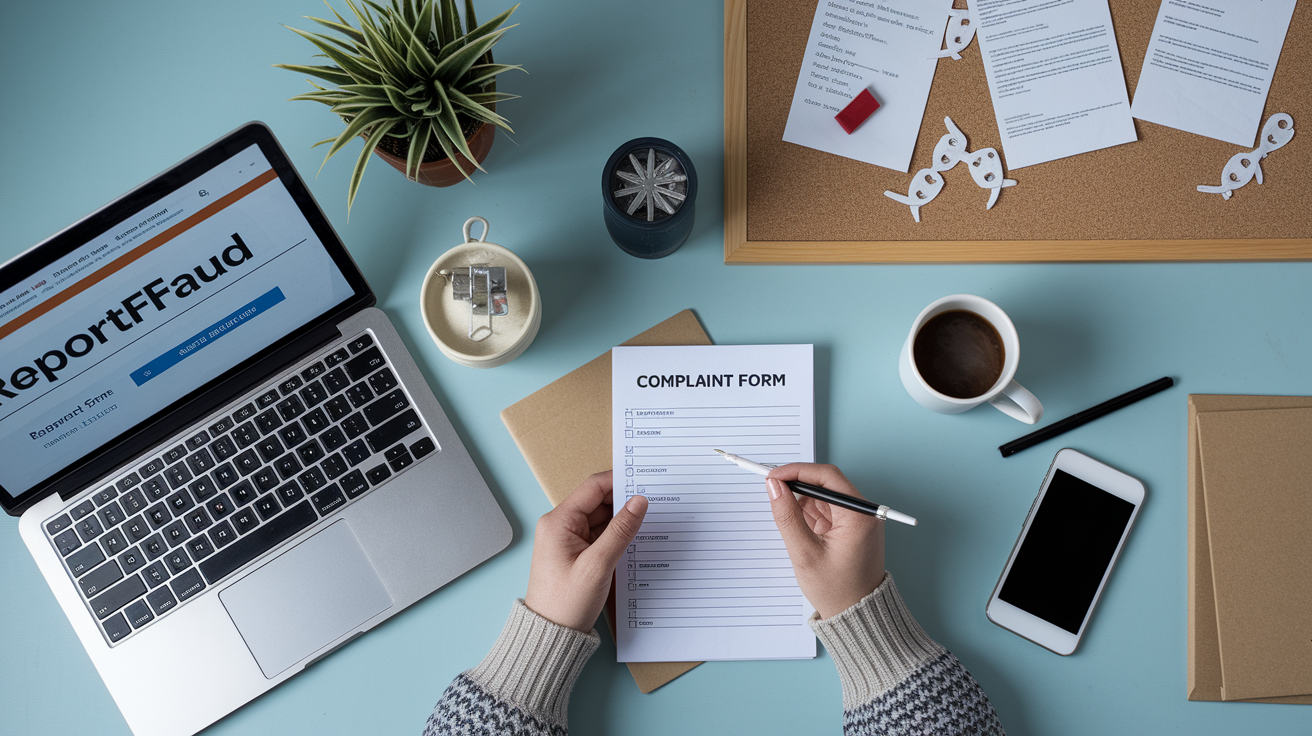
If you’ve been contacted by a scam lender or already sent money, act fast. Cut off all communication with the scammer. No more emails, calls, or texts. Then start gathering evidence. Take screenshots of the website, save every email and text message, write down phone numbers, names, and dates. If you made a payment, save the transaction receipt, bank statement entry, and any confirmation number they gave you. This documentation becomes your case file when you report the fraud.
Contact your bank right away if you shared account information or sent money. They may be able to freeze a pending wire transfer or issue a fraud alert, but you usually have only 24 to 48 hours before funds become unrecoverable. Change your passwords for online banking and any other accounts where you used the same login. If you gave out your Social Security number, consider placing a fraud alert or credit freeze with the three major credit bureaus.
Next, file official reports with the agencies that track and investigate loan scams. Reporting won’t always get your money back, especially if you paid by gift card or cryptocurrency, but it helps authorities spot patterns, shut down scam operations, and warn other consumers. The more detailed your complaint, the better.
Follow these steps to report the scam and create an official record:
-
File a complaint with the Federal Trade Commission (FTC) at ReportFraud.ftc.gov. Include the lender’s name, website, phone numbers, and a summary of what happened.
-
Report to your state Attorney General’s office and your state Department of Banking or Financial Regulation. Many states maintain complaint databases and can investigate unlicensed lenders.
-
Submit a tip to the FBI’s Internet Crime Complaint Center (IC3) at ic3.gov if the scam involved wire fraud, identity theft, or large sums of money.
-
File a report with your local police department to create an official record, especially if you’re a victim of identity theft or the scammer has your SSN.
-
Warn others by posting a review on the Better Business Bureau and reporting the scam phone number or website to Google Safe Browsing so it can be flagged.
Safe Alternatives to Avoid Falling for Fake Loan Offers Online

When you need money and your credit isn’t perfect, it’s tempting to jump at the first approval you see. Instead, start with lenders you can verify. Banks, credit unions, and regulated online lenders with clear histories and transparent terms. Credit unions often offer small personal loans with lower rates than payday lenders and will work with members who have imperfect credit. Many have physical branches you can visit, and they’re insured and regulated just like banks.
If you’re comparing online lenders, use marketplace platforms that vet their partners and publish privacy policies, like LendingClub or Upstart. Read the terms carefully, confirm the lender is licensed in your state, and check independent reviews before you apply. Avoid payday loans when you can. They’re legal but expensive, with APRs that can exceed 300 percent and repayment terms as short as two weeks. If you’re in an emergency, look for local nonprofits or community assistance programs that offer small emergency loans or grants instead.
Here are safer borrowing options to consider before risking a scam:
- Credit unions – member owned, lower rates, and willing to work with less than perfect credit.
- Established online lenders – verify state license, HTTPS, and NMLS ID. Compare APR and total cost across multiple offers.
- Bank personal loans – traditional banks may have stricter requirements but provide clear terms and full regulatory protection.
- Nonprofit lending programs – some community organizations and CDFIs (Community Development Financial Institutions) offer affordable small loans and financial counseling.
Final Words
In the action, we ran through the clearest red flags, step-by-step checks to verify a lender, common scam scripts, side-by-side differences between real and fake offers, how to protect your personal info, and where to report fraud.
Next, keep a short checklist: no upfront fees, check HTTPS and state registration, look up domain age, and never share bank logins.
Keep these checks handy and you’ll know how to spot a fake loan offer online and still find trustworthy options with confidence.
FAQ
Q: How to tell if a loan offer is legit? How can I verify a loan offer?
A: To tell if a loan offer is legit and verify it, check for HTTPS, clear APR and fees, state licensing, a verifiable address and phone, domain age via WHOIS, a written estimate, and a credit check.
Q: How do I know if a loan company is scamming me online? What are red flags in a loan offer?
A: You can tell a loan company might be scamming you if it promises guaranteed approval, asks upfront or gift card fees, skips credit checks, pressures you, uses unsecured sites, fake addresses, sloppy grammar, or hides terms.