


Think dealers are giving you their best rate? Think again.
You can often shave percentage points off your APR (the all-in yearly cost) and save thousands by knowing a few simple moves before you sit in the finance office.
This post shows the exact steps to use: get pre-approvals from at least two lenders, compare APRs not just interest rates, separate the vehicle price from financing, and make the dealer put every fee in writing.
Follow these steps and you’ll leave with a better deal or the confidence to walk away.
Actionable Steps to Negotiate a Lower Auto Loan Rate Immediately

The fastest way to get a better rate? Start before you ever step into a dealership. Get pre-approved from at least two places. Banks, credit unions, online lenders. Bring printed copies of those offers with you. Let the dealer go first on financing, then pull out your outside APR. “I’ve got an approval at 6.2% from my credit union. Can you beat that?” Simple. The dealer either matches it, goes lower to keep your business, or shows you exactly where they stand. This one move kills the markup game before it starts.
Always ask for the total loan cost, the full APR (not just the interest rate), and every single fee broken out. Dealers love quoting monthly payments because it hides the APR and the junk they’ve buried in there. Instead, ask “What’s the out-the-door price, the total amount financed, the APR, the term, and the total interest I’ll pay?” Write it down. Multiply the monthly payment by the number of months, subtract what you’re financing. That’s your interest plus fees. If the dealer’s offer doesn’t beat your pre-approval, use your own loan.
Here’s what to say: “I’m ready to buy today if the numbers work. I’ve got financing at [your pre-approved APR]. Beat that by at least half a percent and keep the fees reasonable, I’ll finance through you. If not, I’ll use my outside loan and we’ll just settle on the vehicle price.” You’re a serious buyer, but you’re holding all the cards.
Six things to do at the dealership or lender’s office:
- Negotiate the vehicle price first. Completely separate from financing or trade-in. Lower price equals smaller loan, less interest.
- Bring printed pre-approval letters showing APR, term, and lender name. That’s your walk-away number.
- Demand a written breakdown. Vehicle price, dealer fees, taxes, registration, loan interest, add-ons. Everything itemized before you agree.
- Use any defects or missing features you find during the test drive to push the price down or get repairs.
- Never tell them your max monthly budget. Let them compete against themselves.
- Make sure every verbal promise shows up in the written contract before you sign.
Understanding Auto Loan Rates: APR, Interest, and Dealership Markups

Interest rate and APR aren’t the same thing, even though dealers and lenders toss them around like they are. The interest rate is what you pay on the loan balance. APR is the interest rate plus all the mandatory fees. Origination charges, processing fees, documentation costs. APR is the real yearly cost. When you compare offers, compare APRs. A 5% interest rate with high fees can cost more than a 5.5% rate with no fees. Ask every lender “What’s the APR, and does it include all fees?” so nothing sneaks past you.
Dealers can legally mark up the lender’s rate. The lender gives the dealer a wholesale rate, called the buy rate. The dealer quotes you a higher number, the sell rate. If the lender approves you at 5.5%, the dealer might quote 6.5% and pocket the difference. That markup is called dealer reserve. You’ll never see the buy rate unless you ask or bring competing offers that force them to drop the sell rate. Show a pre-approval at 5.8% and suddenly the dealer “finds” a 5.6% rate? You just watched the markup shrink.
| Rate Type | What It Includes | Risk | How to Negotiate |
|---|---|---|---|
| Interest Rate | Percentage charged on the loan balance only | Hides fees and true cost of borrowing | Ignore this number. Always ask for APR instead |
| APR (Annual Percentage Rate) | Interest rate plus all mandatory loan fees | Some lenders exclude optional add-ons from APR | Compare APRs from multiple lenders, demand itemized fee list |
| Buy Rate | Wholesale rate lender offers to dealer | Dealer never discloses this number | Use pre-approvals to push dealer closer to buy rate |
| Sell Rate (Quoted Rate) | Buy rate plus dealer markup | Can be 1 to 3% higher than buy rate | Present competing offers and ask dealer to match or beat your best APR |
Credit Readiness Strategies That Lower Your Auto Loan Rate

Your credit score is the biggest thing lenders look at when they set your APR. Borrowers with scores above 780 get single-digit rates. Below 680? You’re looking at 10% or higher. Before you apply, check your credit report for errors. One wrong late payment or a collections account that isn’t yours can cost you thousands. Get your free report and dispute mistakes right away. Fixing errors before you apply can bump you into a better pricing tier.
Credit utilization matters. That’s the percentage of your available credit you’re using. Keep it below 30% on all revolving accounts. Lower is better. If you’ve got a credit card with a $5,000 limit, keep the balance under $1,500. Pay down balances before you apply for an auto loan. High utilization looks like financial stress to lenders, which pushes your rate up. If you can pay off a card or knock down balances, do it at least 30 days before you shop for a car. Give it time to show up on your report.
Pre-qualification and rate shopping tools often use soft credit pulls, which don’t hurt your score. When you formally apply, the lender runs a hard inquiry. That can drop your score a few points. Multiple hard inquiries for auto loans within a 14-day window usually count as one, so shop hard during that stretch. If you’re not ready to buy, skip full applications. Ask lenders for soft-pull pre-qualification to see estimated rates without the score hit.
Five things to do before you negotiate an auto loan:
- Pull your free credit report and dispute any errors, late payments, or accounts you don’t recognize. Corrections can take 30 days.
- Pay down revolving balances to below 30% utilization, ideally below 10%. Let the lower balance report for at least one billing cycle before applying.
- Don’t open new credit accounts or apply for other loans in the 60 days before your auto loan application. New inquiries drop your score temporarily.
- If you have collections or charge-offs, negotiate a pay-for-delete agreement in writing or settle the debt so it stops dragging your score down.
- Get pre-qualification offers using soft pulls from multiple lenders. See your estimated APR range without hurting your score.
Using Pre-Approvals and Multiple Offers to Maximize Negotiation Leverage
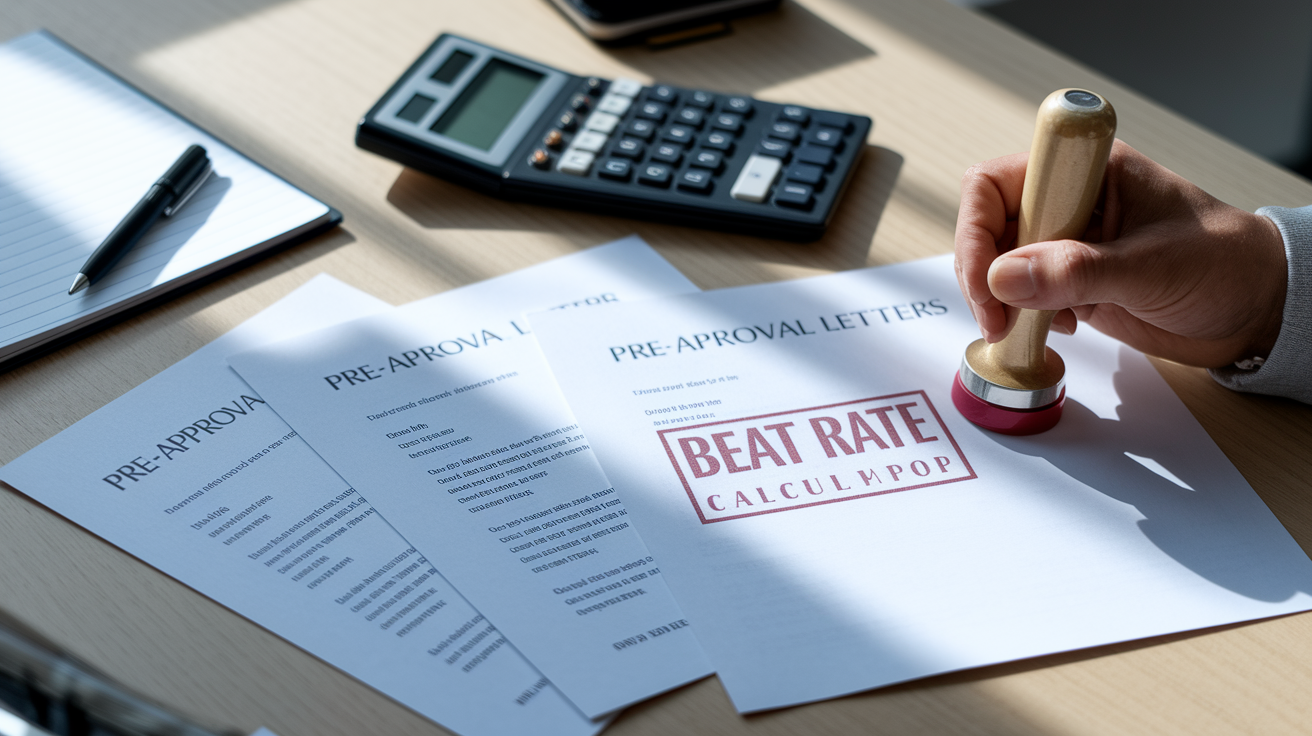
Pre-approval is your biggest weapon. It sets the floor for the dealer’s offer and proves you can walk. Apply with at least two sources before you visit any dealership. Your bank, a credit union, an online lender. Each one gives you a max loan amount, an APR, and a term. Print the approval letters. Bring them to the dealership. When the finance manager makes an offer, put your pre-approvals on the desk and say “Here’s what I already have. Can you do better?” Forces them to match your rate or explain why their financing is worth it.
Credit unions and online lenders often beat dealer financing because they don’t add markups. Credit unions are member-owned and return profits through lower rates. Online lenders have less overhead and pass savings to borrowers. Even if you don’t use the outside loan, having those offers creates leverage. Dealers know you can finance elsewhere, so they work harder to keep you. Some lenders will match or beat a competitor’s rate, especially if you’ve got other accounts with them.
Five things to gather before you compare offers:
- Loan approval letter showing APR, max loan amount, term, and any conditions like down payment or insurance minimums.
- Itemized list of all fees each lender charges. Origination fee, documentation fee, processing fee. So you can calculate the true APR.
- Payment schedule or amortization table showing monthly payment, how much goes to principal versus interest, and total interest over the term.
- Pre-approval expiration date and rate lock period. Some offers expire in 30 days. Knowing the deadline helps you move fast.
- Contact info for each lender’s loan officer or rep, so you can call during negotiations if the dealer claims they can’t verify your offer.
Negotiating Loan Terms: Down Payment, Loan Length, and Monthly Payment Tactics

A bigger down payment cuts the amount you finance, which lowers total interest and can get you a better APR. Lenders see a big down payment as lower risk, especially if it brings your loan-to-value ratio below 80%. Put down 20% or more and you’ll often unlock better pricing. Paying $5,000 down on a $25,000 car instead of $1,000 drops your loan from $24,000 to $20,000. Over 60 months at 6% APR, that $4,000 difference saves you roughly $650 in interest. More important, it gives you equity from day one, which protects you if the car depreciates fast.
Loan term is a tradeoff between monthly payment and total cost. A 72-month loan has a lower monthly payment than a 48-month loan, but you pay way more interest over six years. Dealers love long terms because they make payments look affordable. Quietly, they jack up the total you pay. If a dealer pushes you toward a longer term “to lower your payment,” ask for the total interest over the life of the loan. Use a calculator to check their math. Shorter terms almost always save money. Pick the shortest term you can afford without stretching your budget so tight that one surprise expense wrecks you.
Never negotiate on monthly payment alone. Dealers can manipulate payment by stretching the term or hiding fees. Focus on the final vehicle price, the total amount financed, the APR, and total interest paid. Ask “What’s the full purchase price before financing? What’s the APR? What’s the total interest I’ll pay?” Write it down. Verify with your own calculator. If the dealer won’t give you clear answers, walk.
| Term Length | Monthly Payment Effect | Total Interest Effect | Negotiation Advantage |
|---|---|---|---|
| 36 months (3 years) | Highest monthly payment | Lowest total interest paid | Lenders often offer lowest APR for short terms, builds equity fastest |
| 48 months (4 years) | Moderate monthly payment | Moderate total interest | Common term, easier to compare offers, balances affordability and cost |
| 60 months (5 years) | Lower monthly payment | Higher total interest | Most common term, dealers prefer this because it looks affordable, watch for rate increases on longer terms |
| 72 months (6 years) | Lowest monthly payment | Highest total interest, high risk of negative equity | Avoid unless absolutely necessary, you may owe more than the car’s worth for years, negotiate hard on APR to offset long-term cost |
Negotiating With Dealer Financing vs. Banks and Credit Unions

Dealer financing is convenient but often pricier. Dealers sit between you and the actual lender, which creates room for markups. The dealer submits your application to multiple lenders, gets approval offers, then adds a markup before showing you the rate. If the lender approves you at 5%, the dealer might quote 6.5% and keep the difference. This markup is legal and can add thousands to your loan. Best defense? Bring outside pre-approvals and make the dealer compete.
Credit unions and banks usually offer lower rates because they lend directly and don’t add dealer markups. Credit unions are especially good for borrowers with decent credit. If you’re a member, call ahead and get pre-approved before you visit the dealership. Even if the dealer’s rate looks good, check it against your credit union’s offer. Some dealers will match or beat outside financing to earn the origination fee, but only if you show them a real competing offer. Don’t assume dealer financing is terrible. Just verify it’s competitive.
Used car dealer financing can get tricky. Used car dealers often work with subprime lenders or buy-here-pay-here setups that charge much higher rates. If you’re buying used, outside financing from a bank or credit union is almost always cheaper. Certified pre-owned vehicles financed through the manufacturer’s captive lender (Toyota Financial, Ford Credit) sometimes come with promo rates that beat third-party loans. Ask about manufacturer incentives and compare those to your bank’s rate. Test drive carefully and note any issues. If the car has cosmetic damage, mechanical problems, or missing features, use those to negotiate a lower purchase price. A $1,000 cut in vehicle price lowers the loan amount and saves you interest over the term.
Avoiding Add-Ons, Hidden Fees, and Common Loan Traps

Dealers make serious profit from add-ons like paint protection, fabric treatment, wheel and tire warranties, VIN etching. These extras are almost always overpriced and unnecessary. Decline them unless you actually want the product and the price is fair. GAP insurance and extended warranties can be useful, but dealers mark them up hard. Ask your lender or insurance company for GAP coverage and extended warranty quotes. They’re often half the dealer’s price. If you want GAP or a warranty, negotiate the price or buy them separately and pay out of pocket so you don’t finance the markup.
Fees like documentation fees, delivery fees, and dealer prep fees should be itemized in writing. Some fees are unavoidable. Sales tax, registration, title transfer. But dealer-added fees are negotiable. If a dealer lists a $500 documentation fee and your state average is $150, challenge it. Ask “Why is this fee higher than other dealers around here?” or “Can you waive or cut this fee?” Many dealers will drop or lower fees if you push. Get every promise in writing. If the dealer verbally agrees to waive a fee, make sure it’s crossed out on the contract before you sign.
Five fees and add-ons to scrutinize and how to challenge them:
- Documentation fee (also called doc fee or processing fee): ask what the fee covers, compare it to the state average, request a reduction. Dealers can waive or lower this.
- Delivery or destination fee: verify whether this is charged by the manufacturer (non-negotiable) or added by the dealer (negotiable). Refuse to pay dealer-added delivery fees.
- Paint protection, fabric protection, or anti-theft etching: decline these unless you want them. If included, ask for the cost and negotiate it down or remove it.
- Extended warranty or service contract: get a quote from your lender or a third-party warranty provider and compare. Dealer markups can be 100% or more.
- GAP insurance: ask your auto insurance company or lender for GAP coverage and compare the price. Dealer GAP is often two to three times more expensive.
Scripts and Templates for Negotiating a Lower Auto Loan Rate

Dealers and lenders respond to calm, prepared buyers who bring evidence and alternatives. Use these scripts to start the conversation and keep control. Speak clearly, stay polite, be ready to walk if the numbers don’t work.
Script for Dealer Financing Negotiation
“I’m ready to buy this car today if we can agree on the price and the financing. I have pre-approval from [name of lender] at [APR]% for [term length] months. Can you match or beat that rate? I’d prefer to finance through you if the terms are better, but I need to see the full APR, all fees itemized, and the total cost of the loan before I decide. If your offer isn’t competitive, I’ll use my outside financing and we’ll just finalize the vehicle purchase.”
Email Template for Requesting a Lower Rate
Subject: Auto Loan Rate Matching Request – [Your Name]
Hi [Lender or Dealer Name],
I’m shopping for an auto loan to finance a [year, make, model] and I have a pre-approval offer at [APR]% APR for [term length] months from [competing lender name].
I’d like to work with you, but I need a competitive rate. Can you match or beat [APR]% and provide an itemized breakdown of all fees?
Please send the APR, term, monthly payment, and total interest cost so I can compare offers.
Thanks,
[Your Name]
[Your Phone Number]
Phone Script for Pre-Approval Rate Matching
“Hi, I got a pre-approval from you at [APR]%, but I just got an offer from [competing lender] at [lower APR]%. I’d prefer to finance with you because [I’m already a member / you’re local / I have other accounts with you], but I need you to match or beat their rate. Can you review my application and see if there’s a better rate available? I’m ready to finalize the loan today if we can agree on the APR.”
When to Walk Away and When to Refinance Your Auto Loan

Walking away is one of the best negotiation tactics you’ve got. If the dealer won’t meet your terms, leave. Dealers track walk-aways and often call back within 24 hours with a better offer. If they don’t, you’ve dodged a bad deal and you can shop another dealership for the same make and model. Don’t feel pressured to buy the first day. Take the offer sheet, go home, compare it to your pre-approvals, decide calmly. If the numbers don’t make sense, say “I need to think about it” and walk out.
Refinancing your auto loan makes sense when your credit’s improved, interest rates have dropped, or you realize you’re paying too much. Most lenders let you refinance after six months of on-time payments. If your credit score has jumped by 50 points or more since you bought the car, you’ll likely qualify for a lower rate. Refinancing replaces your current loan with a new one at better terms. Watch out for prepayment penalties on your existing loan. Some lenders charge a fee if you pay off the loan early, which can wipe out your refinancing savings. Ask your current lender “Is there a prepayment penalty?” before you refinance.
Three timing cues that say it’s time to refinance:
- Your credit score’s improved by 50+ points since you took out the original loan, and you’re now in a better pricing tier.
- Market interest rates have dropped by at least 1% compared to your current APR, making refinancing worth the effort and any fees.
- You’re struggling with high monthly payments and can refinance to a lower rate at the same term, cutting your payment without stretching the loan.
Final Words
In the action: you got fast, usable moves — secure preapproval, let the dealer make the first money offer, focus on APR and total cost, and bring competing quotes and KBB/NADA pricing for leverage.
You also saw how credit fixes, a bigger down payment, and loan length change what you pay, plus scripts and a six-item checklist to use at the dealership or bank.
Use these steps so you know how to negotiate a lower auto loan rate with your dealer or lender. Go in prepared and calm — you can get a better deal.
FAQ
Q: Can you haggle the interest rate with a dealer or negotiate a lower auto loan rate?
A: You can usually haggle the interest rate with a dealer or lender. Bring a pre-approval, let them make the first money offer, compare APRs, insist on itemized fees, and focus on total cost.
Q: What is the 20% rule when buying a car?
A: The 20% rule means putting about 20% down on the car to avoid being upside-down, lower monthly payments, cover taxes and fees, and often qualify for better rates.
Q: How much does a car salesman make off a $20,000 car?
A: A car salesperson typically earns a commission and bonuses, often about $100–$1,000 on a $20,000 sale, depending on dealer pay plan, gross profit, and finance or warranty add-ons.