


What if bankruptcy could be the fastest way to rebuild your credit?
It sounds wrong, but with the right steps you can see solid score gains in 6 to 12 months.
This guide shows the practical moves that work: pull and fix your credit reports, open a small secured card or credit-builder loan that reports to all three bureaus, keep balances under 30 percent (aim for 10 percent), automate payments, and build a $500–$1,000 starter savings.
Follow these steps and you’ll be rebuilding credit, not just waiting for time to pass.
Core Strategies to Rebuild Credit After Bankruptcy Quickly and Safely

Bankruptcy wipes out debt, but it tanks your credit score and sits on your report for years. Chapter 7 stays visible for up to 10 years, Chapter 13 for 7. That’s a long time. But you don’t have to wait a decade to see progress. With smart moves, you can get real score improvement in 6 to 12 months.
Your credit score runs on five main factors. Payment history is 35 percent, amounts owed is 30 percent, length of credit history is 15 percent, new credit is 10 percent, and credit mix is 10 percent. Right after bankruptcy, payment history and utilization are the two you can actually control. Start there.
Here’s what actually works. Pull all three credit reports right away and check every single line. Dispute anything that’s wrong, then open a small secured credit card or credit builder loan that reports to all three bureaus. Pay everything on time. Keep your credit card balances below 30 percent of the limit (better yet, under 10 percent). Don’t open a bunch of new accounts in a short window. Build a starter emergency fund of 500 to 1,000 dollars so you don’t fall back into late payments. Track your score every few months and adjust when you spot errors or see things stalling.
The six most important first steps:
- Pull your credit reports from Equifax, Experian, and TransUnion and review them line by line for discharged accounts that still show balances or late payments that shouldn’t be there.
- Dispute any mistakes immediately using the bureau’s online dispute form or certified mail with proof.
- Set up automatic payments for every bill to lock in perfect on time payment history, which is your biggest score driver.
- Open a secured credit card with a deposit of 200 to 500 dollars, making sure the issuer reports to all three bureaus.
- Keep your credit utilization under 30 percent, and ideally under 10 percent, by paying balances before the statement closes.
- Monitor your credit reports every 6 to 9 months and track score changes to catch new errors and measure progress.
Understanding How Bankruptcy Influences Your Credit Rebuilding Journey

Chapter 7 and Chapter 13 bankruptcies hit your credit differently. Chapter 7 discharges most unsecured debt quickly and appears on your credit report for up to 10 years from the filing date. Chapter 13 sets up a repayment plan over three to five years and stays on your report for 7 years from the filing date. Both hurt your score immediately. The score drop is often worse if you had a higher score before filing.
Discharged debts must show a zero balance and should stop reporting new late payments. If a creditor keeps marking an account late after discharge, or if a collection agency continues to report an old balance, those are errors that drag your score down unfairly. Hard credit inquiries from applications before bankruptcy stay visible for 2 years but usually stop affecting your score after 12 months. Any debts that can’t be discharged, like student loans and alimony, remain active and must be paid on time to avoid ongoing damage.
The score factors most affected:
- Payment history, because the bankruptcy itself is recorded as a major negative event, even though individual discharged accounts may show as paid or settled.
- Amounts owed, because your total debt changes and utilization can swing sharply depending on whether you kept any credit cards.
- Length of credit history, which may shorten if older accounts are closed as part of the filing.
- New credit, because applying for new accounts too soon after discharge can add hard inquiries and lower the average age of your accounts.
Rebuilding means repairing those four areas while the bankruptcy record slowly ages. The older the filing, the less weight it carries in scoring models. But you have to build new positive data to offset it.
Credit Report Review and Error Dispute Strategies for Post Bankruptcy Recovery
Pull your credit reports from all three bureaus as soon as your bankruptcy discharge is final. You’re entitled to one free report per year from each bureau at AnnualCreditReport.com, and you can stagger them every four months if you want to monitor more often without paying. Look at every account, every balance, every status code. Discharged debts should say “discharged in bankruptcy” or “included in bankruptcy” with a zero balance. If they still show an outstanding balance or new late payments after the discharge date, you need to dispute.
Errors slow your recovery because scoring models treat an incorrect unpaid balance or lingering collection account as current risk. A discharged 5,000 dollar credit card that still reports 5,000 owed looks like you’re carrying that debt. Filing a dispute is straightforward. Go to the bureau’s website, find the dispute center, upload a copy of your discharge papers and any proof the debt was included, and state clearly what the error is. The bureau has 30 days to investigate, contact the creditor, and update or remove the line. If the creditor doesn’t respond or can’t verify the debt, the bureau must delete it. Keep copies of all correspondence and check back after 35 days to confirm the fix.
| Common Error | Consequence | Fix Method |
|---|---|---|
| Discharged account still shows a balance | Inflates utilization and lowers score | Dispute with discharge order; bureau must correct or delete within 30 days |
| Collection account reports new activity post discharge | Adds fresh negative marks and restarts aging clock | Dispute with proof of discharge; request deletion if creditor cannot verify |
| Bankruptcy filing date or chapter type is wrong | May extend reporting period or confuse underwriters | Dispute with court filing documents showing correct date and chapter |
Set a reminder to review your reports again in six months. New errors can appear when creditors sell old accounts or when data furnisher systems merge records incorrectly. Catching mistakes early prevents months of unnecessary score damage.
Secured Credit Cards as a Foundation for Rebuilding Credit

A secured credit card is often the easiest account to open right after bankruptcy. You put down a cash deposit, usually 200 to 500 dollars, and that deposit becomes your credit limit. The issuer holds your money as collateral, so the risk is low for them and approval is easier for you. Use the card for small routine purchases like gas or groceries, then pay the balance in full each month. Every on time payment gets reported to the credit bureaus and starts building a new positive payment history.
How Secured Cards Work
When you apply, the issuer runs a credit check, but the deposit reduces the underwriting threshold. Once approved, you load your deposit and receive a card that functions like any other credit card. Swipe it, get a statement, pay by the due date. Some issuers will convert your secured card to an unsecured card after six to twelve months of on time payments, refund your deposit, and sometimes raise your credit limit. Others will keep it secured indefinitely but still report positive activity. The key is that every payment you make on time feeds into the 35 percent payment history bucket of your FICO score.
Choosing the Right Secured Card
Not all secured cards are built the same. Some charge annual fees of 50 dollars or more, some add monthly maintenance fees, and a few don’t report to all three bureaus. If a card only reports to one or two bureaus, you’re missing out on score improvement at the other bureau. Compare at least three issuers before you apply. Look for zero or low annual fees, no monthly service charges, automatic reporting to Equifax, Experian, and TransUnion, and a clear path to unsecured conversion. Read the fine print about minimum deposits and whether the issuer accepts applicants with recent bankruptcies. If the terms say “excellent credit required,” move on.
To get the most score gain from a secured card:
- Charge only what you can pay off in full each month to avoid interest and keep utilization low.
- Set up autopay for at least the minimum payment so you never miss a due date, then pay the rest manually before the statement closes.
- Keep your balance under 30 percent of your limit at all times, and try to stay under 10 percent for faster improvement.
- Don’t close the card even after you get an unsecured card later, because the account age helps your credit history length.
- Check your statements for errors and confirm the issuer is reporting your payments to all three bureaus every month.
Using Credit Builder Loans and Installment Accounts to Strengthen Your Credit Profile
Credit builder loans are designed for people who need to rebuild or establish credit. The lender approves a small loan, often 300 to 1,000 dollars, but instead of handing you the money up front, they hold it in a savings account or certificate of deposit. You make monthly payments for six to twenty four months, and those payments get reported to the credit bureaus. When you finish paying, you get the full loan amount back, minus any interest or fees. You’re building credit and forced savings at the same time.
These loans help because they add an installment account to your credit mix, which makes up 10 percent of your FICO score. Most people rebuilding after bankruptcy only have revolving credit like secured cards, so adding an installment loan diversifies your profile. Payments are fixed and predictable, which makes budgeting easier. As long as you pay on time every month, the loan steadily improves your payment history and shows lenders you can handle different types of credit.
When to consider a credit builder loan or other small installment account:
You already have a secured credit card and want to add variety to your credit mix without taking on real debt risk. You can afford the monthly payment comfortably and won’t miss due dates. The lender reports to all three major credit bureaus, not just one. The interest rate and fees are transparent and reasonable, typically under 10 percent APR for credit builder products.
Credit unions and community banks often offer credit builder loans with better terms than online lenders. Some will approve applicants with recent bankruptcies as long as income is stable. Auto loans are another installment option, but expect higher interest rates in the first year or two after discharge. If you need a car and can afford the payment, a modest auto loan with on time payments can help rebuild credit and may allow refinancing to a lower rate once your score improves.
Authorized User Strategies to Speed Up Post Bankruptcy Credit Gains

Becoming an authorized user on someone else’s credit card can give your score a quick boost, but only if the conditions are right. When the primary cardholder adds you as an authorized user, the card issuer may report the account’s entire history to your credit report, including the account age, payment history, and current utilization. If the primary account is old, has perfect on time payments, and carries a low balance, you inherit all that positive activity without applying for new credit yourself.
The catch is that not all issuers report authorized users to the credit bureaus, and some only report to one or two. Before you ask to be added, confirm the issuer reports authorized users to Equifax, Experian, and TransUnion. Also make sure the primary cardholder has a strong track record. If they miss a payment or max out the card after you’re added, that negative activity can appear on your report too. The primary cardholder remains legally responsible for all charges and payments, so you’re riding on their behavior, not your own.
Step by step guidance for using authorized user status safely:
- Choose a primary cardholder with at least two years of positive payment history, low utilization (under 10 percent is ideal), and a credit limit high enough to keep the dollar balance small relative to the limit.
- Confirm with the card issuer that authorized users are reported to all three bureaus before the primary cardholder submits your request.
- Ask the primary cardholder to keep you updated on payment dates and balances so you know if something changes that could harm your report.
- Consider not using the physical card at all. The benefit comes from the account appearing on your report, not from your own spending.
If the primary account turns negative, ask to be removed immediately. Most issuers allow removal online or by phone, and the account will usually drop from your credit report within one to two billing cycles.
Managing Utilization, Payment Habits, and Old Accounts to Maximize Recovery

Payment history is 35 percent of your FICO score, so every single on time payment moves you forward and every late payment drags you back. The fastest way to lock in perfect payment history is to automate it. Set up autopay for at least the minimum payment on every credit card, loan, and recurring bill. Then, if you can, pay the full statement balance manually a few days before the due date. That keeps utilization low and avoids interest while the autopay acts as a safety net in case you forget.
Credit utilization, how much you owe compared to your total credit limits, makes up 30 percent of your score. Lenders calculate it two ways, per card and across all cards combined. Keeping each card under 30 percent is the common guideline, but dropping to 10 percent or lower accelerates score gains. If you have a secured card with a 500 dollar limit, try to keep the balance under 50 dollars when the statement closes. You can do this by making multiple payments throughout the month or by using the card for one small recurring charge, like a streaming subscription, and paying it off immediately.
Three quick ways to control utilization and protect your score:
Pay down balances before the statement closing date, not just before the due date, because issuers typically report your balance to the bureaus on the statement date. Request a credit limit increase on existing cards once you have six months of on time payments. A higher limit with the same balance lowers your utilization percentage. Avoid closing old credit card accounts even if you don’t use them. Closing an account removes its limit from your total available credit and can spike your utilization ratio.
Older accounts improve the average age of your credit, which is 15 percent of your score. If you opened a secured card right after bankruptcy and another card two years later, keeping both open helps more than closing the older one. The length of history factor rewards stability, and every month an account ages adds a tiny bit of positive weight. If an old account has an annual fee you don’t want to pay, call the issuer and ask to downgrade to a no fee version instead of closing it outright.
Monitoring Your Credit and Avoiding Post Bankruptcy Pitfalls
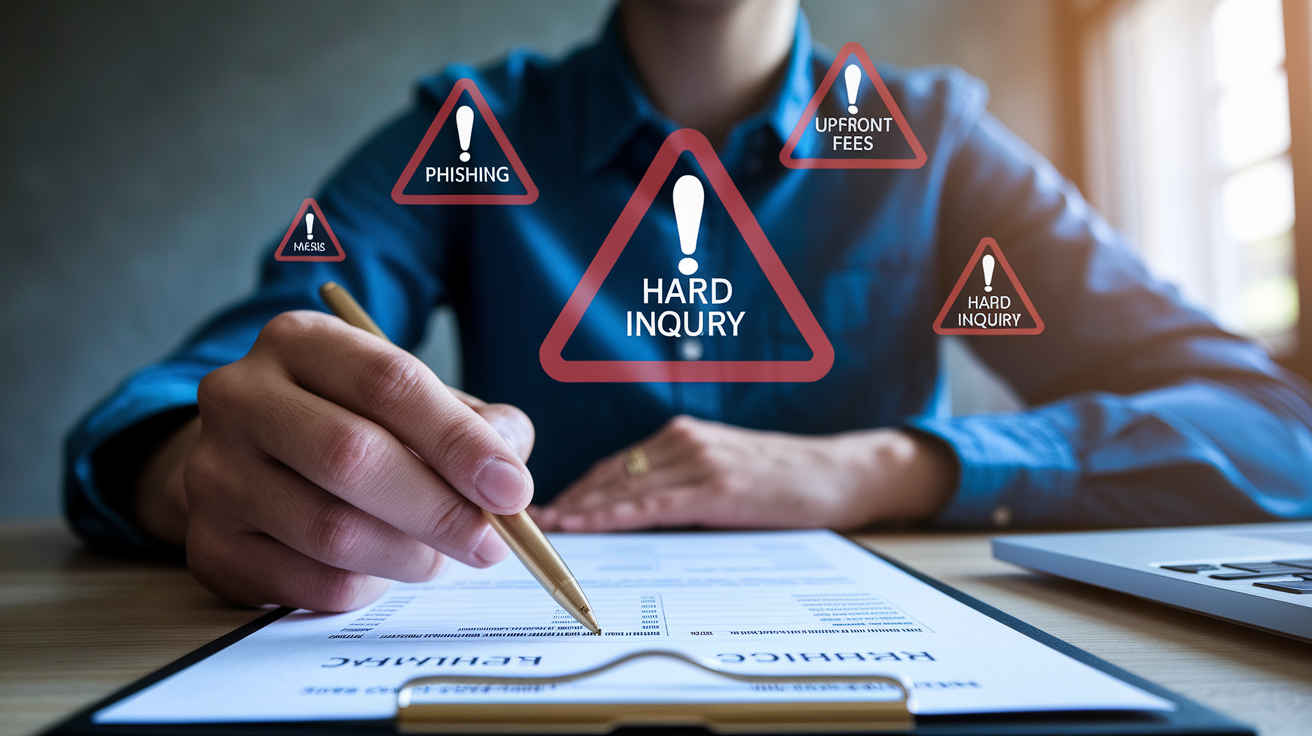
Predatory lenders and credit repair scams target people fresh out of bankruptcy because they know you’re anxious to rebuild and may not understand how credit scoring works. Watch out for offers that promise to “erase bankruptcy from your record” or guarantee a specific score increase in 30 days. No one can remove an accurate bankruptcy filing from your credit report, and any company that charges hundreds of dollars up front for disputes you can file yourself for free is a waste of money.
Set up a simple monitoring routine. Pull one free report every four months by rotating the three bureaus, so you get a fresh look three times a year without paying. Use a free credit monitoring service or your credit card’s built in score tracker to watch for sudden changes. If a new account appears that you didn’t open, or if a discharged debt suddenly shows a balance again, dispute it right away. Monitoring also helps you see which actions are working. If your score jumps after three months of on time secured card payments, you know to keep doing exactly that.
Five warning signs to avoid:
- A lender or credit counselor asks for large upfront fees before doing any work. Legitimate credit counseling is usually low cost or free.
- An offer guarantees approval for an unsecured loan or credit card with no income verification or credit check. These are often high fee scams or predatory payday style products.
- A “credit repair” company tells you to dispute accurate information or create a new credit identity. Both are illegal and can result in fraud charges.
- You’re pressured to apply for multiple credit cards or loans in a short period to “build credit fast.” This racks up hard inquiries and can lower your score.
- A lender markets directly to recent bankruptcy filers with sky high interest rates or hidden fees. Compare at least three options and read all disclosures before signing.
Hard inquiries stay on your report for two years and affect your score primarily for the first twelve months. One or two inquiries for a secured card and a credit builder loan won’t hurt much, but five inquiries in three months signals desperation to lenders and can cost you points. Space out new credit applications and only apply when you’re confident you’ll be approved.
Realistic Timeline and Milestones for Credit Recovery After Bankruptcy
Rebuilding credit after bankruptcy isn’t instant, but it’s also not a ten year wait. Most people see their first noticeable score increase within six to twelve months of consistent on time payments and low utilization. Moving from a post bankruptcy score in the low 500s to the mid 600s can happen in that first year if you avoid new negatives and use a secured card or credit builder loan responsibly. Getting into the “good” range, around 680 to 700, usually takes two to four years, depending on your starting point and how many other negatives were on your report before bankruptcy.
The bankruptcy filing itself remains on your credit report for seven years if you filed Chapter 13, or ten years if you filed Chapter 7. That doesn’t mean your score stays low the whole time. Scoring models give less weight to older negative items, so a five year old bankruptcy has much less impact than a one year old bankruptcy, especially if you’ve built a solid payment history since. Some loan programs, like FHA mortgages, will consider applicants as early as two years after a Chapter 7 discharge if you can document steady income and clean payment history during that period.
Patience and consistency matter more than speed. A 30 point jump in three months is realistic. A 150 point jump in three months is not, unless you’re correcting major reporting errors. Expect progress in small increments, and use those increments as motivation to keep going.
| Time Period | Expected Progress | Key Actions |
|---|---|---|
| 0 to 3 months | Errors corrected; accounts verified; small score stabilization | Pull all three reports, dispute inaccuracies, open secured card, set up autopay, build 500 to 1,000 dollar emergency fund |
| 3 to 12 months | First measurable score increase, 20 to 50 points possible | Maintain perfect on time payments, keep utilization under 10 percent, add credit builder loan or become authorized user if conditions are right |
| 1 to 2 years | Score may reach mid to high 600s; some unsecured credit offers appear | Continue low utilization and on time payments, monitor reports every 6 months, consider unsecured card upgrade or second secured card if needed |
| 2 to 4 years | Good credit range (680 to 720) achievable; mortgage and auto loan qualification improves | Maintain account age, diversify credit mix cautiously, avoid unnecessary inquiries, prepare for major loan applications with documentation |
A 12 Month Structured Credit Rebuild Plan to Follow After Bankruptcy

The first twelve months after bankruptcy are the most important for setting the foundation. A structured plan keeps you focused and prevents the mistakes that can stall progress or create new damage. This roadmap assumes you discharged your bankruptcy within the past 60 days and are ready to start rebuilding immediately. Adjust the timing if you’re further along, but keep the sequence of actions in order.
Monthly Action Roadmap
Month 1: Pull your credit reports from Equifax, Experian, and TransUnion. Review every account for errors, especially discharged debts that still show balances. File disputes for any inaccuracies using the bureau’s online system or certified mail with proof. Open a no fee checking and savings account if you don’t have one. Set a goal to save 100 dollars by the end of the month for your emergency fund.
Month 2: Apply for one secured credit card that reports to all three bureaus and has low or zero annual fees. Deposit 200 to 500 dollars. Set up autopay for the minimum payment and make your first small purchase, something under 20 dollars like a tank of gas. Pay the full balance before the statement closes. Add another 100 dollars to your emergency fund.
Month 3: Check your credit reports again to confirm disputes were processed and the secured card is reporting. If the card isn’t showing up yet, wait another 30 days. Make a second small purchase on the secured card and pay it off immediately. Continue adding to your emergency fund. Target 300 to 400 dollars total by now.
Month 4: Review your budget and identify one recurring bill you can automate, like a phone or utility payment. Set up autopay to ensure it’s never late. If you can afford it, open a credit builder loan with a 500 to 1,000 dollar amount and a 12 month term. Make your first payment on time. Keep using the secured card for small purchases and paying in full.
Month 5: Pull a fresh report from one bureau using your annual free pull rotation. Look for the secured card and credit builder loan to confirm both are reporting. Check your score if your card issuer provides it for free. Continue perfect on time payments on all accounts.
Month 6: Evaluate your progress. If your score has increased and you have six months of clean payment history, consider requesting a credit limit increase on your secured card or asking if the issuer will convert it to unsecured. Keep your emergency fund growing toward 500 to 1,000 dollars. Make another small purchase and pay it off.
Month 7: If you were added as an authorized user on a family member’s card, check that it’s reporting to all three bureaus. If not, ask the primary cardholder to confirm with the issuer. Continue low utilization and on time payments across all accounts.
Month 8: Review all three credit reports again, rotating your free annual pulls. Dispute any new errors. If your credit builder loan is halfway paid, confirm payments are still reporting. Avoid applying for new credit unless absolutely necessary.
Month 9: Check your score trend. If it’s climbing steadily, stay the course. If it’s flat, review utilization, confirm all accounts are reporting, and verify no new negatives have appeared. Continue adding to savings and maintaining autopay on every bill.
Month 10: If you need another type of credit, such as a retail card for a necessary purchase, apply cautiously. Only apply if you’re confident of approval and the card reports to all three bureaus. Don’t apply for multiple accounts in the same month.
Month 11: Pull another free credit report from a different bureau. Confirm all positive accounts are showing up and no discharged debts are reporting incorrect balances. Prepare a written summary of your progress. List your score at month 1, your current score, the accounts you’ve opened, and your on time payment streak.
Month 12: Celebrate a full year of disciplined credit rebuilding. Review your emergency fund. If you’ve hit 1,000 dollars, keep it there as a safety buffer. If your credit builder loan is paid off, collect your savings. Check whether your secured card has been converted to unsecured or if your limit has increased. Plan your next twelve months. Maintain what’s working, add one more account only if it makes sense, and keep monitoring every six months to catch errors early.
Final Words
Get moving: pull your three reports, dispute mistakes, set up autopay, and start a secured card while keeping utilization under 10%. These are practical steps you can do this week.
Expect to see signs of progress in 6 to 12 months if you stay consistent. Build a $500 to $1,000 starter fund and monitor accounts every 6 to 9 months to avoid surprises.
The best strategies to rebuild credit after bankruptcy are steady payments, low balances, and accurate reporting, stick with the plan and your score will climb.
FAQ
Q: What is the fastest way to build credit after bankruptcy?
A: The fastest way to build credit after bankruptcy is to open a secured card or credit-builder loan, make every payment on time, keep balances under 10–30%, use authorized-user help, and monitor reports.
Q: What is the 180 rule in bankruptcy?
A: The 180 rule in bankruptcy is a look-back period used in some proceedings to review transfers or payments made before filing; exact timing and effects vary, so ask your trustee or bankruptcy attorney.
Q: What is the 910 day rule in bankruptcy?
A: The 910 day rule in bankruptcy is a lender timing guideline often tied to mortgage eligibility after foreclosure or short sale; it generally means waiting about 910 days, but rules differ by loan type and program.
Q: How to get a 700 credit score after bankruptcy?
A: You can get a 700 credit score after bankruptcy by rebuilding steadily: on-time payments, a secured card or credit-builder loan, low utilization under 10%, keep older accounts open, monitor errors; expect 2–4 years.