


Think bad credit means you can’t get a mortgage?
It’s not true, lenders approve thousands of buyers each year with FICO scores below 620, and some programs accept scores as low as 500.
This post shows the loan options that actually work for low scores, the compensating factors lenders care about (bigger down payment, steady income, low debt-to-income), and simple steps you can take today to boost approval odds and compare offers so you don’t overpay.
How to Secure a Mortgage When You Have Bad Credit
You can get a mortgage with bad credit. Lenders who work with nonprime or government-backed loans approve thousands of buyers every year with FICO scores well below 620. Some programs accept scores as low as 500. Your credit score is just one piece of what lenders look at when deciding if you’re worth the risk.
Compensating factors can offset a low score. Steady income, reliable work history, low debt-to-income ratio, or a larger down payment often get you approved even when your score falls into the “bad” range. A 15% down payment can sometimes unlock programs that would reject a 580 score with 3.5% down. Lenders want to see you’ve got skin in the game and the financial capacity to repay.
Credit unions, online mortgage lenders, and FHA-approved originators tend to be most flexible when looking at bad credit applications. National banks often enforce stricter overlays. Community banks and specialist lenders actively market to borrowers rebuilding credit. Shopping multiple lender types increases your approval chances and helps you compare which institution offers the best terms for your situation.
Fast ways to improve your approval odds with bad credit:
Save a larger down payment. 10% or more significantly improves approval rates and can unlock better rates even with scores below 600.
Lower your debt-to-income ratio. Pay down credit cards, student loans, or car notes before you apply so your monthly obligations drop below 43% of gross income.
Add a co-borrower with stronger credit. Their score and income count toward the application, raising your combined approval odds.
Dispute credit report errors immediately. Pull free reports from AnnualCreditReport.com and challenge inaccuracies that drag your score down.
Apply with FHA-approved lenders. They follow flexible government underwriting standards instead of strict bank overlays.
Shop non-QM or subprime lenders. They use alternative income documentation and property-based underwriting if traditional programs reject you.
Minimum Credit Scores Required by Loan Type
Different loan programs have different credit score thresholds because they carry different levels of government backing, insurance requirements, and default risk. FHA, VA, and USDA loans are insured or guaranteed by federal agencies, so lenders can accept lower scores without taking on the full loss if you default. Conventional loans have no government insurance, which pushes lenders to require higher scores and stricter debt ratios.
Your credit score also determines whether you qualify for the lowest down payment available or must bring extra cash to close. FHA allows 3.5% down at 580 but jumps to 10% down if your score falls between 500 and 579. That extra 6.5% can mean thousands of additional dollars you need in the bank before closing day.
| Loan Type | Minimum Credit Score | Typical Down Payment Requirement |
|---|---|---|
| FHA | 500 (10% down) or 580 (3.5% down) | 3.5% to 10% |
| VA | No official minimum; most lenders require 580–620 | 0% |
| USDA | Typically 640 (some flexibility for strong compensating factors) | 0% |
| Conventional | Around 620 (some lenders now evaluate risk factors below 620) | 3% to 5% |
Lender Options for Borrowers with Low Credit

Traditional banks tend to enforce the strictest credit overlays because they fund loans from deposits and hold them in portfolio or sell them to Fannie Mae and Freddie Mac. If your score sits below 620, many big banks will reject your application before a human underwriter ever sees your file. Online lenders and credit unions often use more flexible automated underwriting systems and consider the full borrower profile, including payment history on rent and utilities that don’t appear on your credit report.
Non-QM (non-qualified mortgage) and subprime lenders work with borrowers who don’t fit standard underwriting boxes. They allow lower credit scores, alternative income documentation like bank statements instead of tax returns, and asset-based qualification. The trade-off? Higher interest rates, larger down payments (often 15% to 25%), and shorter initial terms or adjustable rate structures. These loans work when you need to buy now and plan to refinance once your credit improves.
Lender flexibility directly impacts your approval odds and the cost you’ll pay over the life of the loan. A credit union might approve your 590 score with a 5% down FHA loan at a competitive rate. A subprime lender approves the same score but charges you an extra 2% in interest and requires 20% down. Shopping at least three to five lenders across different categories gives you leverage to negotiate and choose the offer that balances approval certainty with long-term affordability.
Strategies to Increase Your Odds of Mortgage Approval

Lenders use your debt-to-income ratio as a gatekeeper for mortgage approval. Most programs cap DTI at 43% to 50%. When your credit score is already weak, staying well below that ceiling improves your odds. Paying down revolving debt before you apply can drop your DTI by several percentage points in a matter of weeks and show the lender you’re serious about managing monthly obligations.
Seven strategies to strengthen a bad credit mortgage application:
Increase your down payment to 10% or more. Reduces lender risk and may unlock approval even with a 550 score.
Pay down credit card balances below 30% utilization. Amounts owed make up 30% of your FICO score. Lowering balances can boost your score quickly.
Add a co-borrower or co-signer. Their income and credit count in underwriting, but they assume legal responsibility if you default.
Provide 12 months of on-time rent payment documentation. Some lenders accept cancelled checks or bank statements as proof of housing payment history.
Avoid new credit inquiries in the 90 days before you apply. Hard pulls can drop your score and signal financial stress to underwriters.
Save three months of mortgage payment reserves. Liquid savings after closing give underwriters confidence you can handle unexpected expenses.
Get preapproved by multiple lenders within a 14-day window. Rate shopping within that period counts as one inquiry and lets you compare real approval terms.
When you stack multiple compensating factors, lenders often override automated underwriting denials and send your file to manual review. An underwriter who sees steady employment, 15% down, and six months of reserves may approve a 570 score that an algorithm would’ve rejected. The more risk-reduction levers you pull, the better your chance of getting a human decision instead of an automated “no.”
Government-Backed Mortgage Programs for Bad Credit Borrowers

FHA loans are designed for buyers who can’t meet conventional credit or down payment requirements. The Federal Housing Administration insures the loan, so lenders can approve scores as low as 500 with a 10% down payment or 580 with just 3.5% down. FHA also allows higher debt-to-income ratios (up to 57% in some cases if your score is 620 or higher) and accepts gift funds from family members to cover your down payment and closing costs.
VA loans offer the most generous terms for eligible veterans, active-duty service members, and qualifying surviving spouses. There’s no minimum credit score set by the VA. You can finance 100% of the purchase price with no down payment and no monthly mortgage insurance. Most lenders set their own floor around 580 to 620, but some VA-specialist lenders will work with scores in the 500s if you have strong compensating factors like steady military income and clean payment history over the past 12 months.
USDA loans support low to moderate income buyers purchasing in eligible rural and suburban areas. The program requires no down payment and typically looks for credit scores around 640, though some lenders accept lower scores with manual underwriting. USDA also caps household income at 115% of the area median, so you must meet both the geographic and income requirements to qualify.
Three advantages of government-backed programs for bad credit buyers:
Lower down payment requirements (as low as 0% for VA and USDA, 3.5% for FHA).
More flexible underwriting and higher tolerance for past credit issues like collections or medical debt.
Access to streamlined refinance options in the future that may skip credit checks and appraisals if you maintain on-time payments.
Expected Interest Rates for Bad Credit Borrowers
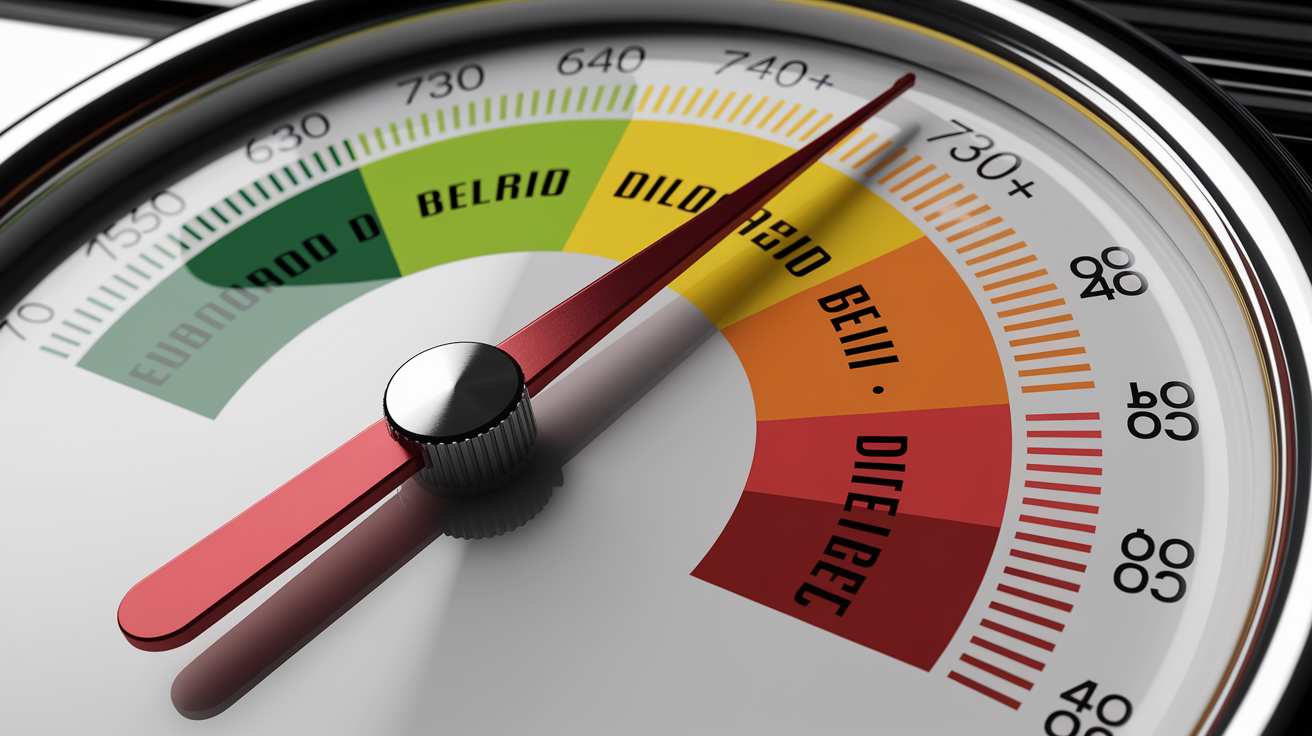
Your credit score has a direct, measurable impact on the interest rate lenders offer. A borrower with a 760 FICO might lock a 30-year fixed rate at 6.0%. A borrower with a 580 score on the same day could face 7.5% or higher on an FHA loan. That 1.5 percentage point spread translates to roughly $30,000 in extra interest over the life of a $250,000 mortgage. Improving your score even 40 to 60 points before you apply can save serious money.
Subprime and non-QM lenders charge even steeper premiums because they’re taking on borrowers that government programs and conventional underwriting reject. Rates in the 8% to 12% range are common for scores below 550, especially when you’re financing more than 80% of the home’s value. Adjustable rate mortgages may start with lower teaser rates, but the rate can jump significantly after the initial fixed period. Read the terms carefully and plan for payment increases.
| Credit Score Range | Typical Rate Range | Notes |
|---|---|---|
| 740+ | 6.0% – 6.5% | Best available rates; widest program choice |
| 620 – 739 | 6.5% – 7.5% | Conventional and government loans available; moderate rate premiums |
| Below 620 | 7.5% – 12%+ | FHA, VA, subprime or non-QM only; significantly higher lifetime interest cost |
Step-By-Step Application Guide for Buyers with Bad Credit
Applying for a mortgage with bad credit requires extra documentation and patience, but the process follows a clear sequence. Start by pulling your credit reports from all three bureaus so you know exactly what lenders will see. Gather proof of income, assets, and housing payment history before you contact any lender.
Eight steps to complete your mortgage application with bad credit:
Pull your credit reports from Equifax, Experian, and TransUnion. Use AnnualCreditReport.com for free weekly access and review for errors, duplicate accounts, or incorrect late payments.
Dispute inaccuracies and negotiate pay-for-delete on collections. Submit disputes online and ask collection agencies to remove paid accounts in exchange for settlement.
Gather 24 months of employment history and current pay stubs. Lenders verify job stability. Have W-2s, tax returns (two years), and recent pay stubs ready.
Compile 60 days of bank statements for all accounts. Underwriters check for consistent deposits, verify down payment source, and flag recent large deposits that aren’t payroll.
Document 12 months of on-time rent or mortgage payments. If you rent, get a letter from your landlord or provide cancelled checks. This compensates for low credit scores.
Get preapproved by at least three lenders within a two week period. Compare FHA, VA (if eligible), and non-QM options. Multiple inquiries in 14 days count as one hard pull.
Respond quickly to underwriter requests for updated documents. Bad credit files often go to manual review, and delays can cause rate locks to expire.
Review your Loan Estimate and compare APR, not just interest rate. APR includes fees and shows the true cost. Use it to pick the best overall deal among your approvals.
Final Words
You can still move forward even with a low credit score. This post gave fast, usable steps: who will lend, which loan types (FHA, VA, USDA, non-QM), and what documents you need to apply.
It also covered smart moves—bigger down payment, steady income, co-borrower options, and ways to boost approval odds while watching higher rates.
Follow the step-by-step checklist and compare offers. With patience and a plan, you can get a home mortgage loan with bad credit and take real steps toward owning a home.
FAQ
Q: Can I qualify for a mortgage with a 500 credit score?
A: You can sometimes qualify for a mortgage with a 500 credit score. FHA loans may accept 500 with a 10% down payment; expect higher rates and strong income or reserves.
Q: What is the easiest home loan to get approved for with bad credit?
A: The easiest home loan to get approved for with bad credit is often an FHA loan, since it accepts lower scores; VA or USDA work if you qualify, while non‑QM or subprime lenders are pricier options.
Q: How much income to qualify for a $200,000 mortgage?
A: To qualify for a $200,000 mortgage you typically need about $3,500–4,000 gross monthly income (roughly $42k–48k yearly), assuming a 30‑year loan, common rates, and a DTI under about 43%.
Q: How much of a down payment do I need for a $300,000 house?
A: The down payment for a $300,000 house depends on loan type: FHA 3.5% ($10,500) if eligible, conventional 3%–20% (20% avoids PMI = $60,000), and VA/USDA may require $0 if you qualify.