


What if your rent could actually raise your credit score?
It can. Landlords or rent reporting services that send verified rent payments to the credit bureaus make it possible.
Payment history counts for about 35% of your FICO score, and fewer than 5% of renters have rent reported, so this is an easy way to stand out.
This post shows how rent reporting works, who benefits, what to check before you enroll, and the realistic score gains many renters see.
How Rent Reporting Works to Improve Your Credit Score

Payment history makes up 35% of your FICO score. Every on-time payment you make, including rent, strengthens that single biggest scoring factor. Adding rent payments to your credit report creates a new tradeline that shows lenders you pay a major recurring bill consistently each month. Right now, fewer than 5% of U.S. renters get their rent reported to the credit bureaus, so there’s a real opportunity to stand out with rental history.
When you enroll in rent reporting, services submit your verified payment data to one or more of the three major credit bureaus: Experian, TransUnion, and Equifax. How much that data influences your score depends on the scoring model. Both VantageScore and some newer FICO versions treat rental tradelines like any other positive payment history, weighting them alongside credit cards and installment loans. Older FICO models used by some mortgage lenders, though, may ignore rent entirely. That’s why impact can vary from lender to lender.
Most renters with thin credit files see score changes within 1 to 6 months after reporting starts. Typical increases fall in the 10 to 30 point range. Renters with very thin files, or those using rent as their primary positive tradeline, have reported gains of 40 to 100+ points over 6 to 24 months. Results depend on your starting profile, how many on-time months you report, and which scoring model a lender pulls. The cleaner and more consistent your rent payment history, the stronger the potential boost.
Key Benefits of Adding Rent Payments to Your Credit Report

Rent reporting helps the roughly 26 million Americans identified as “credit invisible” and the 19 million considered unscorable by traditional models. If you don’t qualify for a credit card or have never carried a loan, on-time rent becomes a verified, recurring tradeline that proves your ability to handle a significant monthly obligation. Adding rental history also benefits renters rebuilding credit after past late payments, collections, or other derogatory marks. Each new on-time rent entry dilutes the negative weight over time.
Recurring, verified rent payments strengthen your payment history length and show future lenders that you’ve been responsible with housing costs month after month. When you apply for a car loan, mortgage, or even a new apartment, a solid rental payment record can support qualification by demonstrating financial stability beyond traditional debt products.
Establishing a new tradeline means rent becomes a verified account on your credit file, especially valuable when you have no other open accounts. Each additional on-time month extends the positive timeline lenders see. Though payment history matters most, having rent alongside installment or revolving accounts rounds out your profile. Uninterrupted rent history signals reliability and lower risk. Some underwriters manually review rental payment records even if the scoring model doesn’t factor them in.
Credit Bureaus That Accept Rent Payments and How They Use the Data

All three major U.S. credit bureaus (Experian, TransUnion, and Equifax) accept rental payment data, but each handles and uses that data differently. Experian operates Experian RentBureau, a specialized file for rental history, and integrates verified rent into standard credit files via tools like Experian Boost. TransUnion and Equifax also accept rent from landlords and third party reporting services, though the frequency and formatting of rental tradelines vary by provider and bureau relationship.
How scoring models treat rent depends on the version. VantageScore 3.0 and 4.0 typically include rental tradelines in payment history calculations, treating them like credit cards or auto loans. Some newer FICO versions (FICO Score 9, FICO Score 10 T, and UltraFICO) account for alternative data including rent. But many older FICO models, like FICO Score 8 (still widely used by credit card issuers and auto lenders), may ignore rent altogether. That’s why you can see a VantageScore increase without a matching FICO change.
Impact varies by lender because each chooses which bureau and which scoring model to pull. A mortgage lender might use an older FICO version that skips rent, while a credit card issuer using VantageScore will see every on-time payment. Checking which models your target lenders use helps set realistic expectations before you enroll.
| Bureau | Accepts Rent? | Notes |
|---|---|---|
| Experian | Yes | RentBureau file; Boost integrates into standard file; widely used for VantageScore and some newer FICO models |
| TransUnion | Yes | Accepts from landlords and third party services; how rental tradelines appear depends on reporter format |
| Equifax | Yes | Accepts rental data; usage and visibility vary by scoring model and lender preference |
How Rent Reporting Services Work and What They Verify
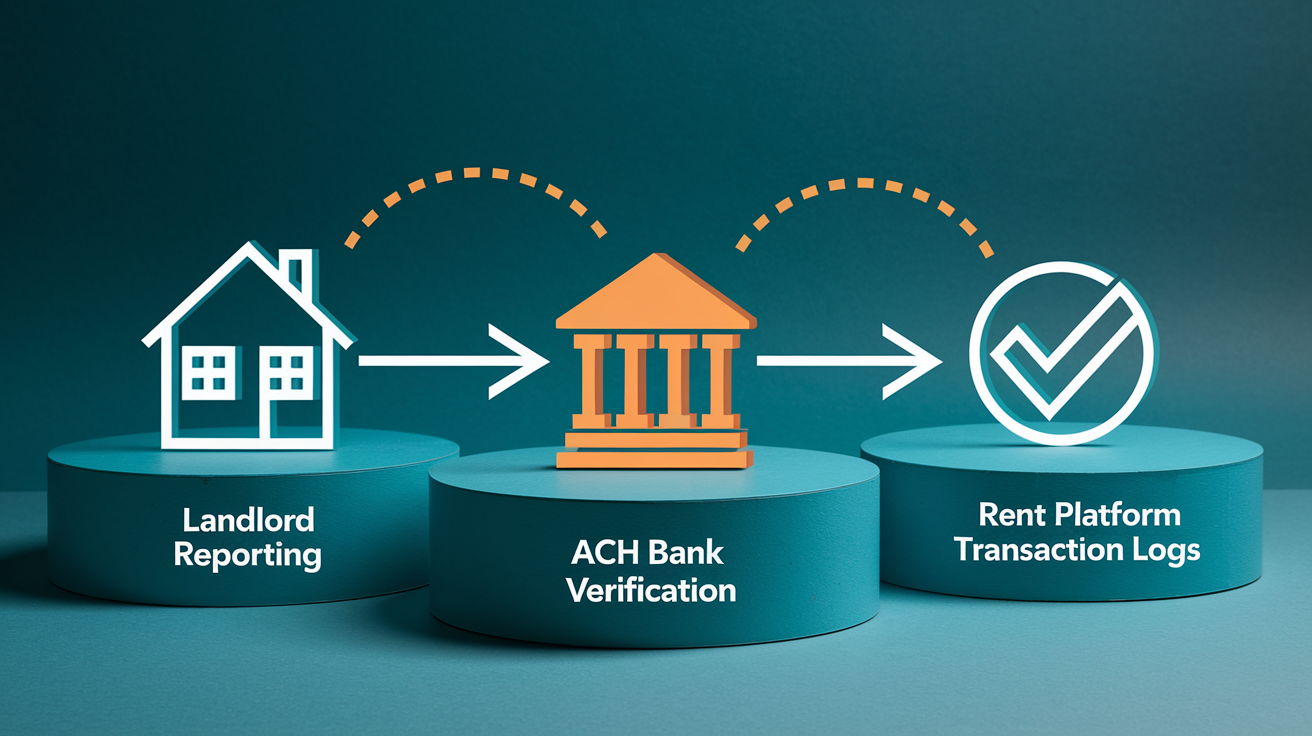
Rent reporting services verify your payments in one of three main ways: direct landlord or property manager reporting, ACH or bank account transaction verification, or rent payment processor data. Landlord initiated reporting means your property enrolls and submits tenant payments directly to the bureaus each month. Tenant initiated services let you sign up independently by linking your bank account so the service can detect and verify rent transactions, or by uploading payment receipts and lease documents.
Once verified, the service reports your payment history to one, two, or all three bureaus depending on its partnerships. Reporting typically happens monthly, mirroring the cycle of your rent due date. Some services offer back reporting, which adds prior on-time payments (often up to 24 months) to your file immediately. Others only report from the enrollment date forward. Back reporting can provide a quick boost if you have a clean payment history, but it’s not available with every provider.
Fees vary widely. Tenant paid models often charge $5 to $15 per month or a one-time setup fee ranging from $20 to $60. Some services bill landlords instead, making the reporting free to tenants if the property opts in. Experian Boost is a well-known free option that reports to Experian only.
Services may request a signed lease agreement, recent rent receipts or bank statements, government ID, and proof of address. Verification types accepted include landlord confirmation letter, ACH payment history, rent payment platform transaction logs, or manual upload of canceled checks. Reporting frequency is typically monthly, though initial setup can take 1 to 3 billing cycles before the first report appears on your file. How services handle missed or late payments varies. Late rent is reported just like a late credit card payment. Some services let you pause reporting temporarily to avoid negative marks, but policies vary.
Step-by-Step Process for Adding Rent Payments to Your Credit Profile

Most rent reporting services follow a similar enrollment flow whether you initiate the process or your landlord does. The key difference is whether you need landlord participation or can verify payments independently through bank records or a rent payment platform.
Tenant initiated reporting paths usually require you to link your bank account or route future rent payments through the service’s platform. Landlord initiated paths mean the property manager signs up and reports all tenants automatically, which can be easier if your property already uses a reporting service. Either way, gather your lease, recent payment proof, and identification documents before you start to speed up verification. Services typically confirm your identity and payment history within 1 to 3 billing cycles, after which monthly reporting begins.
You’ll want to monitor your credit reports from all three bureaus to confirm the new tradeline appears and updates correctly each month. Free weekly reports are available through AnnualCreditReport.com, and many rent reporting services offer in-app credit monitoring so you can track changes in real time.
Choose a rent reporting service by comparing which bureaus each service reports to, whether back reporting is available, and total cost (monthly vs. one-time). Confirm bureau coverage by checking if the service reports to Experian, TransUnion, Equifax, or all three, and verify which scoring models are most likely to use that bureau’s data. Verify your identity by providing your Social Security number or ITIN, date of birth, current address, and any additional identity documents the service requests. Provide lease and proof of payments or connect bank accounts by uploading a signed lease, recent rent receipts, or linking the checking account you use to pay rent for ACH verification. Authorize monthly reporting and payment method by selecting your billing preference (monthly subscription or one-time fee) and confirming the service can report your payment data to the bureaus. Monitor reports for new tradeline appearance by checking your credit files after 1 to 3 months to verify the rental account is listed and updating monthly. Dispute any errors immediately.
If your landlord already participates in a reporting program, ask which service they use and whether you need to opt in or if reporting is automatic. If you’re going the tenant initiated route, prepare to link your bank or set up future rent payments through the service’s payment portal to maintain continuous verification.
Expected Credit Score Timeline and Typical Boost from Rent Reporting

Initial reporting usually appears in your credit file within 1 to 3 billing cycles after enrollment, which translates to 1 to 3 months. You won’t see a score change until the tradeline posts and updates with at least one on-time payment. For renters with thin or no credit, detectable score increases often occur within 3 to 6 months as multiple on-time months accumulate.
Typical increases for thin file renters fall in the 10 to 30 point range. Some individuals with very limited credit history, where rent becomes the primary or only positive tradeline, have reported gains of 40 to 100+ points over 6 to 24 months. Renters with established credit may see smaller or no changes, especially if they already have several on-time accounts. Results depend on your starting score, the number of existing tradelines, the presence of any derogatory marks, and which scoring model is used.
| Timeline | Expected Result |
|---|---|
| 1–3 billing cycles | Rental tradeline appears on credit file; no guaranteed score change yet |
| 3–6 months | Detectable score increases for thin file renters; typical range 10–30 points if rent is only new positive tradeline |
| 6–12 months | Sustained on-time history strengthens payment factor; cumulative increases may reach 30–50+ points for very thin files |
| 12+ months | Longer payment history provides continued support; some renters with minimal prior credit report total gains of 40–100+ points; established credit renters see smaller or no change |
Costs, Fees, and Free Rent Reporting Options

Most tenant paid rent reporting services charge between $5 and $15 per month for ongoing monthly reporting. Some providers offer a one-time setup fee model, typically ranging from $20 to $60, which covers initial verification and either a fixed period of reporting or indefinite reporting with no recurring charge. Fees can also fall on the landlord or property manager if the building enrolls in a landlord paid program, making reporting free for tenants.
Free options exist but usually report to fewer bureaus. Experian Boost is the most widely known free tool. It allows you to add rent (if paid online to an eligible landlord or through a qualifying platform) directly to your Experian file at no cost. Boost also lets you add utility, phone, and some streaming bills. The trade-off is that Boost only affects your Experian credit file and may not influence scores pulled from TransUnion or Equifax.
When weighing cost versus benefit, compare the monthly or one-time fee against the potential score increase and your timeline. If you need credit quickly for a car loan or apartment approval, paying $10 per month for 6 months ($60 total) may be worth a 20 point boost. If you already have solid credit and rent reporting offers minimal gain, a free option or skipping rent reporting altogether makes more sense.
Monthly subscription models typically run $5–$15/month and work best if you plan to rent long-term and want continuous reporting. One-time setup fees commonly fall between $20–$60 and can be cost effective if the service offers indefinite reporting after the initial payment. Landlord paid programs are free to tenants, so check if your property participates before signing up for a tenant paid service. Free tenant initiated options include Experian Boost (Experian only) and some promotional periods from other services. You’ll get limited bureau coverage but zero out-of-pocket cost.
Pros and Cons of Using Rent Reporting to Build Credit
Rent reporting offers a straightforward way to convert an expense you’re already paying into positive credit history. For renters with thin files or no traditional credit accounts, it’s one of the fastest methods to establish a payment record without taking on debt. Even renters recovering from past negatives can use consistent on-time rent to rebuild their payment history percentage over time.
The downsides center on inconsistent lender adoption, potential negative reporting, and variable results. Not all scoring models or lenders consider rental tradelines, so you may improve one score while another stays flat. Late or missed rent will hurt your credit just like any other negative tradeline. Incorrect data, whether from reporting errors or landlord mistakes, requires time and effort to dispute and remove.
Pros:
Builds credit without opening new debt accounts or hard inquiries. Converts existing rent payments into positive tradeline history. Particularly effective for thin file or credit invisible renters. Some services offer back reporting to add prior on-time months immediately. Can support future loan or apartment applications by demonstrating housing payment stability.
Cons:
Not all lenders or scoring models use rental data; FICO 8 and many mortgage scores may ignore it. Late or missed rent reports damage credit, sometimes more severely than skipping a small credit card payment. Services charge fees and tenant paid models add ongoing or upfront costs. Requires landlord participation or continuous bank account linking for verification. Results vary widely. Some renters see no measurable score increase despite months of reporting.
Reputable Rent Reporting Companies and What They Offer
Several companies specialize in rent reporting with varying bureau coverage, fee structures, and feature sets. RentTrack is one of the longer established services, offering reporting to one, two, or all three major bureaus depending on the plan you choose. Rental Kharma provides tenant initiated reporting and historically offered flexible monthly and one-time fee options. RentReporters, LevelCredit, ECredable, and CreditMyRent are additional examples that have operated in the space, each with different bureau partnerships and pricing models.
When comparing providers, verify which bureaus they currently report to, whether back reporting is included, and the exact fee structure. Some services bundle credit monitoring or identity protection. Others keep the offering simple and low cost. Check recent reviews and confirm the service is still active, as smaller companies occasionally pause operations or merge with larger platforms.
Exact pricing and bureau coverage change frequently, so always confirm current terms directly with the provider before enrolling. What’s listed as “reports to all three bureaus” in one review may have changed to “TransUnion and Experian only” by the time you sign up.
| Provider | Bureau Coverage | Typical Fee Model |
|---|---|---|
| RentTrack | Experian, TransUnion, Equifax (varies by plan) | Monthly subscription ~$5–$15/month or one-time fee options |
| Rental Kharma | TransUnion, Equifax (check current coverage) | One-time setup fee or monthly plan; pricing varies |
| RentReporters | TransUnion, Equifax (historically) | One-time fee ~$20–$100 depending on back reporting; verify current terms |
| LevelCredit | Experian, TransUnion, Equifax | Monthly subscription model; exact fee varies |
| Experian Boost | Experian only | Free; tenant initiated; requires eligible online rent payment |
Documentation You Need for Successful Rent Reporting

Most rent reporting services require identity verification plus proof of your lease and payment history. Start by gathering a signed lease agreement that shows your name, the property address, monthly rent amount, and lease term. You’ll also need recent proof of rent payments like bank statements showing ACH transfers, canceled checks, or receipts from your landlord or property manager.
Identity documents typically include your Social Security number or Individual Taxpayer Identification Number, date of birth, current address, and a government issued ID like a driver’s license or passport. Some services ask for additional address verification, such as a utility bill in your name at the rental property.
If you’re using a tenant initiated service, you may need to link your checking account through a secure portal so the service can detect recurring rent payments automatically. If your landlord is reporting on your behalf, you may only need to provide your SSN and consent for the landlord to submit your data. Keep digital and physical copies of all documents in case you need to re-verify or dispute incorrect data later.
A signed lease agreement shows rent amount, term, and your legal obligation to pay. Recent rent payment receipts or bank statements prove on-time payment history. Three to 6 months of records are common requests. A government issued photo ID (driver’s license, passport, or state ID) confirms identity verification. Your Social Security number or ITIN is required to match your credit file and report data accurately. Proof of current address (utility bill, bank statement, or lease showing you reside at the rental property) may be requested. Landlord or property manager contact information helps if the service needs to verify your lease or payment details directly with the property.
Risks, Limitations, and When Rent Reporting May Not Help
Not all landlords participate in rent reporting programs, and some property managers refuse to verify tenant payments for third party services. If you’re in a month-to-month lease, subletting, or renting informally without a written lease, many services won’t accept your payments. Additionally, some older FICO models used by major mortgage lenders and auto finance companies ignore rental tradelines entirely, so you may see no score movement on the versions that matter most for your loan application.
Late or missed rent reported to the bureaus can lower your score as much as, or more than, a missed credit card payment, especially if collections get involved. Privacy and data security concerns also exist. You’re granting a third party access to your bank account or sensitive lease information, so choose reputable, established services with clear privacy policies.
If you already have several on-time tradelines and a solid payment history, adding rent may produce minimal or no score change. The benefit is greatest when rent fills a gap in an otherwise empty or very thin credit file. Renters with recent bankruptcies, charge-offs, or multiple collections should focus on resolving or disputing those negatives first, since one new positive tradeline won’t erase major derogatory marks.
Many landlords decline to verify payments or enroll in reporting programs. Tenant initiated services help but may require linking bank accounts. Older FICO versions (e.g., FICO 8, many mortgage scores) may not factor in rental tradelines, limiting lender visibility. Late or missed rent damages credit. Collections can create severe score drops and stay on file for seven years. If you already have multiple on-time accounts, adding rent may produce small or no measurable score increase.
Alternatives and Complementary Strategies for Building Credit Beyond Rent Reporting
Becoming an authorized user on a responsible family member’s or partner’s credit card account can add that account’s full payment history to your credit file, often with an immediate score boost. The primary cardholder’s on-time payments and low utilization benefit you without requiring you to apply for new credit or pass a credit check. Just confirm the card issuer reports authorized users to all three bureaus before you’re added.
Opening and responsibly using your own credit card, whether a secured card with a deposit or a starter unsecured card, builds payment history and credit mix. Pay the balance in full each month and keep utilization below 30% (ideally under 10%) to maximize the positive effect. Regularly reviewing your credit reports for errors and disputing inaccuracies also protects and improves your score. Even one removed late payment or corrected balance can yield a noticeable gain.
Experian Boost and similar tools let you add utility, phone, insurance, and streaming bills to your credit file alongside rent. Combining rent reporting with one or two of these complementary strategies creates multiple positive tradelines and accelerates credit building, especially if you’re starting from a thin file or recovering from past negatives.
Becoming an authorized user gives you instant access to the primary account’s history. Verify the issuer reports to all three bureaus. Opening and using a secured or starter credit card builds payment history and utilization factor. Pay in full monthly. Adding utility and phone bills via Experian Boost is free and reports to Experian only but adds multiple positive tradelines quickly. Reviewing and disputing credit report errors costs nothing. Free weekly reports are available at AnnualCreditReport.com. Disputing inaccuracies can remove negatives or correct balances. You can also consider a credit builder loan, which is a small installment loan held in savings while you make payments. It’s reported monthly and releases funds at the end of the term.
Final Words
We showed how rent reporting turns on-time rent into a tradeline that feeds payment history, which is 35% of your FICO score. You saw why bureaus and scoring models treat that data differently and what timelines and score gains to expect.
We covered services, verification steps, fees, and common pros and cons so you can pick the right path. We also gave practical steps to start reporting and other ways to build credit.
If you’re ready, gather your lease and proof, pick a reporting option, and begin. Remember, how adding rent payments can boost your credit score — steady on-time rent often leads to real score gains and better loan options.
FAQ
Q: Should I boost my credit score with rent payments? How much does rent increase credit score?
A: Boosting your credit score with rent payments can help. Rent reporting typically raises scores 10–30 points within 1–6 months; thin or credit‑invisible files sometimes see 40–100+ points over 6–24 months.
Q: How do I add 100 points to my credit score?
A: Adding 100 points to your credit score isn’t guaranteed. Very thin files can gain 40–100+ from rent reporting plus steps: fix errors, lower card balances, make every payment on time, and avoid new debt.
Q: What is the biggest killer of credit scores?
A: The biggest killer of credit scores is missed or late payments. Payment history makes about 35% of a FICO score, so delinquencies have the fastest, largest negative impact.