


Think a civil judgment will always tank your credit for 7 years? Not quite.
In 2017 the three big credit bureaus stopped listing most civil judgments and tax liens unless the records included full ID details.
But judgments still live in courthouse files and can block loans, rentals, and insurance, and creditors can still garnish wages or place liens.
This post shows how long judgments really stay on credit reports and gives clear, step-by-step removal options you can use.
How Long Civil Judgments Stay on a Credit Report

Civil judgments used to stick around for 7 years from the filing date. That’s when the court entered the judgment, not when you missed a payment or got sued. But in 2017, the big three credit bureaus (Equifax, Experian, and TransUnion) stopped putting most civil judgments and tax liens on consumer credit reports. The reason? Data accuracy standards under the National Consumer Assistance Plan. That move wiped the majority of judgment records out of credit files, though the 7-year rule still applies if one were to show up.
Here’s the thing. Just because judgments rarely appear on credit reports anymore doesn’t mean they’re harmless. Lenders, insurers, landlords, and other creditors can still dig them up through county courthouse records or specialty public-record reports. So a judgment can wreck your chances of getting a loan, renting an apartment, or locking in decent insurance rates long after it’s gone from your credit file. Wage garnishment, bank levies, and property liens don’t care about credit reports either. They keep going until you pay the debt or your state’s enforcement period runs out, which can stretch way past 7 years.
If a judgment does pop up on your credit report (maybe it got reported before 2017 or someone made a mistake), you’ve got a few quick removal options:
- Dispute it if it’s missing your Social Security Number, date of birth, or has the wrong name. Bureaus usually delete entries that can’t pass identity checks.
- Vacate the judgment in court if you were never properly served or have solid grounds to fight it. Once it’s vacated, it has to come off your credit file.
- Check courthouse records and send proof of satisfaction or dismissal to the credit bureaus. Anything they can’t verify has to be deleted within 30 days under the Fair Credit Reporting Act.
How Civil Judgment Reporting Works

A civil judgment happens when a plaintiff wins a lawsuit against you in county or state court. Once the judge signs the judgment order, the court clerk records it in the public docket. That includes the case number, date of entry, names, and the amount you owe. Credit bureaus used to grab this data by scanning courthouse records or buying it from public-record vendors. They’d match it to you using name, address, Social Security Number, and date of birth, then add it to your credit file.
The 7-year clock starts on the original filing date from the court docket, not when you paid or settled. So if the judgment was filed on March 1, 2015, it would drop off your credit report on or after March 1, 2022, even if you still owe money. Paying the judgment changes it from “unsatisfied” to “satisfied” in court records, but that status flip didn’t erase the credit-report entry under the old rules.
In 2017, the three major bureaus decided to exclude civil judgments and tax liens from most credit reports unless those items met strict data-quality requirements. Specifically, they needed name, address, Social Security Number, and date of birth. Since most courthouse data doesn’t include Social Security Number and birth-date fields, the vast majority of judgments vanished from credit reports overnight. Lenders who still want to check for judgments now use specialty background-check vendors or manual courthouse searches.
Credit Impact of a Civil Judgment

Before 2017, an unpaid judgment could tank a credit score by roughly 50 to 150 points, depending on where you started and what else was in your file. Satisfied judgments still hurt because the public record itself signaled unpaid debt and a court loss, even after you paid. Today, most judgments don’t show up on credit reports from the three major bureaus, so they don’t directly mess with FICO or VantageScore calculations for most people.
But lenders, landlords, and insurers often run public-record searches or order specialty reports that include courthouse data. A judgment can still block approvals, jack up insurance premiums, or force you to put down bigger security deposits. Unpaid judgments also let creditors garnish wages, freeze bank accounts, or slap liens on real estate. All of that can trigger a cascade of credit damage if you miss other bills or overdraft your accounts. Even a judgment that never touches your credit report can trash your finances if it leads to wage garnishment that makes you default on rent, car payments, or credit cards.
Options to Remove or Prevent a Judgment From Appearing
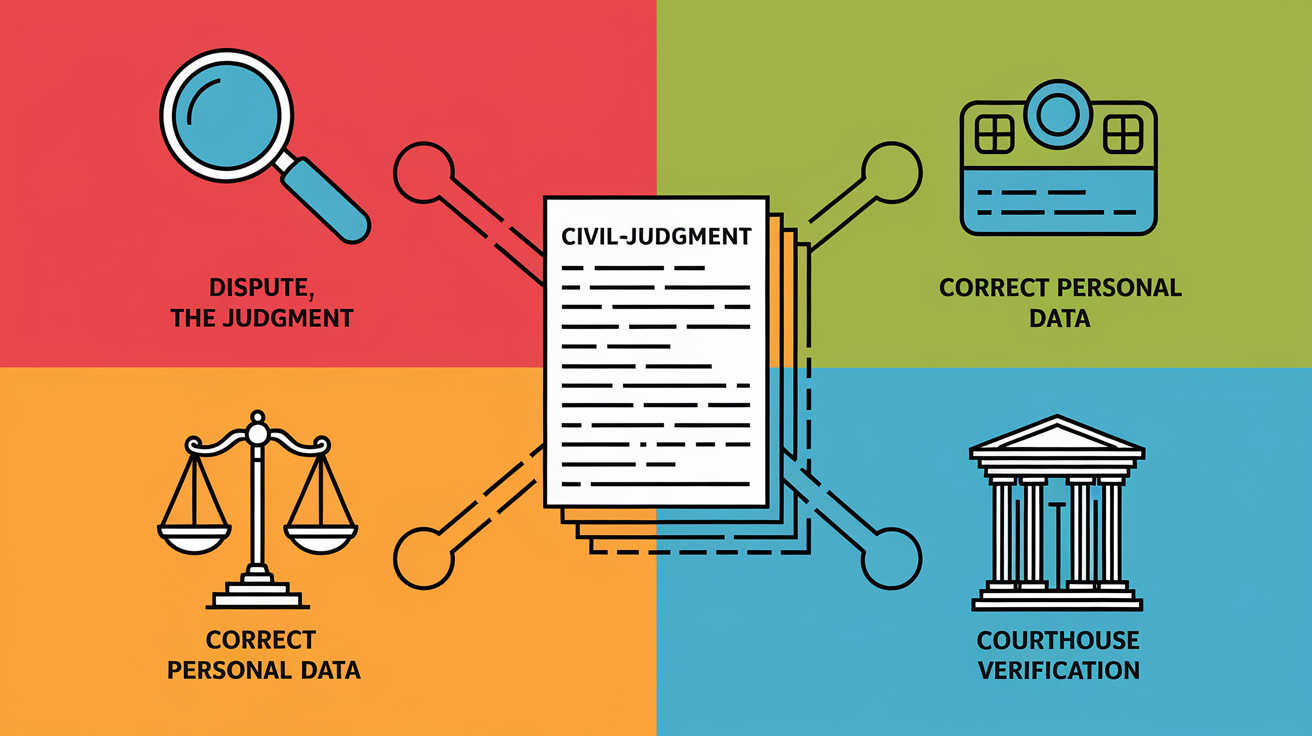
If a judgment shows up on your credit report or you want to stop one from tanking lender decisions, you’ve got four main removal strategies. Paying the judgment in full changes it to “satisfied” status in court records, which might help if you refinance or apply for a mortgage later. But payment alone doesn’t erase the credit-report entry or wipe the public record. Actually removing a judgment from your credit file takes either a successful dispute, a court vacatur, or proof that the reported information is wrong or can’t be verified.
Disputing errors with credit bureaus is usually the fastest route. If the judgment got reported without your Social Security Number, date of birth, or correct legal name, the bureau typically has to delete it because the item fails post-2017 data-quality standards. You can also dispute if the filing date is wrong, the amount is off, or the judgment was dismissed, vacated, or satisfied a long time ago. Credit bureaus have to investigate within 30 days and remove anything they can’t verify through courthouse records. Send copies of court dockets, dismissal orders, or satisfaction documents with your dispute letter to speed things up.
Vacating the judgment in court is your strongest removal option when you were never properly served, the creditor missed a procedural step, or you’ve got a valid legal defense you never presented. Filing a motion to vacate means submitting paperwork to the same court that issued the judgment, explaining why it should be tossed. If the judge grants your motion, the judgment gets erased from the court docket, and you can send the vacatur order to credit bureaus to force deletion. This takes weeks to months and might need an attorney, but a vacated judgment is treated like it never existed.
Common removal approaches:
- Dispute with credit bureaus when the judgment lacks full identifying information or shows incorrect dates, amounts, or case numbers.
- Request courthouse verification by sending a certified letter asking the court clerk to confirm the judgment details or provide proof of satisfaction or dismissal.
- File a motion to vacate if you were never served properly, the plaintiff didn’t follow court rules, or you’ve got new evidence that undermines the judgment.
- Correct personal data by notifying the bureau if the judgment belongs to someone with a similar name or if your Social Security Number was reported wrong, which triggers automatic deletion.
Step-by-Step Action Plan for Removing a Judgment

-
Request your credit reports from Equifax, Experian, and TransUnion through AnnualCreditReport.com or directly from each bureau. Review the public-records section for any judgment entries. Note the court name, case number, filing date, and creditor name.
-
Pull courthouse records by visiting the clerk’s office or searching the county court website using the case number. Get a certified copy of the judgment, satisfaction, or dismissal order to verify accuracy and status.
-
Identify errors or grounds for removal by comparing the credit report to the court docket. Look for mismatched names, wrong filing dates, missing Social Security Number or date of birth, or proof that the judgment was vacated or satisfied.
-
File a dispute with each credit bureau online or by mail, attaching copies of the certified court documents, your dispute letter, and proof of identity. State clearly why the judgment is wrong or can’t be verified.
-
Follow up after 30 days by checking your updated credit report. If the judgment’s still there and the bureau claims it was verified, ask for the name and contact information of the courthouse or data furnisher they used.
-
Send a second dispute or courthouse verification request if the judgment remains, or file a motion to vacate with the court if you have legal grounds. Once the judgment’s removed from the courthouse docket, provide the vacatur order to all three bureaus and request immediate deletion.
State-Specific Rules and Exceptions

The 7-year federal credit reporting period applies nationwide, but state laws decide how long a creditor can enforce a judgment through wage garnishment, bank levies, or property liens. Some states allow judgments to stay enforceable for 5 to 10 years, while others permit 20 years or indefinite renewal. That means a creditor can re-file or extend the judgment over and over. Renewal doesn’t restart the credit-reporting clock. Once 7 years have passed from the original filing date, the judgment has to drop off your credit report even if the creditor renews it for another decade in court.
State enforcement periods matter because a renewed judgment can keep threatening your wages and bank accounts long after it’s gone from your credit file. Always check your state’s statute of limitations on judgment enforcement and the renewal rules. Some states make creditors take specific action within a set window, while others allow automatic renewal with minimal paperwork.
| State Example | Judgment Duration | Renewal Allowed |
|---|---|---|
| California | 10 years | Yes, can renew for additional 10-year periods |
| Texas | 10 years | Yes, can renew for additional 10-year periods |
| New York | 20 years | No formal renewal; enforceable for full 20 years |
| Florida | 20 years | No formal renewal; enforceable for full 20 years |
| Ohio | 5 years | Yes, can renew for additional 5-year periods |
What Happens After the 7-Year Period Ends
Once 7 years have passed from the judgment filing date, the credit bureaus have to automatically remove the entry from your credit report if it was ever reported. Payment status doesn’t matter. An unpaid judgment falls off on the same timeline as a satisfied one. If the judgment still shows up after the 7-year mark, file a dispute with each bureau and include a copy of the court docket showing the filing date, plus a brief letter explaining that the reporting period’s expired under federal law.
Removal from your credit report doesn’t erase the judgment from courthouse records or stop enforcement. Creditors can still garnish your wages, levy your bank account, or place a lien on your property until the state enforcement period expires or the debt gets paid. Lenders who manually search public records will keep finding the judgment, so you might need to explain it or provide proof of satisfaction when you’re applying for a mortgage, business loan, or rental. The 7-year rule governs credit reporting, not legal enforceability.
Final Words
You now know judgments usually drop from credit reports after 7 years from the filing date, and major bureaus largely stopped including them after 2017. Lenders can still find court records, so a judgment can still affect decisions even if it’s not on your report.
Fast removal paths include disputing errors, asking the court to vacate the judgment, and fixing wrong personal data.
If you’re asking how long do judgments remain on credit reports and removal options, start with courthouse records, file disputes, and follow up until the entry is fixed. Small, steady steps can clear the way forward.
FAQ
Q: Can judgments be removed from my credit report and how long does it take for a judgment to be removed?
A: Judgments can be removed from your credit report if they’re incorrect, vacated by a court, or successfully disputed; bureaus must delete unverifiable items within 30 days, otherwise judgments fall off after seven years from filing.
Q: How long can a judgment be on your credit report?
A: A judgment can be on your credit report for seven years from the filing date; note that since 2017 major bureaus largely stopped reporting judgments, but lenders can still find them in public court records.
Q: Can I have a 700 credit score with collections?
A: You can have a 700 credit score with collections if the accounts are few, paid, or older and the rest of your history is strong; but active or recent collections usually lower scores and hurt lending decisions.