


Thinking about refinancing to a shorter term so you can pay off your mortgage fast — but not sure if the bigger monthly bill is worth it?
A shorter-term refinance can cut total interest and build equity much faster, sometimes saving tens of thousands or even six figures.
But it also raises your monthly payment and adds closing costs.
This post walks you through the simple checks you need: calculate payback, test affordability, compare rates and fees, and decide based on how long you’ll stay in the house.
By the end, you’ll know whether sprinting toward payoff makes sense for you.
Key Factors to Evaluate When Deciding on a Shorter-Term Refinance

A shorter-term refinance swaps higher monthly payments for real cuts in total interest. Refinance from 30 years to 15, and you’re speeding up the amortization so more of each payment hits principal from day one. You’ll build equity faster and pay way less interest by the time you’re done. But here’s the catch: you need the cash flow to handle that bigger payment without wiping out your reserves or killing other financial goals.
Before you pull the trigger, figure out your net benefit. Compare lifetime interest under both scenarios and stack it against upfront cost. Refinance closing costs usually run 2% to 6% of the new loan amount, so if you’re refinancing $400,000, expect somewhere between $8,000 and $24,000. To see if it’s worth it, use this: Payback in years = Closing costs ÷ Annual interest savings. If moving to a 15-year loan saves you $143,663 in total interest and costs $10,000 upfront, your payback is under a year. That’s compelling if you’re staying put. Most lenders want at least 20% equity to qualify comfortably, and they’ll check whether that new higher payment fits your debt-to-income ratio.
Your decision also leans on your current mortgage rate versus what lenders are quoting now. Locked in a 30-year mortgage when rates were above 7%? If today’s 15-year rate is mid-4%, you’re getting both a lower rate and a shorter term. That combo magnifies interest savings and gets you debt-free faster. But if your existing rate is already competitive, refinancing might not beat the closing costs, no matter how good the shorter term looks.
Ask yourself these questions before moving forward:
- Can I afford the higher monthly principal and interest payment without draining emergency savings or cutting retirement contributions?
- How long am I staying in this home? Will I be here long enough to recoup closing costs through interest savings?
- Does the new interest rate justify the switch, or am I just shortening the term while keeping a similar rate?
- Do I have at least 20% equity, and does my income support the higher payment under lender debt-to-income guidelines?
- Are there prepayment penalties on my current loan that’d offset the benefit of refinancing early?
- Would making extra principal payments on my existing loan deliver similar results without the upfront expense?
Comparing Loan Term Lengths When Considering a Shorter-Term Refinance

Shortening your mortgage term changes both your monthly bill and total interest. A 15-year mortgage usually carries a lower interest rate than a 30-year loan because lenders face less long-term risk when you’re paying faster. For example, a 15-year refinance might come in at 4.63% (APR 4.9630%), while a comparable 30-year loan could sit at 5.50% (APR 5.6070%). That rate difference compounds. On a $400,000 15-year loan at the lower rate, you’d pay about $3,085.59 each month. A $350,000 30-year loan at the higher rate runs $1,987.26 monthly. Even accounting for different loan amounts, the monthly jump is real when you move to a shorter term with a bigger principal balance.
The amortization schedule shifts hard with a shorter term. On a 30-year mortgage, early payments are mostly interest and principal reduction crawls. It can take years before you start making any real dent in the balance. A 15-year loan flips that. Each payment retires more principal from day one, so equity builds faster and the interest portion shrinks quickly. That accelerated principal reduction is why a shorter term can save you six figures in interest over the life of the loan, even when the starting balance is the same.
| Term Length | Typical Rate Range | Approximate Monthly Payment Impact | Total Interest Outlook |
|---|---|---|---|
| 30-year | 5.50%–6.50% | Lowest monthly payment | Highest total interest paid |
| 20-year | 5.00%–6.00% | Moderate monthly increase | Moderate total interest |
| 15-year | 4.50%–5.50% | Highest monthly payment | Lowest total interest paid |
Calculating Affordability for a Shorter-Term Refinance

Start by comparing your current monthly principal and interest payment to the quoted payment on the new shorter-term loan. Use exact figures from your current loan statement and the lender’s refinance estimate. Small rounding errors can hide a payment increase that’ll strain your budget. In one typical scenario, refinancing from a 30-year loan to a 15-year loan raised the monthly payment by roughly $621, even though the interest rate dropped. That difference might sound manageable in theory, but you need to verify it fits your actual take-home pay after all other fixed expenses.
Lenders calculate your debt-to-income ratio (DTI) by dividing total monthly debt payments (new mortgage payment, credit cards, car loans, student loans) by your gross monthly income. Shorter-term loans push your DTI higher because the monthly payment is larger, so underwriting standards can be stricter. If your DTI is already near the lender’s limit (often 43% for conventional loans), jumping to a 15-year term may disqualify you or force you to pay down other debts first. Lenders also want stable, predictable income. Self-employed or relying on variable commissions? Be ready to document consistent earnings over at least two years.
Beyond DTI, stress-test your cash flow by simulating a few months with the higher payment. Can you still save for retirement, cover regular home maintenance, and keep an adequate emergency fund (three to six months of expenses)? The higher payment cuts into your monthly cushion. If an unexpected expense or temporary income loss hits, you need reserves to fall back on. Run a scenario where your income drops for a quarter or a major repair bill arrives. You’ll see whether the new payment leaves you financially exposed or comfortably covered.
Follow these five steps to run a complete affordability check:
- Gather your current monthly principal and interest payment from your latest mortgage statement, and note your remaining balance and interest rate.
- Get a detailed refinance quote with the new interest rate, term length, and estimated monthly principal and interest payment.
- Calculate the monthly payment increase. Subtract your current payment from the new payment to see the exact dollar difference you’ll need to cover each month.
- Compute your debt-to-income ratio by adding the new mortgage payment to all other monthly debts, then dividing by your gross monthly income. Confirm it stays below your lender’s threshold (usually 43%).
- Stress-test your emergency fund and cash flow. Subtract the higher payment from your monthly take-home, verify you can still contribute to savings and retirement, and confirm your emergency fund covers at least three months of all expenses including the new mortgage payment.
Performing Break-Even and Interest Savings Calculations for a Shorter-Term Refinance

When you refinance to a shorter term, your monthly payment usually goes up, so the traditional break-even formula (Break-even months = Closing costs ÷ Monthly savings) doesn’t work cleanly. Instead, focus on lifetime interest savings and calculate how quickly you’ll recover the closing costs through reduced interest expense: Payback in years = Closing costs ÷ Annual interest savings. For example, if refinancing costs $10,000 and switching to a 15-year term saves you $143,663 in total interest over the remaining life of the loan, you’re saving roughly $9,577 per year in the early years (the exact annual savings varies as the loan amortizes). That puts your payback at just over one year. If you stay in the home longer than 12 months, you come out ahead.
Closing costs for a refinance typically run 2% to 6% of your new loan amount. On a $400,000 refinance, expect to pay between $8,000 and $24,000 depending on lender fees, title charges, appraisal, and any discount points you choose to buy down the rate. Use an amortization calculator or refinance calculator to generate the total interest paid under your current loan for the remaining term, then compare it to total interest on the proposed shorter-term loan. The difference is your gross interest savings. Subtract your closing costs from that number to find your net savings, and divide closing costs by the average annual interest reduction to see how many years it takes to break even.
Most lenders and financial advisors recommend refinancing only if you’re staying in the home at least as long as your payback period. Expect to move in three years and your payback is four years? You won’t recoup the upfront expense. Planning to stay ten years and your payback is one year? The remaining nine years deliver pure savings that can exceed six figures depending on your loan size and rate improvement.
Here are five calculation steps to evaluate your refinance:
- Gather your current loan balance, remaining term in months, current interest rate, and current monthly principal and interest payment.
- Request a detailed refinance quote showing the new rate, new term, new monthly payment, and itemized closing costs.
- Use a refinance calculator to compute total interest paid on your current loan over its remaining life and total interest on the new loan over its full term.
- Subtract the new loan total interest from the current loan total interest to find your gross interest savings.
- Divide your closing costs by your annual interest savings (gross savings ÷ remaining years) to determine payback period in years.
| Scenario | Monthly Payment Change | Lifetime Interest Saved |
|---|---|---|
| Keep current 30-year loan | No change | $0 (baseline) |
| Refinance to 20-year | +$350 | ~$80,000 |
| Refinance to 15-year | +$621 | ~$143,663 |
Evaluating Cash-Flow Impact and Emergency Fund Considerations Before a Shorter-Term Refinance
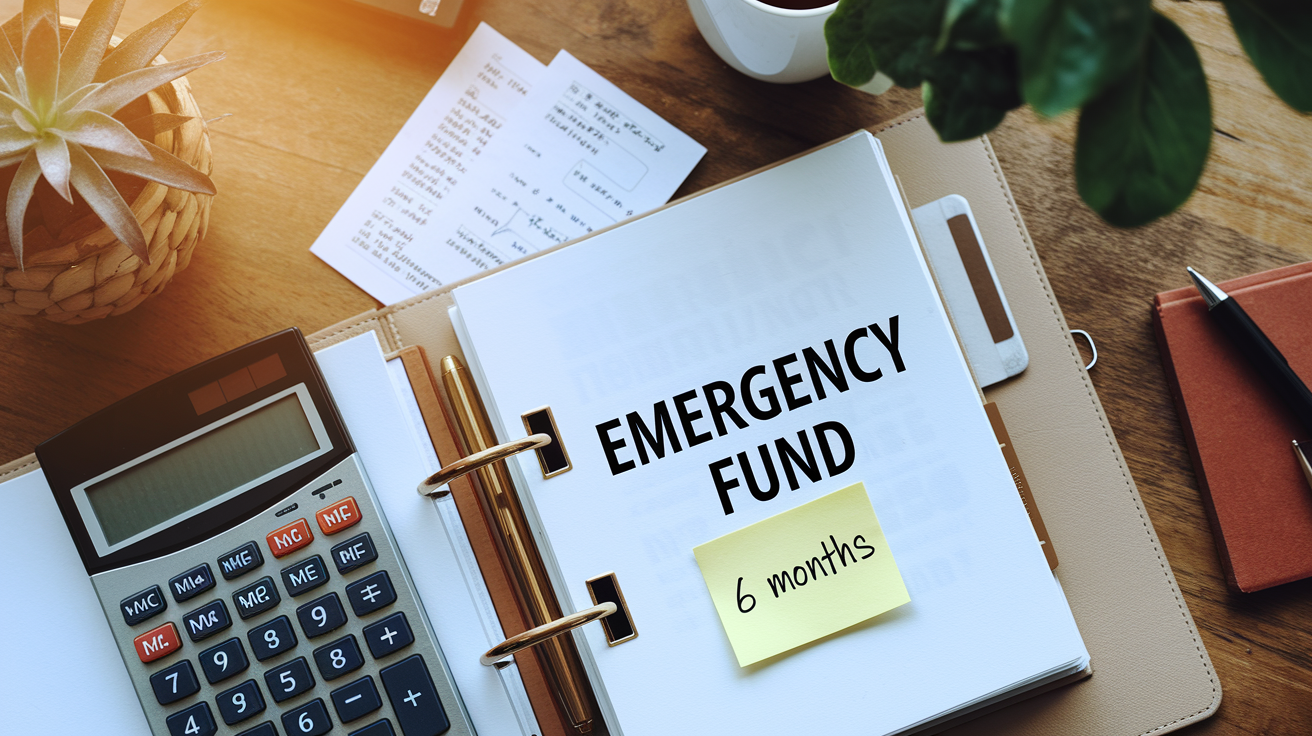
Locking into a higher monthly payment cuts into the cash you have for other financial priorities each month. That loss of liquidity can limit your ability to contribute to retirement accounts, save for college tuition, or build a taxable investment portfolio. Over time, the opportunity cost of diverting an extra $600 or more into mortgage principal each month might outweigh the interest savings, especially if those dollars could earn higher returns in the market or carry valuable tax advantages through a 401(k) or IRA.
A rigid, higher payment also reduces your financial flexibility when unexpected expenses or income disruptions hit. Lose your job or face a major medical bill? You can’t just skip or reduce a mortgage payment the way you could choose to pause discretionary savings. That constraint means you need a larger emergency fund to absorb shocks without risking foreclosure. Many financial planners recommend increasing your reserves to cover six months of expenses (including the new higher payment) before committing to a shorter-term refinance.
Consider how a shorter-term loan fits with your broader wealth-building strategy. If you’re in your peak earning years and can comfortably handle the payment, accelerating mortgage payoff can simplify your finances and reduce total debt before retirement. But if you’re early in your career, carry other high-interest debt, or need to prioritize liquid savings, reduced cash flow may hinder your ability to build net worth efficiently. Weigh the psychological benefit of owning your home sooner against the tangible cost of reduced monthly flexibility.
Assessing Whether Your Financial Goals Align With a Shorter-Term Refinance

A shorter-term refinance makes the most sense when your primary goal is eliminating mortgage debt and owning your home outright as quickly as possible. Planning to retire in 10 to 15 years and want to enter retirement without a monthly mortgage payment? Refinancing to a 15-year term today aligns perfectly with that timeline. Faster equity build and reduced interest expense also accelerate your net worth growth, which can be especially valuable if homeownership is your largest asset and you want to maximize the equity available for future needs or estate planning.
On the other hand, a shorter term may be a poor fit if your priorities center on liquidity, flexibility, or preserving cash flow for other investments. Planning to move within the next few years? The closing costs and payback period often exceed your time horizon, leaving you with a net loss. If you have variable income (freelance work, commission-based pay, or seasonal earnings), the higher fixed payment can create financial stress during lean months. And if you’re balancing competing goals like paying off high-interest credit card debt, funding a child’s education, or building an emergency fund from scratch, those priorities usually deserve attention before you accelerate mortgage payoff.
Here’s a quick guide to scenarios where a shorter-term refinance is generally a good or poor fit:
- Good fit: You have stable, predictable income and expect it to grow or stay steady for the foreseeable future.
- Good fit: You have minimal other debt and a fully funded emergency reserve covering at least six months of expenses.
- Good fit: You’re staying in your home for at least as long as your payback period, ideally much longer.
- Poor fit: You expect to move or sell the home within the next three to five years.
- Poor fit: Your income fluctuates significantly month to month or year to year, and you need maximum flexibility in your monthly budget.
- Poor fit: You have high-interest debt (credit cards, personal loans) or lack an adequate emergency fund. Those should be addressed before locking into a higher mortgage payment.
Alternatives to Refinancing for Faster Payoff

If closing costs or the commitment to a permanently higher payment make refinancing unattractive, you can still accelerate your mortgage payoff using extra payment strategies. Making additional principal payments whenever your budget allows reduces your balance faster and cuts total interest, without the upfront expense or the obligation to pay more every single month. You keep the flexibility to pause or adjust extra payments during tight months, and there’s no need to requalify with a lender or pay appraisal and title fees.
Biweekly payment plans are another popular method. Instead of making one full payment each month, you pay half your monthly amount every two weeks. Because there are 52 weeks in a year, you’ll make 26 half-payments, equivalent to 13 full monthly payments instead of 12. That extra payment each year goes entirely to principal and can shorten a 30-year mortgage by several years while reducing total interest. Many borrowers set this up through automatic bank transfers rather than enrolling in a lender’s biweekly program, which often charges a setup fee.
Here are four alternative strategies to consider:
- Make one extra principal payment per year. Apply a bonus, tax refund, or side-income windfall directly to your mortgage principal. Even one extra payment annually can shave years off a 30-year term.
- Switch to biweekly payments. Set up automatic half-payments every two weeks to generate 13 full payments per year without feeling the pinch of a single large extra payment.
- Request a mortgage recast. If you receive a lump sum (inheritance, sale of another property), apply it to your principal and ask your lender to recalculate your monthly payment based on the new lower balance and remaining term. This avoids refinancing but reduces your monthly obligation.
- Round up your monthly payment. If your payment is $1,487, round it to $1,500 or $1,600 and direct the extra to principal. Small recurring additions compound over time and are easier to sustain than a full refinance.
Final Words
You weighed the key tradeoffs: lower lifetime interest versus a higher monthly payment, closing costs and break-even timing, and whether a shorter term matches your financial goals.
You saw the payback formula and that closing costs (often 2%–6%) and about 20% equity matter when comparing offers. Use the checklist and steps in the article to compare offers apples to apples.
Now run the numbers and answer how to decide whether to refinance to a shorter term for faster payoff — then pick the option that saves interest and fits your life.
FAQ
Q: What is the 2% rule for refinancing and mortgage payoff?
A: The 2% rule for refinancing and mortgage payoff says consider refinancing if the new rate is roughly 2 percentage points lower to cover closing costs; some borrowers also add about 2% extra principal yearly to speed payoff.
Q: What is the 3 7 3 rule in mortgage?
A: The 3-7-3 rule in mortgage is not a standard industry rule; it’s a shorthand some use for specific buydown or break-even setups, so ask your lender exactly what they mean before relying on it.
Q: What is the $100000 loophole for family loans?
A: The $100,000 loophole for family loans refers to IRS rules (Section 7872) that let loans up to $100,000 avoid imputed interest if the borrower’s net investment income is $1,000 or less; confirm with a tax advisor.