


What if one missing paper could cost you the house?
Getting your first mortgage means gathering pay stubs, W-2s, tax returns, bank and investment statements, credit info, proof of residency, and identity documents.
Lenders won’t move forward until they see it all, and missing items are the most common reason deals slow or fall apart.
This checklist lays out every document first-time mortgage applicants need, why lenders ask for it, and quick tips to get files ready so you speed up approval and avoid last-minute chaos.
Complete Mortgage Application Document Overview for First-Time Buyers

Getting your first mortgage means pulling together documents from a bunch of different places before you hit submit. You’ll need proof of income, assets, debts, credit, work history, and identity. Lenders won’t budge until everything’s in, and missing stuff is what trips people up most. Get these files ready early and you’ll speed up underwriting, plus you won’t be hunting through old emails when the seller wants to close fast.
Lenders use your paperwork to answer three questions: Can you actually afford the monthly payment? Do you have enough cash to close? Are you someone who pays bills on time? They check income to make sure you earn what you say you do. They look at assets to confirm you can cover the down payment and still have money left over. They pull credit to see how you’ve handled debt before. And they add up your debts to figure out your debt-to-income ratio (DTI). Every document ties back to one of these approval factors, so don’t expect lenders to skip anything or accept half the story.
Most lenders follow the same timeframes. Pay stubs go back 30 to 60 days. Bank and investment statements need to be from the past 2 months, all pages. W-2s and federal tax returns cover the last 2 years to show your income is stable. These windows aren’t flexible. Lenders need enough history to spot patterns, not just a quick snapshot.
Here’s what first-time buyers should gather:
- Pay stubs from the last 30 to 60 days (every page, with year-to-date totals showing).
- W-2 forms for the past 2 years so they can verify salary or hourly income.
- Federal tax returns for the past 2 years (your personal returns, and if you’re self-employed, business returns too).
- Employment verification letter from your current job when the lender asks for it.
- Bank statements for every checking and savings account from the past 2 months (all pages, even the blank ones).
- Investment account statements for the most recent quarter or last 2 months (401(k), IRA, brokerage, bonds).
- Full list of current debts with what you pay monthly (car loans, student loans, credit cards, personal loans).
- Credit report (lenders pull this themselves, but review your own copy first to fix mistakes).
- Where you’ve lived for the past 2 years, with rent records and landlord contact info.
- Gift letter and proof of gift money if part of your down payment comes from family or another approved source, plus any situation-specific documents like divorce papers or bankruptcy discharge records.
Income Verification Requirements for a First-Time Mortgage Application
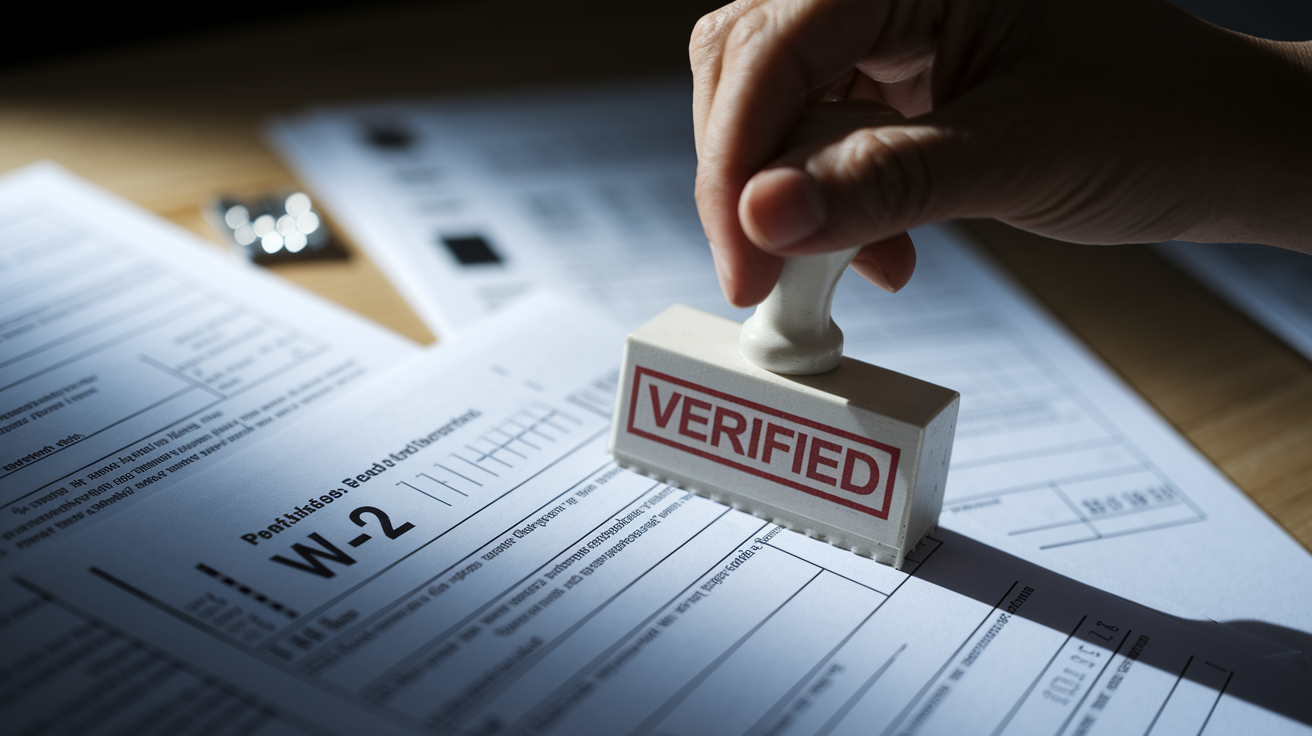
Lenders dig into income documents to confirm three things: you make what you claim, your income doesn’t bounce around, and it comes from real, checkable sources. They cross-check pay stubs against W-2s and tax returns to catch anything that doesn’t line up. Changed jobs in the past 2 years? They’ll want you to explain why and provide an employment letter or offer letter. They’re checking that the switch didn’t cut your pay or signal you can’t hold down work. Salary employees have it easier. Self-employed people and contractors get put under a microscope because income isn’t as predictable.
Pay stubs need to cover at least the last 30 to 60 days and show year-to-date numbers so the lender can figure out your monthly income. Every page matters, even if it’s just a list of deductions. W-2 forms from the past 2 years verify what your employer reported and confirm where you worked. Federal tax returns for the same 2 years let the lender see if what you told them matches what you told the IRS. If your income dropped between years, get ready to explain it. Employment verification letters come straight from HR or your boss and confirm your job title, salary, start date, and that you’re still working there. These matter most if you’re new to the job or got a recent raise. Lenders want written proof that the higher pay is permanent, not just temporary. Say you got a $50,000 bump six months ago. An offer letter or updated contract documenting that increase stops underwriters from using your old number.
Self-employed borrowers and 1099 contractors have to provide business tax returns for 1 to 2 years, a current profit-and-loss (P&L) statement, a balance sheet, and business bank statements from the past 2 months. Lenders figure out qualifying income by subtracting business expenses from what you brought in. If your 1099s add up to $100,000 but you deducted $50,000 in expenses on your return, the lender treats your income as $50,000, not $100,000. That’s why self-employed applicants often need a CPA letter confirming the math. Lenders review multiple years to smooth out swings and make sure your business isn’t about to fold.
Income documentation checklist:
- Pay stubs: last 30 to 60 days, every page.
- W-2 forms: past 2 years from each employer.
- Federal tax returns: past 2 years, signed and complete (include all schedules).
- Employment verification letter: current employer confirms your job title, salary, and start date.
- 1099 forms: every client who paid you more than $600 in the calendar year.
- Profit-and-loss statement and balance sheet: current-year numbers for self-employed applicants.
- Business bank statements and CPA letter: past 2 months of business accounts, plus accountant sign-off when needed.
Asset Documentation Needed for First-Time Mortgage Applicants

Lenders look at your assets to make sure you’ve got enough cash for the down payment, closing costs, and reserves. Reserves are extra funds sitting there after closing, usually 2 to 6 months of mortgage payments depending on the loan program. They also check where your money came from to confirm you didn’t take out an undisclosed loan, which would jack up your debt without them knowing. Every big deposit gets looked at hard, so be ready to explain any transfer over a few hundred bucks if it doesn’t match your regular paycheck.
Big, mysterious deposits can stall or kill your approval. Sold a car for $8,000 and deposited the cash? Provide a bill of sale and explain it in writing. Family member gave you $10,000 for the down payment? You need a formal gift letter signed by them saying it’s a gift, not a loan, plus bank proof showing they actually had that money. Lenders call this “seasoning.” Money that’s been sitting in your account for at least 60 days is seasoned and doesn’t need as much documentation. Fresh deposits, especially big cash amounts, throw up red flags because lenders can’t verify where it came from. Don’t deposit unexplained cash while your application’s moving.
| Account Type | Timeframe Required | Why It’s Needed |
|---|---|---|
| Checking and savings accounts | Past 2 months, all pages | Verify down payment money, reserves, and transaction history to spot hidden debts or weird deposits |
| Investment accounts (stocks, bonds, mutual funds) | Most recent quarter or past 2 months | Show additional liquid assets you can turn into cash for reserves or closing costs |
| Retirement accounts (401(k), 403(b), IRA) | Most recent quarterly statement or past 2 months if monthly statements | Document long-term savings and calculate available funds if you’re borrowing or withdrawing from retirement for the down payment |
| Gift funds | Gift letter plus donor’s bank statement proving the money exists | Confirm down payment help is really a gift, not a loan that messes up your debt-to-income ratio |
Credit and Debt Information Needed for a Mortgage Application

Lenders pull a tri-merge credit report that combines data from Equifax, Experian, and TransUnion. This report shows your payment history, current debts, credit inquiries, public records like bankruptcies or liens, and your credit score. You don’t submit this yourself. The lender orders it straight from the bureaus using your Social Security number and written permission. But pull your own free reports from all three bureaus before applying so you can dispute mistakes, pay off small collections, or explain negative marks ahead of time. Credit report errors happen all the time, and fixing them after you apply causes delays. “I didn’t know that $200 medical bill was in collections” won’t help when your approval’s stuck.
Lenders also need a full list of your monthly debt payments to calculate your debt-to-income ratio (DTI). This ratio compares total monthly debt to your gross monthly income. Typical debts are car loans, student loans, personal loans, credit card minimums, alimony, child support, and your current rent or mortgage. A common guideline is keeping DTI below 36 percent, though some programs accept up to 50 percent in specific cases. Say your gross monthly income is $6,000 and your debts total $2,400 per month. Your DTI is 40 percent. That’s fine for some programs, too high for others. Lenders use DTI to see if you can handle a new mortgage payment on top of what you already owe. The lower your DTI, the better your approval odds and rate.
If your credit report shows late payments, charge-offs, collections, or public records, the lender might ask for a letter of explanation. Keep it short and factual. Focus on what happened and what you did to fix it. “I was laid off in March 2023 and missed two credit card payments. I got rehired in May 2023, caught up on everything by July 2023, and I’ve been current since.” Don’t write a novel or make excuses. Lenders want to see the problem’s behind you and won’t happen again.
Residential History Documentation for Mortgage Underwriting

Lenders verify where you lived for the past 2 years to check housing stability and payment reliability. Renters need to show rent payment history or proof you paid on time, plus landlord contact info so the lender can confirm your rental record. Paid rent in cash or through informal setups without receipts? Gather canceled checks, bank transfers, or a signed letter from your landlord confirming amounts and dates. Homeowners applying for a second mortgage or refinancing an investment property should provide recent mortgage statements showing the balance, monthly payment, and payment history.
Late rent doesn’t automatically disqualify you, but you’ll need to explain it. Lenders tell the difference between one or two isolated late payments from a specific event and a pattern of constant delays. A letter of explanation should document the reason (job loss, medical emergency, temporary income drop) and show the problem’s resolved. If you were late on rent during the same time you missed credit card payments, the explanation should connect both to a single event, not ongoing money problems.
Residential history documents to prepare:
- Rent receipts, canceled checks, or bank transfer records showing on-time payments.
- Landlord contact information: name, phone number, mailing address for verification.
- Mortgage statements (if you own property now): past 12 months showing payment history.
- Full address history for the past 2 years, with move-in and move-out dates for each place.
- Letters of explanation for any late rent or mortgage payments, tied to what happened and how you fixed it.
Additional Documents That May Be Required During a Mortgage Application

Every borrower needs a government-issued photo ID to verify identity and legal name. Acceptable forms are a valid driver’s license, state ID card, U.S. passport, or permanent resident card. Lenders compare the name on your ID to the name on your loan application, pay stubs, and tax returns. If your legal name changed because of marriage or court order, provide a copy of your marriage certificate or legal name-change documents. Mismatched names delay approval because underwriters can’t confirm all the documents belong to the same person.
If you’re divorced and paying or receiving alimony or child support, the lender needs a copy of the divorce decree or separation agreement to verify amounts and duration. Alimony or child support you receive can count as qualifying income if you prove it’ll continue for at least 3 years after closing. Support payments you’re obligated to make count as monthly debt and bump up your DTI. Provide the full court order, not just a summary, and include any modifications or updated agreements.
Bankruptcy and foreclosure paperwork is required if you filed within the past 7 years. For Chapter 7 or Chapter 11 bankruptcy, lenders typically wait 3 to 4 years from the discharge date, though some programs allow 2 years if you can document serious circumstances like job loss or illness. Chapter 13 bankruptcy has a 2-year waiting period from discharge or 4 years from dismissal. Filed more than two bankruptcies in the last 7 years? Expect a 5-year wait. Foreclosure waiting periods are usually 7 years but can drop to 3 if you document what happened and meet other requirements like rebuilding credit and keeping income stable. Alternatives to foreclosure (charge-offs, short sales, pre-foreclosure sales, or deed-in-lieu agreements) typically carry a 4-year wait. You’ll need discharge papers, court records, and a letter explaining what caused the financial trouble and how things have improved.
Post-Submission Mortgage Document Requests and Timeline

After you submit your initial application and documents, the lender starts verifying everything. They contact your employer to confirm you still work there and check your bank to verify balances. This is called underwriting, and it usually creates follow-up requests for updated or extra documents. Conditional approval means the lender will approve your loan if you meet specific conditions (updated pay stubs, proof you paid off a debt, or an explanation for a recent deposit). Pre-approval is an earlier estimate of how much you can borrow based on a quick document review. Conditional approval happens later, after full underwriting.
Lenders often request updated documents as your file moves toward closing because financial info expires fast. Pay stubs older than 30 to 60 days are stale and need refreshing. Bank statements more than 60 days old might need updating to confirm your cash position hasn’t changed. If your closing gets delayed a week or two, expect the lender to ask for another month of pay stubs and bank statements. Employment status gets re-verified within a few days of closing. Lenders call your employer to make sure you’re still working and haven’t quit or been fired. Don’t leave your job, even if you’re planning to start a new one after closing, until the loan funds and the house is legally yours.
Common post-submission document requests:
- Updated pay stubs: if the latest ones in your file are more than 30 to 60 days old.
- Updated bank and investment statements: if statements are more than 60 days old or closing’s delayed.
- Explanations for new transactions: any big deposit or withdrawal that showed up after you submitted the initial statements.
- Employment re-verification: lender calls or emails your employer within 3 days of closing to confirm job status.
- Conditional approval items: specific documents the underwriter listed as required before final approval, like payoff letters for debts or proof of homeowners insurance.
- Final approval confirmation: once all conditions are met, the lender issues “clear to close” and schedules funding.
Mortgage Document Organization Tips and Mistakes to Avoid

Organizing your mortgage documents before applying saves time and cuts down on errors. Create a simple folder system with separate sections for income, assets, debts, identification, and residential history. Scan paper documents into PDFs and label each file clearly with the document type and date (“PayStubApril2025,” “BankStatementCheckingMarch2025,” “W22024″). Keep the originals somewhere safe. Lenders sometimes request physical copies or notarized documents at closing. Digital files make it easy to upload through the lender’s secure portal and let you respond quickly when the underwriter asks for updates.
Never send confidential documents like tax returns, bank statements, or Social Security numbers through regular email. Use only the lender’s approved upload portal or encrypted file-sharing system. If your lender emails you asking you to reply with documents attached, ask for a secure upload link instead. Scammers pretend to be lenders and loan officers to steal personal info, so verify requests by calling your loan officer directly using a phone number you found yourself, not one in the email.
Organized document management directly affects how fast your loan gets approved. Lenders process complete, clearly labeled files faster than messy submissions with missing pages or blurry scans. When an underwriter has to email you three times to get all the pages of a bank statement, your file sits longer and your closing date’s at risk. First-time buyers who prepare a full checklist, scan everything ahead of time, and respond to requests within 24 hours typically close on schedule. Those who scramble to find documents or submit partial files face delays and sometimes lose the house to another buyer with faster financing.
Common document mistakes that delay approval:
- Missing gift letters or incomplete donor documentation: forgetting the donor’s signature or not providing proof the donor actually has the gifted funds.
- Submitting partial bank or investment statements: uploading only the first page instead of all pages, including blank ones.
- Big, unseasoned deposits without explanation: depositing cash or transfers without documenting the source first.
- Applying for new credit during underwriting: opening a credit card, financing a car, or co-signing a loan after your application’s submitted.
- Closing bank accounts or moving money between accounts: consolidating accounts or transferring funds without telling the lender creates gaps in your asset documentation.
- Providing inconsistent income documentation: submitting pay stubs that don’t match W-2 year-to-date totals or tax returns that show different income numbers.
- Delivering documents late or one at a time: waiting until the lender asks twice or submitting one statement at a time instead of the full 2-month set.
- Uploading wrong file formats: sending photos instead of PDFs, or scans so dark or blurry the underwriter can’t read account numbers or dates.
- Using regular email to send sensitive documents: exposing your Social Security number, account details, and tax data to hackers or phishing scams.
- Not checking credit reports for errors before applying: discovering wrong late payments, identity mix-ups, or unpaid debts only after the lender pulls your credit and flags the problems.
Final Words
Get your paperwork together before you hit submit to avoid slowdowns and extra stress.
This guide walked you through the main categories lenders want: income (pay stubs 30–60 days, W-2s and tax returns for 2 years), assets (full bank and investment statements for 2 months or a quarter), credit and debt details, residential history, and case-specific docs. It also covered post-submission updates and organization tips that speed underwriting.
Use this loan document checklist for first-time mortgage applicants to stay ready and move toward closing with confidence.
FAQ
Q: What documents must first-time mortgage applicants prepare?
A: First-time mortgage applicants must prepare income, asset, debt, credit, identity, residential, and property documents—pay stubs, W-2s, tax returns, bank and investment statements, gift proof, ID, debt list, and purchase agreement.
Q: What income documents do lenders require for mortgage approval?
A: Income documents lenders require include last 30–60 days of pay stubs, two years of W-2s and federal tax returns, and employment verification; self-employed borrowers need business returns, P&L, bank statements, or a CPA letter.
Q: What asset documentation is needed to verify my down payment and reserves?
A: Asset documentation needed includes full checking and savings statements for two months (all pages), recent investment statements, retirement account statements, a gift letter plus donor bank evidence, and explanations for large deposits.
Q: What credit and debt information will lenders check and how do they use DTI?
A: Lenders check a tri-merge credit report and a full debt list (car, student, personal loans, credit cards). They use those to calculate DTI (debt-to-income) and assess risk—aiming generally below 36% though some programs allow higher.
Q: What residential history documents do I need to provide?
A: Residential history documents include a two-year address history, rent payment receipts or landlord contact, prior mortgage statements if applicable, and written explanations for any late or missed housing payments.
Q: What additional case-specific documents might lenders ask for?
A: Additional case-specific documents might include government ID, divorce decree, child support or alimony records, bankruptcy discharge papers, and foreclosure documents; waiting periods for bankruptcy or foreclosure vary by type and circumstance.
Q: Will lenders ask for more documents after I submit my application?
A: After you submit your application lenders will verify information and commonly request updated pay stubs, refreshed bank statements, employment re-verification, explanations for transactions, and any conditional approval items before final approval.
Q: How should I organize and submit mortgage paperwork to avoid delays?
A: To organize and submit paperwork, scan clearly, label files, include every page, keep originals handy, use secure uploads (not unsecured email), make a printable checklist, and refresh documents close to closing.
Q: What common document mistakes delay mortgage approval?
A: Common document mistakes that delay approval include missing gift letters, leaving out statement pages, unseasoned large deposits, opening or closing accounts, applying for new credit, late uploads, and wrong file types.
Q: How far back do lenders typically request each type of document?
A: Lenders typically request pay stubs covering the last 30–60 days, bank statements for two months, W-2s and federal tax returns for two years, and investment statements for the most recent quarter or two months.