


Think talking to a debt collector will wreck your credit?
It doesn’t have to.
Start by demanding written validation, never admit the debt, and don’t send money until you have a signed settlement that says “satisfaction in full.”
Do that and you can lower what you owe, stop harassment, and keep your score from getting new damage.
This post walks you through the exact, credit-safe steps to negotiate, what to ask for, scripts to use, and how to avoid legal and reporting traps, so you protect your credit while resolving the debt.
Immediate Credit‑Safe Steps for Negotiating with Collectors

The safest way to start is simple: validate the debt first, don’t admit anything, and avoid triggering new black marks. Before you discuss what you owe or what you can pay, request a debt validation letter. This shows the collector you know your rights and won’t negotiate blind. If the debt isn’t yours, or they can’t prove they own it, your credit stays protected because you never said it was valid.
FDCPA rules matter. Collectors can’t contact you before 8:00 a.m. or after 9:00 p.m., and they can’t call your workplace if you tell them to stop. Verbal promises mean nothing. A collector might say “just pay this today and we’ll settle it,” but without a written agreement with your name, their name, the account number, and clear “settlement in full” language, that payment can restart the clock or leave the account open for another round.
Partial payments can restart legal timelines in some states. Send money before you negotiate a full settlement and you might reset the statute of limitations, giving them more time to sue. That one payment can stretch the lawsuit window by years depending on where you live.
Before you respond to a debt collector, do these five things:
- Request a debt validation letter in writing within 30 days of first contact to confirm it’s legit and check the account details.
- Review the validation carefully for errors in balance, creditor name, or proof they actually own this.
- Check your state’s statute of limitations to see if they can still sue you.
- Figure out a firm dollar amount you can actually afford, lump sum or monthly, based on your real budget.
- Never admit the debt is yours or send a payment until you’ve got a written settlement agreement.
Understanding Debt Validation and Collector Legitimacy Checks

You can demand they verify the account balance, creditor name, and proof they legally own the debt. Debts get sold for pennies. The FTC found debt buyers paid an average of 4.0 cents per dollar of uncollected debt back in 2013, so the collector contacting you might not even be the original creditor. If they can’t prove they bought it, don’t negotiate. Written validation should arrive within several business days of your request.
Validation protects you from negotiating with the wrong collector or paying twice if the debt gets sold again. If they can’t verify basic facts, they might be trying to collect on something they don’t legally own, or the debt might already be paid, expired, or disputed. Requesting validation forces them to produce documents before you commit to anything.
A complete validation letter needs to include:
- Your full name and the account number tied to the debt
- The name of the original creditor and the total amount owed
- Proof the collector owns the debt or has authority to collect it
- A breakdown of any fees, interest, or charges added since the original balance
Building a Credit‑Safe Negotiation Plan

Build a list of past‑due accounts with the creditor name, current balance, and how many days you’re behind. Lump‑sum offers usually get deeper reductions because creditors prefer guaranteed cash over uncertain monthly payments. Settlements show up as “settled” or “paid for less than full balance” and stay on your credit report for seven years from the original delinquency date, not when you settled. Start with an offer around 20 to 30% of the balance so you’ve got room to go higher if they counter.
Before you make any offer, calculate what you can realistically afford without missing other payments. If you can’t do a lump sum, plan monthly installments, but creditors typically accept lower totals when you pay all at once. If you offer installments, get the payment schedule, total amount, and “settlement in full” clause in writing before the first payment.
Offering too much right away kills your leverage. Collectors expect negotiation, so a low opening offer tells them you understand the game and aren’t desperate.
Prioritizing Accounts by Risk
Contact creditors most likely to sue first. Use the age of the delinquency and account status as your guide. Accounts 90 days or more past due, charged off, or held by large national creditors with aggressive legal teams carry higher lawsuit risk. Smaller debts or older ones may be less urgent if the statute of limitations is getting close.
Focus on creditors that regularly file lawsuits in your area and on accounts big enough to justify court costs. Medical bills and utility debts often get sold to third‑party buyers who sue less often, but credit card companies and personal loan servicers usually move faster.
Negotiation Scripts and Credit‑Friendly Communication Tactics

Your phone script should include a hardship summary, a clear dollar offer, and explicit language asking for written settlement confirmation. Rehearse before you call so you sound calm and ready. Write down the rep’s full name, the time you called, and how long you talked. This protects you if the collector later denies what was discussed or if you need to report illegal behavior.
Keep your explanation short and honest. Collectors respond better to straightforward hardship stories than long explanations. State your situation, name a specific dollar amount you can pay, and ask if they’ll accept it as settlement in full. Then stop talking and wait.
Sample phrases collectors respond well to:
- “I can pay $[specific amount] as a one‑time settlement because of [job loss, medical bills, etc.]. Will you accept that in full satisfaction of this debt?”
- “Please send me a written settlement letter with the amount and language that this payment satisfies the account.”
- “I need confirmation in writing before I send payment. Can you email or mail that today?”
- “What’s the lowest lump‑sum amount you’re authorized to accept?”
- “If I pay $[amount] today, will you report this as ‘paid in full’ or remove it from my credit report?”
- “I’m recording this conversation for my records. Please confirm your name and the settlement terms again.”
Pay‑for‑Delete and Other Removal Strategies (When They Work)

Pay‑for‑delete isn’t guaranteed. Credit bureaus discourage removing accurate negative information, but some collectors will delete the account from your credit report if you pay a settlement or the full balance. Get explicit written terms before you pay, and understand that deletions don’t erase the seven‑year delinquency timeline if the account was already reported as late or charged off. The delinquency date controls how long the mark stays, not when you settled.
Collectors who accept pay‑for‑delete are usually small third‑party agencies or debt buyers willing to trade credit‑report removal for faster payment. Large original creditors rarely agree to delete accurate information because they report to the bureaus under data‑furnishing agreements. If a collector verbally promises deletion, get it in writing with specific language like “upon receipt of payment, [collector name] will request deletion of account [number] from all three credit bureaus.”
Relying on improper deletion promises is risky. If they don’t follow through, you’ve already paid and have no leverage. Some states have consumer‑protection laws that let you sue for breaches of written settlement agreements, but verbal promises are nearly impossible to enforce.
| Strategy | Likelihood of Success | Credit Impact |
|---|---|---|
| Pay‑for‑delete with third‑party collector | Moderate; depends on collector policy | Best case: account removed; worst case: remains as “settled” |
| Negotiating “paid in full” vs. “settled” language | Low; most creditors report settlements accurately | “Settled” notation remains for 7 years; still negative |
| Disputing inaccurate data after settlement | High if data is truly inaccurate | Corrects errors; does not remove accurate negatives |
Setting Up Affordable Repayment or Settlement Plans Safely

Lump sums get deeper discounts because collectors prefer guaranteed cash over the risk of missed installments. Collectors might refuse payment plans on sold debts, especially if the debt changed hands multiple times. Miss a single payment and you can void the agreement, restart the full balance, and sometimes extend the legal window for collection or lawsuit. Written letters need to include the payment schedule, total amount, and “satisfaction in full” language before you send the first dollar.
Can’t afford a lump sum? Propose a realistic monthly amount and total settlement figure. Like “I can pay $100 per month for six months, totaling $600, to settle this $1,500 debt.” Expect them to counter with a higher total or shorter timeline. Negotiate the total down, not just the monthly payment, because a low monthly payment stretched over many months can cost more than a slightly higher lump sum.
Get every detail in writing before you agree. If the collector sends a letter that says “pay $600 over six months” but doesn’t state “this settles the debt in full,” you might pay the $600 and still owe the rest.
To set up payment plans safely, follow these five steps:
- Confirm in writing the total settlement amount, number of payments, amount of each payment, and due dates.
- Verify the letter says something like “upon receipt of final payment, the account will be considered satisfied in full.”
- Schedule payments from a bank account not linked to the creditor to avoid automatic withdrawals that could mess up negotiations.
- Make each payment on the exact due date and keep confirmation receipts, transaction numbers, and bank statements.
- After the final payment, request a paid‑in‑full letter and check your credit reports to make sure the account updated correctly.
Protecting Your Credit Reports During and After Negotiations

Settled accounts stay on your credit report for seven years from the original delinquency date, not when you settled. Disputes can remove wrong information if you find errors in balance, account status, or creditor name. Credit bureaus have to investigate and fix reporting errors under the Fair Credit Reporting Act. Partial payments might restart the reporting clock in some states, so don’t make any payment until you’ve got a complete settlement agreement.
Track the original delinquency date on each account because that’s what controls when the negative mark ages off your report. If an account went delinquent in January 2023, it falls off in January 2030 no matter when you settled. Settling sooner stops more collection activity and can bump your score slightly by closing an active collection, but it won’t shorten the seven‑year timeline.
Post‑settlement tasks you need to complete:
- Pull your credit reports from all three bureaus (Equifax, Experian, TransUnion) 30 days after settlement to confirm the account shows “settled” or “paid.”
- Dispute any wrong information like incorrect balances, wrong settlement amounts, or accounts that should’ve been deleted per your pay‑for‑delete agreement.
- Keep copies of settlement letters, payment receipts, and dispute confirmations in a folder for at least seven years in case the debt comes back.
- Set a calendar reminder to check your reports every six months to catch new collection attempts or errors early.
- Keep making all other payments on time to rebuild your score and prevent new marks from overshadowing the settled account.
Documentation Practices That Preserve Credit and Legal Protection
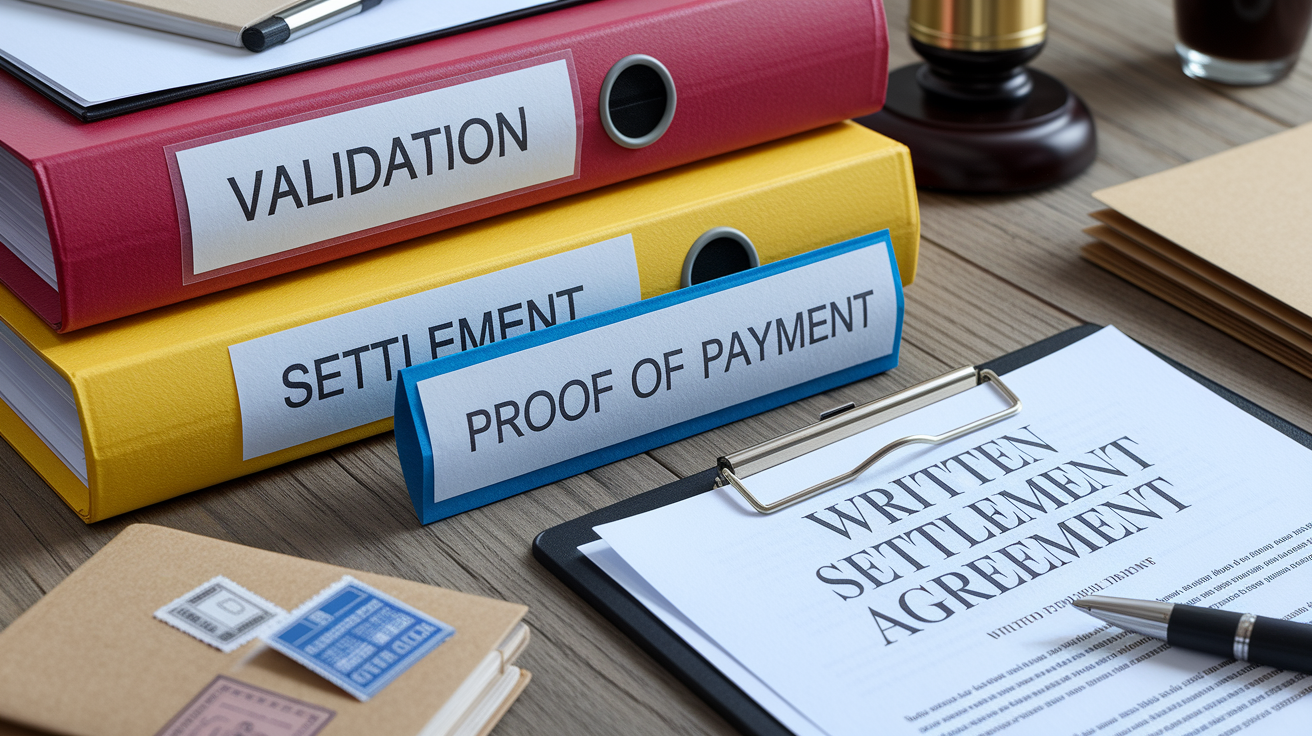
Keep settlement letters, receipts, call logs, and proof of payment for several years. Collectors can resurface, debts can get resold, and reporting errors can show up long after you think an account is closed. Certified mail or return receipt prevents arguments about whether you sent a validation request or got a settlement offer. If a collector later claims you never paid or tries to collect again, your documentation is your defense.
Make a payment record evidence folder with physical or digital copies of every document tied to the negotiation. Include the original collection notice, your debt validation request, their response, your settlement offer letter, the written settlement agreement, payment confirmations, and any follow‑up letters. Label each one with the date, account number, and collector name so you can grab it fast if needed.
Documents you must keep:
- Original debt validation letters and responses showing the collector’s proof of ownership
- Written settlement agreements with all terms, including payment amounts, schedules, and “satisfaction in full” language
- Bank statements, canceled check images, or transaction receipts proving each payment cleared
- Correspondence logs with dates, times, rep names, and summaries of what got discussed or agreed to during phone calls
When to Seek Legal or Professional Assistance

Get help when you’re facing lawsuits, wage garnishment threats, or repeated FDCPA violations. If a collector files a lawsuit, you need an attorney to respond and protect your rights in court. Ignore a lawsuit and you risk a default judgment, wage garnishment, or bank levies that wreck your finances and credit way worse than settling would have. Collectors can’t harass you, lie about what you owe, or contact you at banned hours. If they do, report violations to the Consumer Financial Protection Bureau and your state attorney general.
Nonprofit credit counselors can help you prep repayment strategies, review settlement offers, and connect you with legal aid if you can’t afford an attorney. They won’t negotiate for you like a for‑profit debt settlement company does, but they can walk you through your options and help you figure out if settlement, a debt management plan, or bankruptcy makes more sense. If you’re uncomfortable managing negotiations, feel pressured by collectors, or don’t understand the legal or tax stuff around settlement, talk to a professional before you pay.
Final Words
Start by validating the debt, avoiding any admission of liability, and getting every promise in writing. We covered call timing limits, scripts to use, and why partial payments can restart timelines.
You also learned how to check a collector’s legitimacy, build a negotiation plan, weigh lump‑sum versus payment plans, and keep records like receipts and call logs.
Use these steps when negotiating with debt collectors without damaging credit. Do what you can today. Small steps add up, and you can protect your score.
FAQ
Q: What is the 7 7 7 rule for debt collectors?
A: The 7 7 7 rule for debt collectors is not a federal law; it’s an informal tactic some use. Treat it as a negotiation approach, request debt validation, and get any deal in writing.
Q: What percentage will debt collectors usually settle for?
A: Debt collectors usually settle for roughly 30% to 70% of the balance, often lower for lump‑sum buys; start offers at 20–30% to leave negotiation room and insist on written terms.
Q: Does negotiating with creditors hurt credit score?
A: Negotiating with creditors doesn’t automatically hurt your credit score, but settling or making partial payments can be reported as “settled” and may lower your score for up to seven years.
Q: Will creditors accept 50% settlement?
A: Creditors will accept a 50% settlement sometimes, especially on older or sold debts and for lump‑sum payments; results vary, so get a written “settlement in full” before you pay.