


Shocking: 44% of consumers have at least one error on their credit reports.
Those mistakes can shave dozens of points off your score, even if you paid on time.
Good news: you can fix much of this faster than you think.
This post gives proven, step-by-step moves to repair credit fast: how to pull free reports, spot and dispute errors, lower card usage, negotiate with collectors, and set up autopay to rebuild payment history.
Follow these steps and you could see real gains in weeks, not years.
Immediate Steps to Start Restoring Credit
Pull your credit reports from all three major bureaus. That’s the first move. You can grab free weekly reports from AnnualCreditReport.com, the federally authorized portal for Equifax, Experian, and TransUnion. Checking your own reports won’t hurt your score, so look at them at least once a year or more often if you’re about to apply for a mortgage, auto loan, or other major credit. A 2024 study found 44% of consumers have at least one error on their credit reports, which makes this step pretty essential.
Once you’ve got your reports, start hunting for problems. Look for accounts that aren’t yours, incorrect balances or credit limits, late payments you actually paid on time, duplicate accounts, identity errors (wrong name, address, or date of birth), and anything that says you’ve been marked deceased. These mistakes can drop your score by dozens of points even when you’ve never missed a payment. Spot an error? File disputes right away. Bureaus typically have 30 days to investigate, sometimes 45 if you send additional information during their review. You can dispute online, by certified mail with return receipt requested, or by phone. The bureau has to notify you of the results within five business days after wrapping up its review.
While disputes are working their way through the system, start building better credit habits. Payment history accounts for about 35% of your FICO Score and 41% of your VantageScore. On-time payments matter more than anything else. Set up autopay on at least the minimum for every account and pay balances down hard to lower your credit utilization. Utilization accounts for up to 30% of your score. It’s calculated as total balances divided by total limits times 100. Keep it under 30%, ideally much lower. With a $5,000 total credit limit, that means keeping balances under $1,500. These habits signal responsible behavior and can start raising your score in weeks to months.
First Actions for Credit Repair (Do in Order):
- Download free credit reports from all three bureaus through the federally authorized portal. Weekly reports are available.
- Review each report carefully and list every error: wrong accounts, incorrect payment history, outdated negative marks, duplicate entries, and personal info mistakes.
- Submit disputes to each bureau reporting the error, online or by certified mail, with copies (not originals) of documents proving the mistake.
- Set up autopay for every credit account to cover at least the minimum payment, ideally the full balance when possible.
- Pay down revolving credit card balances to reduce utilization below 30% overall, with a target of under 10% for the best score impact.
- Avoid applying for new credit unless necessary. Each hard inquiry can lower your score by up to about 5 points.
- Keep old accounts open even if unused. Closing them raises utilization and shortens your credit history.
Reviewing and Understanding Credit Reports
Each of the three major bureaus (Equifax, Experian, and TransUnion) may report your accounts differently because creditors pick which bureaus they report to. One lender might send data only to Experian, while another sends to all three. That’s why you need to pull reports from all three to see your full credit picture. The reports include personal identifying information, a list of open and closed accounts (which can appear for up to 10 years), payment history for each account, current balances and credit limits, hard inquiries (which stay on reports for two years but usually affect scores for about 12 months), and public records like bankruptcies or tax liens. Payment history and credit utilization drive most of your score, so those sections deserve the closest attention.
Scores themselves get calculated by scoring models like FICO Score 8 and VantageScore, but the reports don’t always display a score. The data on the reports feeds the scoring algorithms. Payment history typically accounts for 35% of FICO Scores and 41% of VantageScore. Credit utilization is the second biggest factor, making up about 30% of most models. Length of credit history, credit mix, and new credit inquiries round out the rest. If the three reports show different information, lenders pulling from different bureaus will see different versions of your credit. This explains why scores can vary slightly across bureaus.
Six Critical Items to Check on Every Report:
Late payments. Verify every 30, 60, 90, or 120+ day late mark is accurate. Payments reported late when you paid on time must be disputed immediately.
Collections and charge-offs. Confirm the debt is yours, the balance is correct, and the date of first delinquency is accurate. Errors here tank scores fast.
Duplicate accounts. The same account listed twice can artificially inflate utilization and count as two negative marks if delinquent.
Credit limits and balances. If a lender reports a lower limit than reality, your utilization looks higher. Request corrections.
Accounts you don’t recognize. Unknown accounts can mean identity theft or a data mix-up with someone who has a similar name or Social Security number.
Personal information. Wrong name, address, date of birth, or being marked deceased can cause reports to merge with someone else’s file or prevent you from accessing your own accounts.
Correcting and Disputing Credit Report Errors
Disputing errors starts with gathering proof that the information is wrong. Print bank statements showing on-time payments, loan payoff letters, court documents dismissing debts, or identity-theft reports if accounts aren’t yours. File a dispute with every bureau reporting the error. Fixing it on one report doesn’t automatically fix the others. Online disputes are fastest, but certified mail with return receipt requested creates a paper trail proving the bureau received your dispute. Include a short letter explaining the error, the account or item in question, why it’s wrong, and copies of supporting documents. Keep originals for your records. Bureaus must investigate and either verify, correct, or delete the disputed information, usually within 30 days (sometimes 45 days if you send more documents during the review). They must notify you of the outcome within five business days after completing the investigation.
If the bureau finds the information is inaccurate, incomplete, or unverifiable, it must be corrected or removed. The bureau will send you an updated report showing the change. If the bureau verifies the item as accurate, you can add a 100-word statement to your file explaining your side, though this won’t raise your score. When a dispute succeeds, your score can improve immediately if the item was dragging it down. Removing a late payment or correcting a high balance that inflated utilization can add dozens of points in the next scoring cycle. Dispute outcomes vary: some resolve in three weeks, others take the full 30 or 45 days, especially if the creditor is slow to respond to the bureau’s inquiry.
Negative items that are accurate can’t be legally removed through disputes alone, even by paid credit-repair companies. Late payments remain on your report for up to seven years from the date of the original delinquency. Charge-offs, collections, and most other derogatory marks follow the same seven-year rule. Certain bankruptcies can remain for up to 10 years. Hard inquiries stay for two years but typically stop affecting scores after 12 months. Trying to dispute accurate information wastes time and can backfire if the creditor re-verifies it and flags your account. Focus your dispute energy on real errors. They’re common enough to make a measurable difference.
Types of Errors Worth Disputing
Incorrect or outdated late payments. A payment marked 30 days late when you paid on time, or a late mark still showing after seven years, should be challenged immediately.
Accounts that aren’t yours. If you see a credit card, loan, or collection you never opened, dispute it and file an identity-theft report with the FTC.
Duplicate accounts. The same debt listed twice, often when sold to a collection agency, inflates your total debt and can double-count negative marks.
Wrong balances or credit limits. A card showing a $1,000 limit when the real limit is $5,000 makes your utilization look five times higher than it is.
Closed accounts still reported as open. Misreporting the status of paid-off accounts can confuse lenders and affect credit-mix calculations.
Negotiating With Creditors and Debt Collectors

If you’re behind on payments or dealing with collections, reaching out to creditors directly can sometimes reduce what you owe or improve how the debt appears on your report. Many original creditors offer hardship programs with lower interest rates, waived fees, or payment plans that bring accounts current without further damaging your score. Call the number on your statement, explain your situation honestly, and ask what options are available. Some lenders will agree to mark an account current if you commit to a structured repayment plan and make three consecutive on-time payments. Getting accounts current stops additional late marks from piling up and starts rebuilding payment history.
Debt collectors are often willing to negotiate settlements for less than the full balance, especially on older debts. Offer a lump sum of 30% to 50% of the balance and request that the account be marked “paid in full” or deleted from your report entirely. This is called pay-for-delete. It’s not guaranteed and some collectors refuse, but it’s worth asking before you pay anything. Get any settlement agreement in writing before sending money. That includes the exact amount you’ll pay, the date it’s due, and how the account will be reported. Without written proof, a collector can take your payment and still report the debt as unpaid or sell the remaining balance to another agency.
Lowering balances through negotiation also reduces your overall debt load and improves credit utilization on any remaining revolving accounts. Even if a settlement is reported as “settled for less than owed,” paying off or settling collections removes the risk of lawsuits and wage garnishments and can stop the account from continuing to hurt your score. Some newer scoring models ignore paid collections entirely, though older models still count them. Negotiating directly saves the fees you’d pay a debt-settlement company and keeps you in control of the process.
Five Negotiation Techniques That Work:
Ask for a hardship program. Many creditors will lower your interest rate or defer payments temporarily if you explain a job loss, medical emergency, or other financial shock.
Request a goodwill adjustment. If you have one or two late payments on an otherwise clean account, ask the creditor to remove them as a courtesy.
Offer a settlement in exchange for deletion. Propose paying 30 to 50% of the balance if the collector agrees to delete the account from your report.
Negotiate a payment plan to bring the account current. Structured monthly payments can stop further late marks and gradually restore positive history.
Request lower interest or waived fees. Creditors may reduce rates or eliminate late fees to keep you paying, especially if you’re a long-time customer.
Strategies for Rebuilding Credit
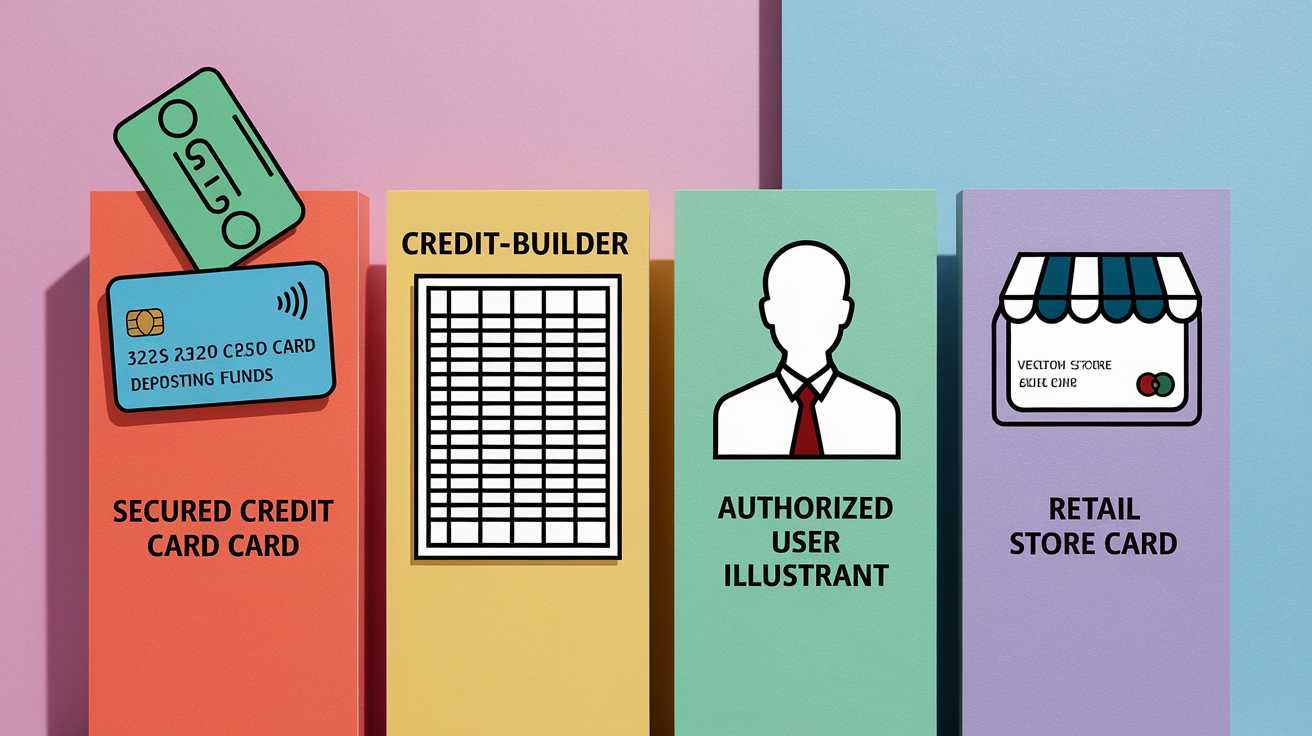
Once you’ve disputed errors and brought past-due accounts current, the next phase is adding positive credit activity. Secured credit cards are one of the fastest rebuilding tools. You make a refundable security deposit (often as little as $200) that becomes your credit limit. Use the card for small purchases, pay the balance in full every month, and the issuer reports your on-time payments to all three bureaus. Many secured cards convert to unsecured after six to 12 months of responsible use, returning your deposit and often increasing your limit. This builds payment history (35% of your score) and keeps utilization low when you pay in full.
Credit-builder loans work differently. You borrow a small amount, usually $1,000 or less, but the lender holds the money in a savings account or certificate of deposit while you make fixed monthly payments over six to 24 months. Once the loan is paid off, you get the funds. The lender reports every on-time payment, creating a positive payment history without requiring you to qualify for a traditional loan. Make sure the lender reports to all three bureaus before you sign up. Some only report to one or two, limiting the benefit. Credit-builder loans are ideal if you need to rebuild but don’t want the temptation of a credit card.
Becoming an authorized user on someone else’s credit card can boost your score if the primary cardholder has a long history of on-time payments and low utilization. The account’s history appears on your report, adding positive data even if you never use the card. Discuss spending limits and whether you’ll receive a physical card. The risk is shared. If the primary user misses payments or maxes out the card, it can hurt your score too. Choose someone responsible and set clear expectations in advance.
Keep your revolving balances below 30% of your total credit limits at all times, and aim for under 10% for maximum score benefit. If you have $10,000 in total credit across all cards, keep your combined balances under $3,000 (ideally under $1,000). Paying down existing balances is often the single fastest way to see a score increase because utilization updates monthly when creditors report to the bureaus. Combining on-time payments, low utilization, and a mix of account types (revolving and installment) creates a strong credit profile that lenders trust.
Four Effective Credit-Building Accounts:
Secured credit card. Requires deposit. Reports monthly. Converts to unsecured with good history.
Credit-builder loan. Small installment loan. Funds held until paid. Builds on-time payment record.
Authorized user on a trusted account. Inherits account history. Zero application or credit check.
Retail store card. Easier approval. Useful if kept at low utilization and paid in full monthly.
Expected Timelines for Credit Repair Progress

Disputing errors is the fastest way to see score movement if the errors are significant. Bureaus must complete investigations within 30 days (sometimes 45 days), and if the item is corrected or deleted, your score can update within one to two billing cycles. That’s typically 30 to 60 days total. Removing a collections account, correcting a high balance, or deleting a fraudulent inquiry can add 20 to 100 points depending on what else is on your report. Small errors like misspelled names or wrong addresses don’t directly affect scores, but fixing them prevents identity mix-ups that could cause bigger problems later.
Building positive payment history takes longer. If you open a secured card or credit-builder loan and make every payment on time, expect to see measurable score improvements in three to six months. Payment history is reported monthly, so each on-time month adds a positive data point. Lowering credit utilization can boost your score faster, sometimes in the next billing cycle, because utilization is recalculated every time your creditors report new balances. If you pay down a maxed-out card from 90% utilization to 10%, your score can jump within 30 days of the new balance being reported.
Recovering from serious delinquencies like charge-offs, collections, or bankruptcies takes 12 to 24 months of consistent positive behavior before scores return to “good” territory. Negative marks remain on your report for up to seven years (10 years for some bankruptcies), but their impact fades over time. A two-year-old late payment hurts less than a recent one. Lenders care most about recent history, so focus on perfect payment behavior going forward. Patience and consistency are the only ways to fully rebuild after major credit damage.
| Action | Typical Timeframe | Expected Impact |
|---|---|---|
| Dispute resolution and correction | 30 to 45 days | Immediate to 60 days for score update; varies by error severity |
| Building payment history with new account | 3 to 6 months | Gradual score increase; stronger after 12 months of on-time payments |
| Recovery from charge-off or collections | 12 to 24 months | Moderate improvement as negative item ages; full recovery may take years |
DIY Credit Repair vs Credit-Repair Companies

You can repair your credit yourself for free using the same tools and legal rights that paid companies use. Consumers have the right under the Fair Credit Reporting Act to dispute inaccurate information directly with the bureaus and to request validation of debts from collectors. Pulling your credit reports costs nothing through the federally authorized portal, and filing disputes online or by mail is free. DIY credit repair takes time and organization (tracking disputes, following up with creditors, and monitoring results), but it costs zero dollars and gives you full control over the process.
Credit-repair companies charge for services you can perform yourself. Typical fees include a setup charge of $70 to $200 and monthly fees ranging from $50 to $150. Some companies limit the number of disputes per billing period to extend subscriptions. They can’t legally remove accurate negative information, and they use the same dispute process available to you. The advantage of hiring a company is convenience. They handle the paperwork, phone calls, and follow-up. The downside is cost and the risk of scams. Companies that promise guaranteed removal of accurate items, demand upfront payment before performing any work, or suggest creating a “new credit identity” are breaking the law and should be avoided.
Key Differences
| Factor | DIY | Credit-Repair Company |
|---|---|---|
| Cost | Free | $70 to $200 setup; $50 to $150/month |
| Control | You manage every step | Company handles disputes and follow-up |
| Legal rights | Same rights under FCRA | Same rights; cannot remove accurate items |
| Time investment | Several hours to organize and track | Minimal; company does the work |
Final Words
Start by pulling your three credit reports, scanning for mistakes, and filing disputes with clear documentation.
Set reminders, lower balances, and open small, positive accounts to build payment history.
You also learned to negotiate with creditors, use secured cards or credit-builder loans, and what timelines to expect: 30-45 days for disputes, 3-6 months for noticeable gains, and longer for major delinquencies.
DIY works for most people, but watch for scams and don’t pay for promises.
Stick with steady steps and you’ll repair credit over time.
FAQ
Q: What is the quickest way to repair my credit, and can I get a 700 score in 30 days?
A: The quickest way to repair your credit and chase 700 in 30 days is to pull all three reports, dispute errors, lower big balances, set autopay, and add positive tradelines; 700 in 30 days is rare.
Q: Can you repair a 400 credit score, and is credit repair really possible?
A: A 400 credit score can be repaired by fixing report errors, making on-time payments, lowering balances, and using a secured card or credit-builder loan; meaningful improvement usually takes months, not days.