


Think one missed payment won’t matter?
It can cut your score by up to 100 points and derail years of progress.
Track the right metrics — payment history, credit utilization, account age, credit mix, and hard inquiries — and you’ll see where to focus fast.
This post shows which numbers to watch, how often to check them, and the simple steps that actually move your score so you can spot progress and fix problems early.
The Core Metrics to Track for Credit Score Progress

Five key factors drive your credit score, and each one pulls different weight. Payment history? That’s roughly 35% of your FICO score. Miss even one payment by 30 days or more and you could watch your score drop by up to 100 points. Credit utilization (what you owe versus your total limits) makes up about 30%, with most Americans hovering around 30% and lenders wanting to see you below 15%. Length of credit history counts for 15%, measuring how long you’ve had your accounts open. Credit mix (having both installment loans like car payments and revolving accounts like credit cards) accounts for 10%. New credit inquiries and recently opened accounts make up the rest, though most scoring models treat multiple inquiries of the same type as one if they happen within 14 to 45 days.
Track your score at least once a month. But focus on what changes most often: your payment record and your utilization ratio. Pull a full credit report from each of the three bureaus (Equifax, Experian, and TransUnion) at least once a year via AnnualCreditReport.com, and watch for errors in personal info, account balances, and inquiry lists. Monthly tracking lets you catch problems early and measure how actions like paying down a balance or disputing an error actually move your score. If you’re preparing for a major loan application, consider monitoring all three bureaus more often because lenders may pull different versions of your report.
Negative items stick around for years, so part of tracking is knowing when old marks will finally drop off. Late payments, collections, and foreclosures typically hang on for seven years from the date of the original delinquency. Bankruptcies can linger up to 10 years, depending on the type. Even a single late payment can hurt for years, but its impact fades over time. Scores often start recovering within a few months if you get back to consistent on-time payments. Understanding these timelines helps you set realistic goals and avoid panic when an old mark temporarily stalls your progress.
Core metrics to track every month:
- Payment history: Log every on-time payment. Watch for any 30‑day late marks that show up on your report.
- Credit utilization: Track per-card and overall utilization. Aim to keep it below 30%, ideally below 10%.
- Average account age: Monitor how long your oldest and newest accounts have been open. Don’t close old accounts unless you have to.
- Hard inquiries: Count new applications and note when inquiry data will age past the 12‑month mark.
- Derogatory marks: List late payments, collections, charge-offs, and public records with their expected removal dates.
Tracking Credit Score Progress Through Payment History Trends

Maintaining 100% on-time payments is the single most powerful action you can take to build or rebuild credit. Because payment history accounts for 35% of your score, one missed payment that crosses the 30-day threshold can erase months of progress. Scores can drop by as much as 100 points in one cycle. About 20% of Americans had at least one 30-day late payment in the past year, so this isn’t uncommon. The good news? Consistent on-time payments can start showing score improvements within 30 to 60 days, especially if you have only a few negative marks. If you’re recovering from multiple late payments, expect steady gains over six to 12 months as the positive payment record grows and the late marks age.
Lenders typically report your account status to the credit bureaus once a month, a few days after your billing cycle closes. That means a payment made on the due date shows up as “paid on time” in the next reporting cycle, while a payment that’s 30 or more days late triggers a negative mark that stays on your report for seven years. To track your progress, log each payment manually or use a bank app that shows on-time payment streaks. Watch your credit report each month to confirm that every account shows a current status with no late indicators. If you spot a late payment you believe was reported in error, file a dispute with the bureau and the creditor. The 30-day investigation window can remove the mark and restore your score immediately if the error is confirmed.
4 practical steps to track and improve payment-history progress:
- Set up automatic payments or calendar reminders for every due date so you never miss the 30-day reporting threshold.
- Check your credit report monthly to verify that all accounts show “current” status with no late marks.
- Use apps or bank dashboards that display on-time payment streaks and send alerts when a payment is due.
- Dispute any incorrect late marks immediately and document the 30-day investigation timeline to see when the correction appears.
Monitoring Credit Utilization and Balance Reporting Cycles
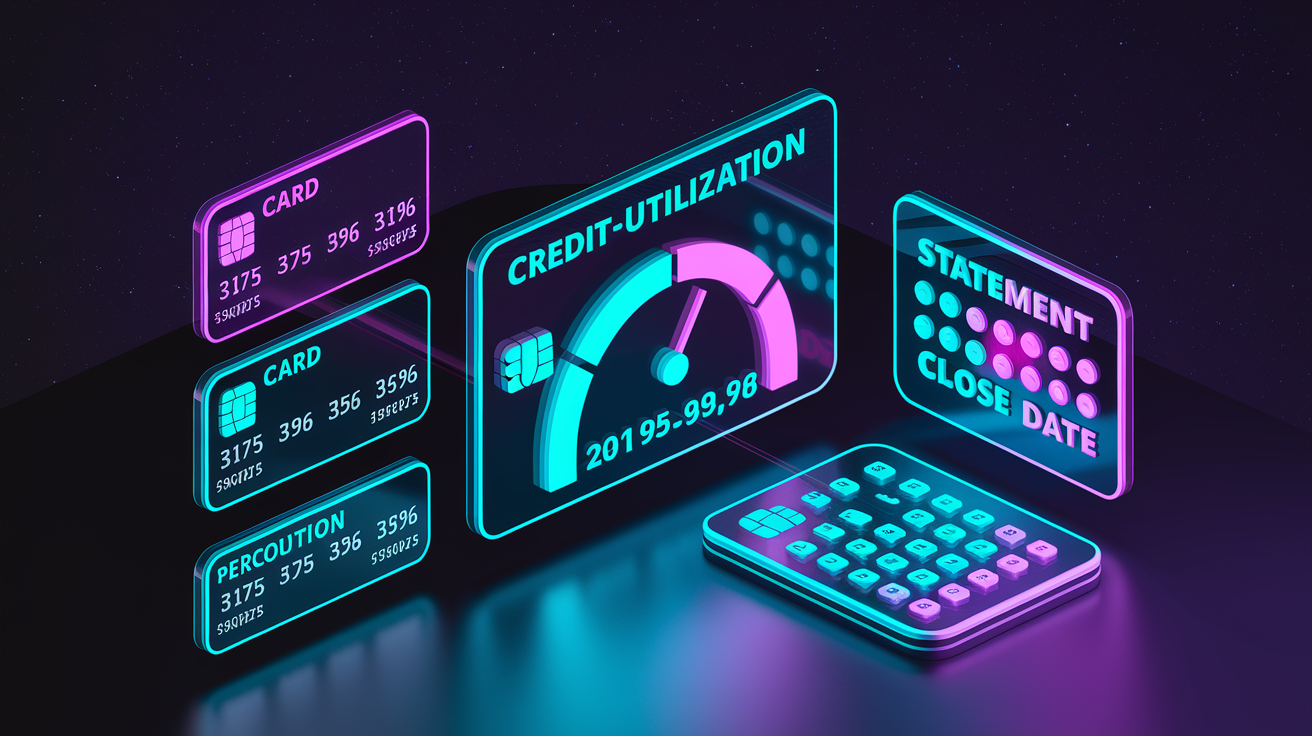
Utilization gets calculated two ways: per-card (balance on one card divided by its limit) and overall (total balances across all revolving accounts divided by total limits). Both matter, but most scoring models focus on overall utilization first. For example, if you’ve got a card with a $10,000 limit and you’re carrying a $5,000 balance, your utilization on that card is 50%. If that’s your only card, your overall utilization is also 50%. Well above the ideal target of 10% and even above the common “safe zone” of 30%. High per-card utilization on even one account can drag down your score, so watch each card individually and pay attention to the combined picture.
Lenders report your balance to the credit bureaus shortly after your billing cycle closes, which means the balance on your statement is usually the number that gets reported. Not the balance you pay down a week later. If you charge $3,000 to a card with a $5,000 limit and your statement closes on the 15th of the month, that 60% utilization gets reported even if you pay the full balance on the due date two weeks later. To keep your reported utilization low, consider making a payment before your statement closing date or spreading charges across multiple cards. Many free credit-monitoring apps update weekly or daily, so you can see your utilization change within the next billing cycle (30 to 60 days) as soon as your lender reports the new balance.
Lowering utilization is one of the fastest ways to see score improvements, sometimes within a single reporting cycle. If you pay down a high balance or ask for a credit-limit increase, your utilization ratio drops immediately the next time your lender reports. Watch for the update in your monitoring app or bank dashboard, and expect to see a score bump within a few weeks if your utilization was high. Keep in mind that utilization has no memory in most scoring models, so your score can jump back up as soon as the ratio improves, even if it was high for months.
| Card/Account | Limit | Balance | Utilization % |
|---|---|---|---|
| Card A | $10,000 | $1,000 | 10% |
| Card B | $5,000 | $2,500 | 50% |
| Overall | $15,000 | $3,500 | 23% |
Assessing Credit Age and Monitoring Average Account Age Growth

Length of credit history counts for about 15% of your FICO score, and it’s measured by averaging the age of all your open accounts. For example, if you have a mortgage that’s six years old, an auto loan that’s two years old, and a credit card that’s been open for 10 years, your average account age is six years (6 + 2 + 10 = 18 years total, divided by three accounts). Scoring models also look at the age of your oldest account, so keeping that 10-year-old card open (even if you rarely use it) helps preserve your credit age. This metric moves slowly because it’s based on time, not actions, so you won’t see sudden jumps the way you do with utilization changes.
Closing accounts, especially old ones, can lower your average age and shorten your credit history. If you close that 10-year-old card in the example above, your average age drops to four years (6 + 2 = 8 years total, divided by two accounts). Some people close cards to simplify their finances or avoid annual fees, but the trade-off is a hit to credit age and possibly to utilization (because you lose that card’s limit). Before closing an account, check whether the issuer will waive the fee or downgrade you to a no-fee version. If you’re an authorized user on someone else’s old account, that account’s age may also contribute to your average, so ask before requesting removal if you’re trying to build credit history.
3 tips for tracking credit-age growth:
- Log the opening date of each account and calculate your current average age every few months to see incremental progress.
- Don’t close your oldest accounts unless fees or fraud make it necessary. The age benefit is worth keeping the account active with small periodic charges.
- If you need to open a new account, understand that it’ll temporarily lower your average age. Track the impact and expect it to recover over time as the account ages.
Watching New Credit Inquiries and Short-Term Score Fluctuations

Hard inquiries happen when you apply for credit and a lender pulls your report. Soft inquiries happen when you check your own score or when a company pre-approves you for an offer without your explicit application. Hard pulls can drop your score by a few points temporarily, while soft pulls have no effect on your score at all. So checking your own credit as often as you want won’t hurt you. Most scoring models group multiple hard inquiries of the same type (for example, mortgage or auto-loan shopping) into a single inquiry if they occur within 14 to 45 days, depending on the model version. This means you can rate-shop without racking up multiple score hits, but spreading applications across months will count each one separately.
New-credit data stays on your report for 12 months, and the score impact fades over that period. If you see a 5- to 10-point dip after applying for a card or loan, that’s normal. Track it in your monitoring app and expect the points to return as the inquiry ages. Don’t make unnecessary applications if you’re preparing for a major loan in the next few months, because multiple recent inquiries can signal risk to lenders even if the score impact is small. If you notice an inquiry you didn’t authorize, dispute it immediately with the credit bureau. Unauthorized inquiries can be a sign of fraud and should be investigated within the standard 30-day dispute window.
Tracking Credit Score Progress by Monitoring Derogatory Marks

Derogatory marks are serious negative items that damage your score and stick around for years. The most common types include late payments (reported when you’re 30, 60, 90, or more days past due), collections accounts (debts sent to third-party collectors), charge-offs (accounts a creditor has given up on), foreclosures, and public records like bankruptcies or tax liens. Late payments, collections, and foreclosures typically remain on your report for seven years from the date of the original delinquency. Bankruptcies can last up to 10 years, with Chapter 7 filings usually staying the full decade and Chapter 13 sometimes dropping off after seven years. The older the mark, the less it hurts your score, but it won’t disappear until the legal time limit expires or you successfully dispute it as an error.
Score recovery after a derogatory mark depends on what else is in your file. If you have only one late payment and an otherwise clean history, your score may rebound within a few months as you add new on-time payments. If you have multiple collections or a bankruptcy, expect a longer rebuild, often one to two years of consistent positive behavior before you see meaningful gains. Removing an error can produce immediate improvements. If you dispute a derogatory mark and the bureau deletes it after the 30-day investigation, your score can jump as soon as the next update cycle. Track every negative item by noting its type, the date it occurred, and its expected removal date so you know when to check your report and confirm it’s gone.
3 key actions for monitoring derogatory-mark progress:
- List every late payment, collection, charge-off, and public record with its original delinquency date and the date it should fall off (seven or 10 years later).
- Set calendar reminders a few months before each removal date so you can pull your report and verify the item is deleted.
- Dispute any derogatory marks you believe are inaccurate or belong to someone else, and track the 30-day investigation window to see if your score improves after removal.
Understanding Scoring Models While Tracking Credit Score Progress
FICO is the scoring model most lenders use when you apply for a mortgage, car loan, or credit card, but many free credit-monitoring apps provide VantageScore 3.0 instead. Both models use similar factors (payment history, utilization, credit age, inquiries, and credit mix) but they weigh those factors slightly differently and can produce different numbers from the same credit report. A small variance is normal: if you see a 5- to 10-point difference between two scores pulled from the same bureau using the same model, that’s typical score noise and not a reason to worry. When you compare scores from different bureaus using the same model, expect a normal range of 10 to 20 points because each bureau may have slightly different data. Differences of 20 to 40 points across scoring models (FICO vs. VantageScore) are also common and considered moderate.
Larger gaps signal a problem. If you see a 50-point difference between two scores from the same model and the same bureau, check your report for errors, recent negative marks, or accounts that haven’t updated yet. A 70-point or greater gap between FICO and VantageScore can happen if one model is using outdated data or if there’s a reporting error that affects only one calculation. These situations are rare but worth investigating. Pull reports from all three bureaus and compare the account details, balances, and payment histories. If you find a discrepancy, file a dispute and track the correction timeline.
Choose which model to monitor based on your goal. If you’re planning to apply for a mortgage, car loan, or most traditional credit products, track your FICO scores from all three bureaus because mortgage lenders typically pull all three and use the middle score. If you’re just watching trends and building credit, VantageScore from a free app works fine. It moves in the same direction as FICO when you improve your habits. Some apps and services offer both models, which helps you see the full picture. When in doubt, prioritize the model and bureau your lender will use. If you can’t find that information, default to monitoring FICO scores and checking all three bureaus periodically.
Tools and Apps for Tracking Credit Score Progress Accurately

Update frequency matters when you’re tracking progress. Daily updates give you the most current view and let you see changes within a day or two after a lender reports new information. Apps like WalletHub and some bank credit widgets refresh daily. Weekly updates are common in free tools like Credit Karma and NerdWallet. They’re frequent enough to catch most activity without overwhelming you with notifications. Monthly updates, offered by many banks and credit unions inside online banking dashboards, can lag and miss short-term changes, but they’re still useful if you’re not actively managing multiple accounts or preparing for a loan application. The faster the update cadence, the sooner you can spot errors, track utilization drops, or confirm that a dispute was resolved.
Monitoring all three bureaus improves reliability because lenders don’t report to every bureau at the same time or in the same way. One creditor might report to Equifax and TransUnion but skip Experian, so your Experian report could be missing an account or show an older balance. Free annual reports are available via AnnualCreditReport.com. You can request one full report from each of the three bureaus every 12 months, and many people rotate them (pulling one bureau every four months) to monitor more frequently without paying. Paid services often include tri-bureau access, faster updates, and alerts for new inquiries, account changes, or potential fraud, which can be worth the cost if you’re rebuilding credit or worried about identity theft. To learn more about choosing the right monitoring setup, see How to Monitor Your Credit Score.
Set up alerts so you don’t have to check manually every day. Most apps and bank dashboards let you enable notifications for new accounts, hard inquiries, large balance changes, or when your score moves by more than a certain number of points. Alerts help you catch fraud early. If a new credit card shows up that you didn’t open, you’ll know within hours or days instead of months. They also confirm when positive changes take effect, like when a paid-down balance posts and your utilization drops. The combination of regular updates, multi-bureau coverage, and automated alerts gives you the full picture without requiring constant manual checks.
5 recommended monitoring tools and their update frequency:
- WalletHub: Free, daily updates, VantageScore, single bureau (TransUnion), includes alerts and score simulator.
- Credit Karma: Free, weekly or daily updates depending on activity, VantageScore 3.0 from Equifax and TransUnion.
- Experian app: Free tier offers Experian FICO 8 with daily updates. Paid plans add other bureaus and faster alerts.
- Bank/credit union dashboards: Free if you’re a customer, typically monthly updates, often FICO-based, embedded alerts.
- AnnualCreditReport.com: Free full reports from all three bureaus once every 12 months, no score included but essential for error checking.
Creating a Personal Tracking System for Credit Score Progress
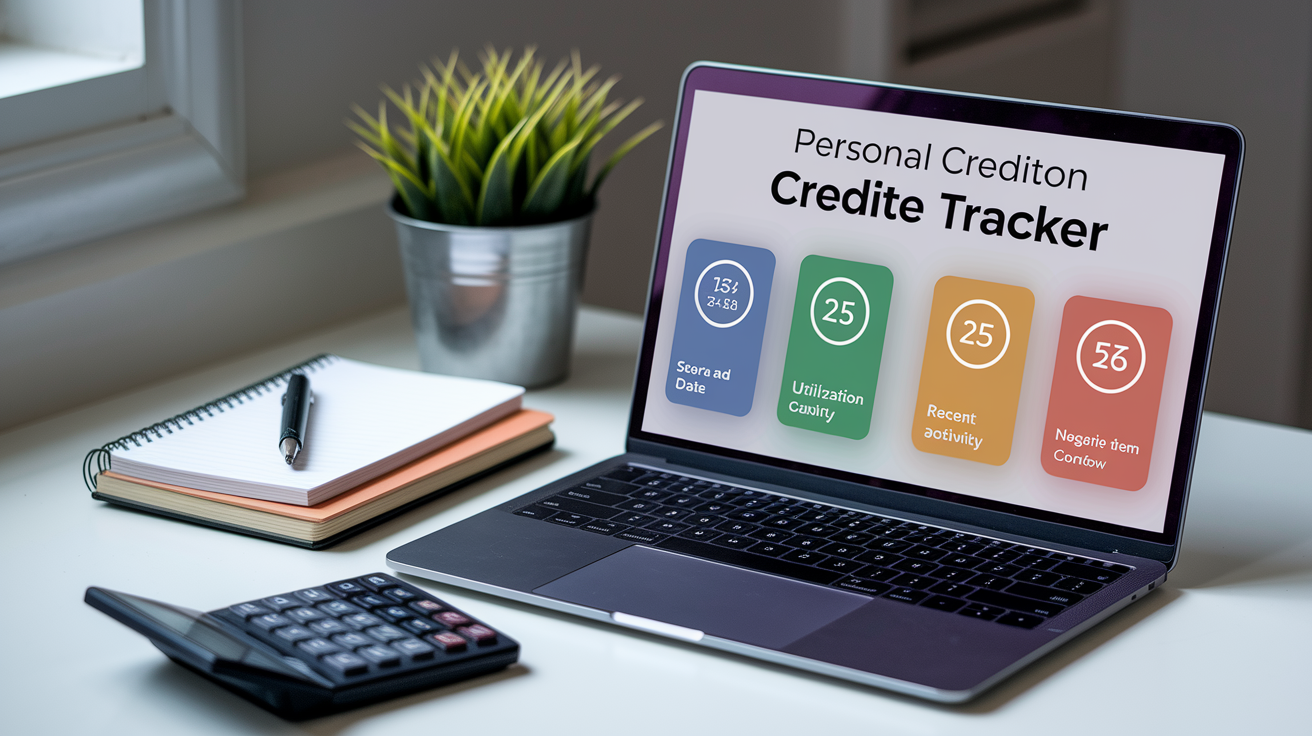
A simple score dashboard helps you see patterns and measure progress over time. Many apps let you export your score history as a spreadsheet or PDF, which you can then organize by date, bureau, and model version. If your app doesn’t offer exports, create a manual log: open a spreadsheet or note app and record your score, the date, the bureau, and any major account changes (new card opened, balance paid down, late payment reported). Update it weekly or monthly depending on how actively you’re managing your credit. Over a few months, you’ll see a trendline that shows whether your actions are working. Consistent score increases confirm you’re on the right track, while flat or declining scores signal it’s time to check for errors or adjust your habits.
General improvements usually appear within six to 12 months if you’re paying on time and keeping utilization low, so plan to log progress for at least that long before you judge the results. Daily or weekly tracking works best if you’re actively rebuilding or preparing for a loan application. Monthly tracking is fine if you’re just maintaining good credit. Periodically pull your full credit reports from AnnualCreditReport.com to cross-check the data your monitoring app is using. This ensures accuracy and helps you catch accounts or inquiries that didn’t sync to the app’s feed.
4 elements to include in a personal credit-score tracker:
- Score and date: Log your score, the date you checked it, and which bureau and model it came from (e.g., “720 Experian FICO 8 on March 15”).
- Utilization snapshot: Record your total balances and total limits so you can calculate overall utilization and track how it changes month to month.
- Recent account activity: Note any new accounts opened, credit-limit increases, payments posted, or inquiries added since your last check.
- Negative-item countdown: List derogatory marks with their expected removal dates so you know when to check for deletions and expect score improvements.
Final Words
You focused on the five core credit factors: payment history, utilization, account age, new inquiries, and derogatory marks. You saw how each one moves your score and why they matter.
Check key numbers every month, time payments around statement dates, use a reliable monitoring tool, and log trends. Track one scoring model for consistency and dispute errors quickly.
Keep a simple log and review tracking credit score progress which metrics to watch so you spot wins and fix problems fast. You’ll see steady improvement.
FAQ
Q: What are the 5 C’s of credit analysis?
A: The 5 C’s of credit analysis are character (your repayment history), capacity (ability to repay), capital (your assets/equity), collateral (what backs the loan), and conditions (loan purpose and economy).
Q: What is the 2 2 2 credit rule?
A: The 2 2 2 credit rule is not a single industry standard; the phrase is used differently by sources. Ask the source, since some mean timing of payments, spacing inquiries, or simple utilization targets.
Q: What credit score does Huntington bank use?
A: Huntington Bank uses credit scores like FICO for decisions, but the exact FICO model and bureau vary by product and branch; check with Huntington for the model and required minimum.
Q: How rare is an 830 FICO score?
A: An 830 FICO score is in the excellent range near the top of the 300–850 scale and is uncommon; it puts you among the highest-scoring borrowers, often in the top few percent.