


Think a lender that asks you to pay before you get the cash is helping? Think again.
Upfront-fee loan scams promise fast money, then take your payment and vanish.
They copy real lenders so they look legit, and they prey on people with tight bills or rough credit.
This post shows the red flags to spot, a quick checklist to verify a lender, and the exact steps to report fraud.
Follow these checks and you’ll avoid losing cash, protect your identity, and find safer help when you need it.
Understanding Upfront‑Fee Loan Scams
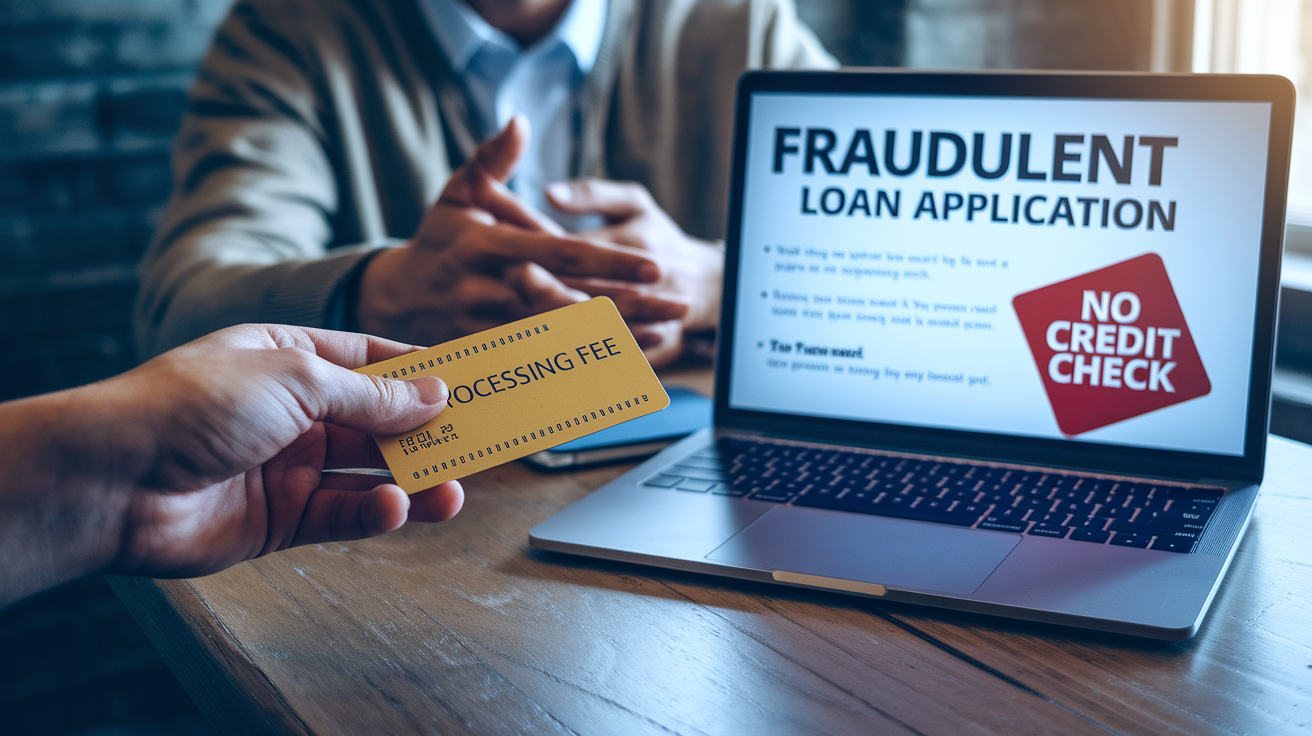
An upfront‑fee loan scam works like this: someone promises you a loan, asks you to pay a fee first (processing, insurance, collateral, whatever), then vanishes once your money clears. You never see the loan. These scams copy just enough of the real lending process to seem legit, but they skip the parts that actually protect you. No credit checks, no real contracts, no oversight.
Scammers go after people with bad credit, overdue bills, or recent money problems. Desperation makes you skip the research. They know you don’t have time to vet a lender when rent’s due Thursday. That urgency? That’s the whole game.
Here’s what to watch for:
- Payment before approval or funding – Real lenders don’t ask you to send money separately before the loan hits your account.
- Guaranteed approval, no credit check – Actual lenders review your credit. “No credit check” is almost always a scam.
- Untraceable payment methods – Gift cards, prepaid cards, crypto, wire transfers to someone’s personal account. All red flags.
- High pressure, short deadlines – They’ll push you to pay within 24 to 48 hours to “lock in” the loan or “release funds.”
- No real address, tax ID, or license – Legit lenders are registered businesses with public records. Scammers use fake addresses or P.O. boxes.
- Email from a personal account – Messages from AOL, Yahoo, Gmail, or Comcast instead of a company domain? Suspicious.
- Website missing HTTPS or security markers – Look for the padlock icon and “https” at the start of the URL. No security seal means trouble.
- Rates or fees that sound way too good – Below‑market rates plus no credit check is classic bait.
Legitimate Lending Practices to Know

Real lenders don’t make you pay separate out‑of‑pocket fees before approving or funding your loan. When a legit lender charges an origination or processing fee, they put it in writing and deduct it from what you receive. You see the fee on your loan estimate or contract. The money you get reflects that deduction. So if you’re approved for $5,000 with a 3% origination fee, you get $4,850. The $150 comes out of the disbursement, not your wallet beforehand.
Legitimate lenders also run credit checks. Even lenders who work with bad credit still pull your report or verify income and employment. They need to assess risk before approving anything. A lender who says “no credit check, guaranteed approval” is skipping the underwriting that protects both sides from default. That shortcut screams fraud.
Federal law requires lenders to give you transparent disclosures before you sign. You’re entitled to see the APR, total interest and fees, repayment schedule, and any prepayment penalties in writing. Legitimate lenders follow Truth in Lending Act rules and state licensing requirements. They’ll send you a loan agreement to review, answer your questions about fees, and give you time to compare offers. If a lender won’t put terms in writing or rushes you past documentation, walk.
How to Verify a Lender Before Applying

Before you share personal info or send money, run through this quick verification checklist to make sure the lender’s real and licensed.
-
Check licensing with your state financial regulator – Most states require lenders to hold a license or register with the state banking or financial services division. Search your state’s licensing database using the lender’s legal name. For mortgages, check the Nationwide Multistate Licensing System (NMLS) registry to confirm the NMLS ID.
-
Look up the physical address and phone numbers – Map the address and confirm it’s a real commercial location, not a mailbox store or someone’s house. Call the number listed on the official website (not the number in a random email) and ask basic questions about the application.
-
Search for complaints and scam reports – Type the lender’s name plus “scam” or “complaint” into a search engine. Check the Better Business Bureau, your state attorney general’s consumer complaint portal, and the Consumer Financial Protection Bureau’s complaint database. Multiple identical complaints are a bad sign.
-
Review website security and transparency – Make sure the URL starts with “https” and shows a padlock icon in your browser. Read the “About Us” and “Contact” pages. Legitimate lenders provide a physical address, tax ID or EIN, and clear contact info.
-
Request written loan disclosures – Ask for a sample loan agreement or written fee schedule before you apply. A real lender will give you an itemized list of fees, the APR, and repayment terms. If they refuse or only offer verbal promises, stop.
-
Avoid lenders who pressure you to decide right now – Scammers create fake urgency to prevent you from doing research. Legitimate lenders give you time to compare and ask questions.
Document everything. Save screenshots of the lender’s website, licensing records, and any messages. Write down names, dates, reference numbers. If the offer turns out to be fraud, this evidence helps you file complaints and warn others. Don’t share your Social Security number, bank details, or ID copies until you’ve finished these checks and confirmed the lender is licensed and real.
How to Report an Upfront‑Fee Loan Scam
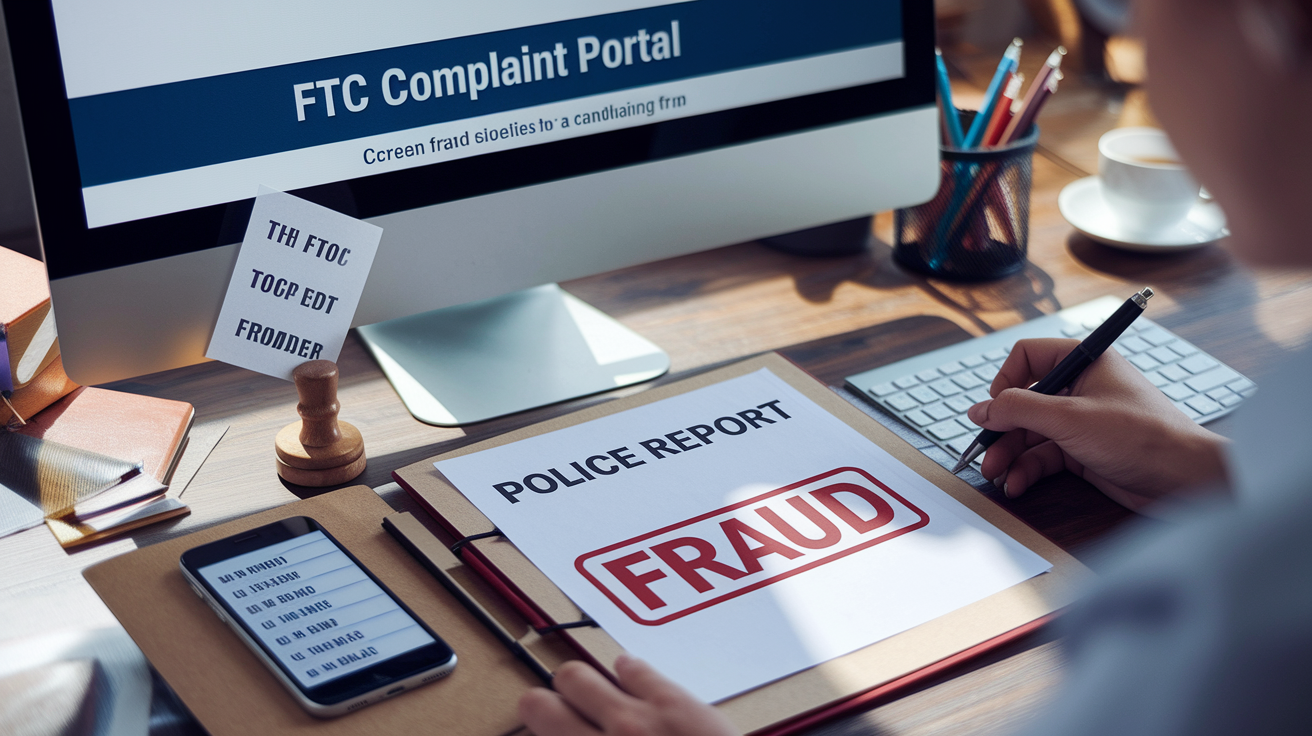
Reporting a scam helps regulators shut down fraudulent operations and stops scammers from targeting more people. Even if you didn’t lose money, filing a report creates a record investigators can use to build a case.
Before you file, gather your evidence: copies of emails or texts, screenshots of ads or websites, transaction receipts, phone numbers the scammer used, and any names or account details they gave. Write down the dates you were contacted, amounts you were asked to pay, and payment methods requested (gift cards, wire transfer, crypto). The more detail, the more useful your report.
Here’s how to report:
-
File a complaint with the FTC – Visit the FTC’s online complaint assistant or call 1‑877‑382‑4357. The FTC tracks scam patterns and shares data with law enforcement nationwide.
-
Report to your state attorney general’s consumer protection office – Each state has a consumer protection division handling fraud complaints. Search “[your state] attorney general consumer complaint” to find the portal or phone number.
-
Contact local law enforcement – If you sent money or disclosed sensitive personal info, file a police report. Bring your evidence packet and ask for a case number. This report may be needed if you dispute charges or file an insurance claim.
-
Notify credit bureaus if you suspect identity theft – If you shared your Social Security number, date of birth, or bank account info, place a fraud alert on your credit file with Experian, Equifax, or TransUnion. Consider freezing your credit to prevent new accounts being opened in your name.
-
Keep copies of all correspondence and confirmation numbers – Save complaint confirmation emails, case numbers, and any follow‑up messages from agencies. These records prove you reported the fraud and may be needed if you pursue legal action or request a chargeback from your bank.
Safe Loan Alternatives If You Need Money Urgently
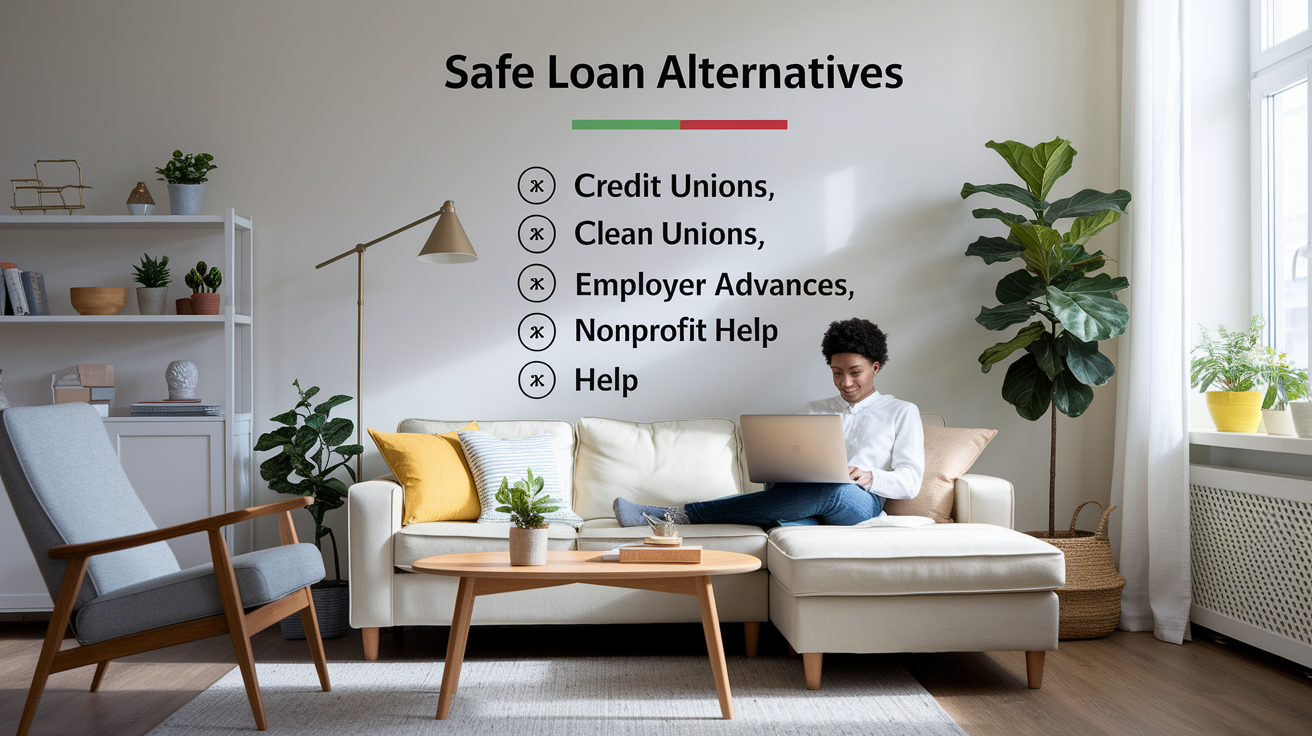
When you need cash fast, there are safer options than responding to random loan offers or applying with sketchy lenders. These alternatives don’t require upfront fees and are backed by consumer protections or nonprofit missions.
Credit unions often offer small‑dollar loan programs for members who need emergency funds. These loans, sometimes called payday alternative loans (PALs), typically range from $200 to $2,500 with terms of one to 12 months. Credit unions are federally insured, nonprofit institutions that cap interest rates and disclose all fees in writing. Many also provide financial counseling to help you avoid future emergencies. Joining a credit union usually requires opening a savings account with a small deposit, often $5 to $25, but membership gives you access to lower‑cost credit and savings tools.
Employer‑based advances and community assistance programs can bridge short‑term gaps without borrowing. Some employers offer paycheck advances or emergency hardship grants to employees facing unexpected bills. Nonprofit organizations, including local churches, community action agencies, and United Way chapters, provide one‑time grants or interest‑free loans for rent, utilities, or medical expenses. These programs don’t perform credit checks and don’t charge fees. Check with your HR department or search “[your city] emergency financial assistance” to find local resources.
Government hardship programs are different from scam offers because they’re free, transparent, and backed by public agencies. Programs like the Low Income Home Energy Assistance Program (LIHEAP), Supplemental Nutrition Assistance Program (SNAP), and state‑run rental assistance funds provide direct aid without requiring repayment or upfront fees. If a “government loan” offer asks you to pay a processing fee or provide payment via gift cards, it’s a scam. Real government programs run through official .gov websites and don’t charge application fees or require advance payments.
Federal Protections and FTC Guidance

The FTC enforces laws that ban advance‑fee loan scams under the Telemarketing Sales Rule. This rule makes it illegal for anyone selling loans over the phone or online to request payment before the loan’s approved and funded. Violators face civil penalties, and the FTC can get court orders to freeze assets and return money to victims. If a lender contacts you by phone, email, or social media and demands an upfront fee, that request breaks federal law.
You’ve got specific rights as a borrower under federal consumer protection laws. The Truth in Lending Act requires lenders to disclose the APR, finance charges, total amount financed, and repayment schedule in writing before you sign. The Equal Credit Opportunity Act protects you from discrimination based on race, religion, national origin, sex, marital status, age, or receipt of public assistance. If a lender refuses to provide written disclosures, charges hidden fees, or pressures you to bypass these protections, you can report them to the FTC at 1‑877‑382‑4357 and the Consumer Financial Protection Bureau at 1‑855‑411‑2372. These agencies investigate violations, impose fines, and publish alerts to warn other consumers. Knowing your rights helps you spot when a lender’s operating illegally and gives you clear grounds to file a complaint and push for enforcement action.
Final Words
Spot the red flags, compare how real lenders operate, verify licenses, and report suspicious offers. You also learned step-by-step checks, which documents to gather, and safer emergency borrowing options.
Next: confirm licensing, insist on written disclosures, document all contacts, and walk away if you feel rushed. Keep a short checklist on your phone so you can act fast without panicking.
If you follow these steps you’ll cut the risk and learn upfront fee loan scams how to avoid, and find safer ways to get money when you need it.
FAQ
Q: Is it normal to pay an upfront fee for a loan?
A: Paying an upfront fee for a loan is not normal; you generally don’t have to pay one. Legitimate lenders disburse funds without advance payment and don’t guarantee approval before fees.
Q: What are the 5 area codes to avoid?
A: The five area codes to avoid don’t exist as a fixed set; scammers use many codes. Watch unknown or out-of-area numbers, toll-free numbers that mask origin, and verify callers before sharing details.
Q: What are the most common loan scams?
A: The most common loan scams include advance-fee scams (pay before approval), fake lenders, identity-theft loan applications, impersonation of real banks, and pressure tactics pushing prepaid cards or crypto payments.