


Think consolidating student loans will always save you money?
Most of the time it won’t.
The only real way to cut total interest is refinancing into a new private loan at a materially lower rate and keeping the same or shorter term, while not giving up federal protections you actually need.
This post lays out the exact conditions that must line up for true repayment savings, and when consolidation only helps with monthly cash flow or simpler paperwork instead.
Key Conditions When Student Loan Consolidation Leads to Real Repayment Savings

Student loan consolidation saves you money only when specific conditions line up. The main way to actually save is refinancing your federal or private loans into a new private loan at a lower interest rate. Say you’ve got $30,000 at 6.00% over 10 years. You’ll pay around $333 a month and rack up roughly $9,976 in interest. Refinance that same balance to 4.00% for 10 years and your payment drops to about $304, while total interest falls to approximately $6,500. That’s real savings of around $3,476 over the loan’s life. Federal consolidation? It uses a weighted average interest rate rounded up to the nearest one eighth of one percent, so it almost never lowers your rate.
Extending your term can drop your monthly payment, but you’ll usually pay way more interest. Take a $50,000 loan at 5.00%. Over 10 years you’re looking at about $531 per month and $13,684 in interest. Stretch that to 25 years and your monthly payment falls to roughly $292, which helps your cash flow. But total interest climbs to around $37,630. That’s an extra $23,946 over the loan’s life. If monthly relief is your priority and you’re okay with the higher long term cost, that trade can work. But it isn’t a savings move in dollar terms.
You get actual repayment savings when you meet all of these conditions:
- You qualify for a materially lower interest rate through refinancing, usually 1 to 2 percentage points or more below your current weighted average.
- You keep the same repayment term, or go shorter, so the lower rate translates into less total interest rather than just a lower monthly payment.
- You don’t lose access to federal benefits you actively need, such as income driven repayment plans or Public Service Loan Forgiveness eligibility.
- You don’t reset or forfeit qualifying payments toward forgiveness programs that would eventually erase remaining balances.
If you fail any one of those conditions, consolidation or refinancing may still simplify your payments or ease monthly cash flow. But it won’t deliver real repayment savings.
How Federal Student Loan Consolidation Affects Repayment Savings
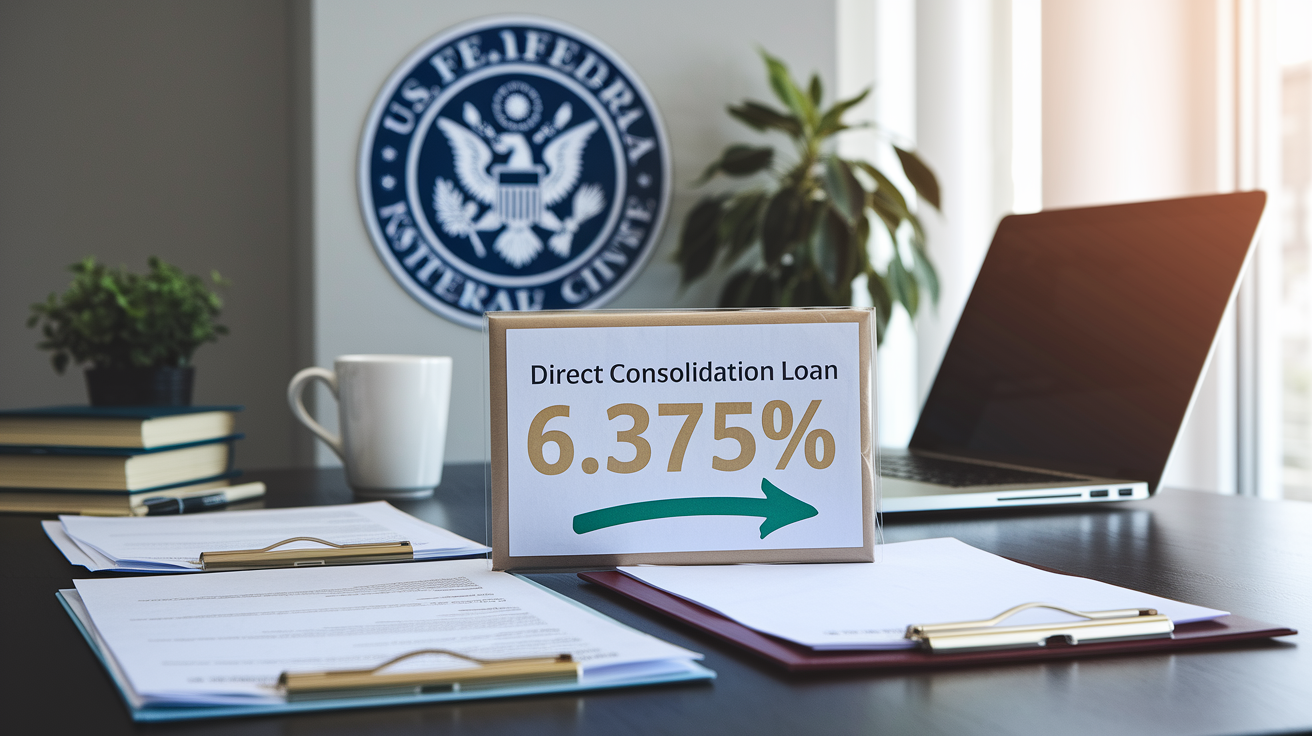
Federal student loans can be combined through a Direct Consolidation Loan, which wraps your existing federal balances into a single new loan with one monthly payment. The interest rate on that new loan is the weighted average of the interest rates on all the loans you include, rounded up to the nearest one eighth of one percent. For example, if you consolidate a $10,000 loan at 5.00% and a $20,000 loan at 7.00%, your new rate will be about 6.33%. Because the government rounds up, you may land at 6.375%. That calculation means federal consolidation won’t reduce your interest cost and can sometimes bump it up slightly.
The repayment term for a Direct Consolidation Loan depends on your total consolidated balance. Smaller balances get shorter terms. Larger balances unlock longer maximum terms that lower monthly payments but increase total interest paid. Repayment starts within 60 days of the consolidation loan being disbursed, so any remaining grace period on subsidized or Perkins loans is forfeited. Any unpaid interest at the moment you consolidate gets capitalized, which means it’s added to your new principal balance and will accrue interest going forward.
| Loan Amount Range | Federal Consolidation Term |
|---|---|
| Less than $7,500 | 10 years |
| $7,500 – $9,999 | 12 years |
| $10,000 – $19,999 | 15 years |
| $20,000 – $39,999 | 20 years |
| $40,000 – $59,999 | 25 years |
| $60,000 or more | 30 years |
Federal consolidation improves repayment savings only in narrow situations where you need access to a specific federal benefit, such as income driven repayment or PSLF, and your current loan types lock you out. For everyone else, the weighted average interest rate calculation and the loss of the ability to target higher rate loans mean consolidation rarely cuts total interest.
When Private Student Loan Refinancing Creates Actual Savings

Private student loan refinancing replaces one or more existing loans with a new loan from a private lender. It’s the only consolidation mechanism that can reduce your interest rate below your current weighted average. If you’ve got strong credit and steady income, private lenders may offer you a rate 1, 2, or even 3 percentage points lower than what you pay now. That rate drop is where real savings appear. A $30,000 balance at 6.00% over 10 years will cost you about $9,976 in interest, but the same balance refinanced to 4.00% for 10 years will cost roughly $6,500 in interest, saving you approximately $3,476.
Refinancing federal loans into a private loan permanently removes those balances from the federal system. You lose access to income driven repayment plans, federal forbearance and deferment options, and any forgiveness programs. That tradeoff makes sense only if you don’t need those protections and the interest rate savings are large enough to justify giving them up. If you have only private student loans to begin with, refinancing carries no federal benefit penalty and can be a straightforward path to lower interest and lower total cost.
You’re a strong candidate for private refinancing that creates actual savings if:
- Your credit score is good to excellent and your debt to income ratio is low enough to qualify for competitive rates.
- You have stable income and employment that meet the lender’s underwriting criteria.
- The quoted interest rate is materially lower than your current weighted average rate, typically by at least 1 percentage point or more.
- You can refinance to the same term length or shorter, so the rate drop translates into lower total interest instead of just a lower monthly payment.
- You don’t need federal loan benefits such as income driven repayment, Public Service Loan Forgiveness, or federal forbearance and deferment options.
Loan Types That Influence Whether Consolidation Makes Sense for Savings

Subsidized federal loans don’t accrue interest while you’re in school, during your six month grace period, or during authorized deferment periods. If you consolidate subsidized loans, you lose the remainder of any grace period because Direct Consolidation Loan repayment begins within 60 days. You also capitalize any unpaid interest at the moment of consolidation, which increases your principal balance and the amount on which future interest will accrue. Unsubsidized federal loans accrue interest at all times, so consolidating them doesn’t forfeit any interest subsidy. But it still capitalizes unpaid interest and can extend your repayment term if you choose a longer schedule.
Parent PLUS loans carry higher interest rates than most other federal student loans. They’re not eligible for most income driven repayment plans unless you consolidate them into a Direct Consolidation Loan. After consolidation, Parent PLUS loans can access Income Contingent Repayment if the loans entered repayment on or after July 1, 2006. That access can lower monthly payments substantially for parents with lower incomes, but the extended 25 year repayment term increases total interest paid. If the parent works for a government or nonprofit employer and plans to pursue Public Service Loan Forgiveness, consolidation is a required step. The long term forgiveness can offset the higher interest cost.
Perkins loans come with unique benefits, including a nine month grace period, subsidized interest during certain deferments, and specific cancellation programs for teachers, nurses, and other public service workers. Consolidating Perkins loans into a Direct Consolidation Loan makes them eligible for income driven repayment and PSLF. But you forfeit all Perkins specific cancellation benefits, the subsidized interest advantages, and any remaining grace period. If you qualify for Perkins cancellation or work in a field where those benefits apply, consolidating will almost always cost you more than the original loan forgiveness would have saved.
Consolidation Timing and Its Impact on Total Repayment Savings

If you consolidate during a grace period, repayment on the new Direct Consolidation Loan begins within 60 days, and you lose the remainder of the grace period on all included loans. Subsidized federal loans typically offer a six month grace period. Perkins loans provide nine months. Consolidating with three months of grace remaining costs you three months of deferred repayment. For subsidized loans, that’s three months of interest free status. That early start on repayment doesn’t change your total principal, but it reduces the breathing room you would’ve had to find a job, adjust your budget, or save an emergency fund.
If one or more of your loans is in default, you’ve got three main options to bring the loan current: pay the full balance, complete loan rehabilitation, or consolidate. Loan rehabilitation requires you to make nine voluntary income based payments within 20 days of the due date over a ten month period. Successful rehabilitation removes the default notation from your credit history. Consolidation doesn’t remove the default from your credit report, but it stops wage garnishment and collections, and it returns you to active repayment. If you consolidate a defaulted loan without first making three full monthly payments on that loan, you’ll be required to enroll in an income driven repayment plan for the new consolidation loan. Active wage garnishment or court ordered collections must be lifted before consolidation is allowed.
Timing consolidation to avoid forfeiting grace periods or resetting forgiveness progress can save you thousands of dollars. Poor timing can erase years of qualifying payments or force you into a longer repayment term than you planned.
How Income Driven Repayment and Forgiveness Programs Affect Consolidation Savings
Consolidating federal student loans typically resets your qualifying payment count for Public Service Loan Forgiveness to zero. If you’ve already made 90 qualifying payments under PSLF and you consolidate, the new consolidation loan starts fresh at zero qualifying payments. You’ll need to make 120 new payments before the remaining balance is forgiven. That reset can delay forgiveness by years and increase the total amount you pay before forgiveness kicks in, turning what looked like a convenience move into a multi thousand dollar mistake.
PSLF Impacts
Public Service Loan Forgiveness requires 120 qualifying monthly payments while working full time for a qualifying government or nonprofit employer and enrolled in an income driven repayment plan. Only Direct Loans are eligible for PSLF, which means that Parent PLUS loans, Perkins loans, and FFEL program loans must be consolidated into a Direct Consolidation Loan to qualify. The consolidation is a one time requirement for those loan types, and it opens the door to PSLF. But it also resets any prior qualifying payments to zero. If you consolidated 50 months into a 120 month PSLF timeline, you lose credit for those 50 payments and must restart the clock, effectively adding more than four years to your forgiveness schedule.
IDR Plan Access and Long Term Savings
Parent PLUS borrowers who consolidate become eligible for Income Contingent Repayment, which caps monthly payments based on income and forgives any remaining balance after 25 years of payments (300 total payments). That forgiveness can represent substantial savings for borrowers with high loan balances and modest incomes. But the forgiven amount is treated as taxable income under current federal tax law, so a large forgiveness may trigger a significant tax bill. The 25 year timeline also means you’ll pay interest for a much longer period than standard 10 year repayment. Total interest paid will be higher unless your income stays low enough that monthly payments never cover accruing interest. IDR access through consolidation makes sense for savings only if your income is low relative to your debt and you can plan for the potential tax consequences of forgiveness.
Example Scenarios Showing When Consolidating Student Loans Saves Money vs Costs More
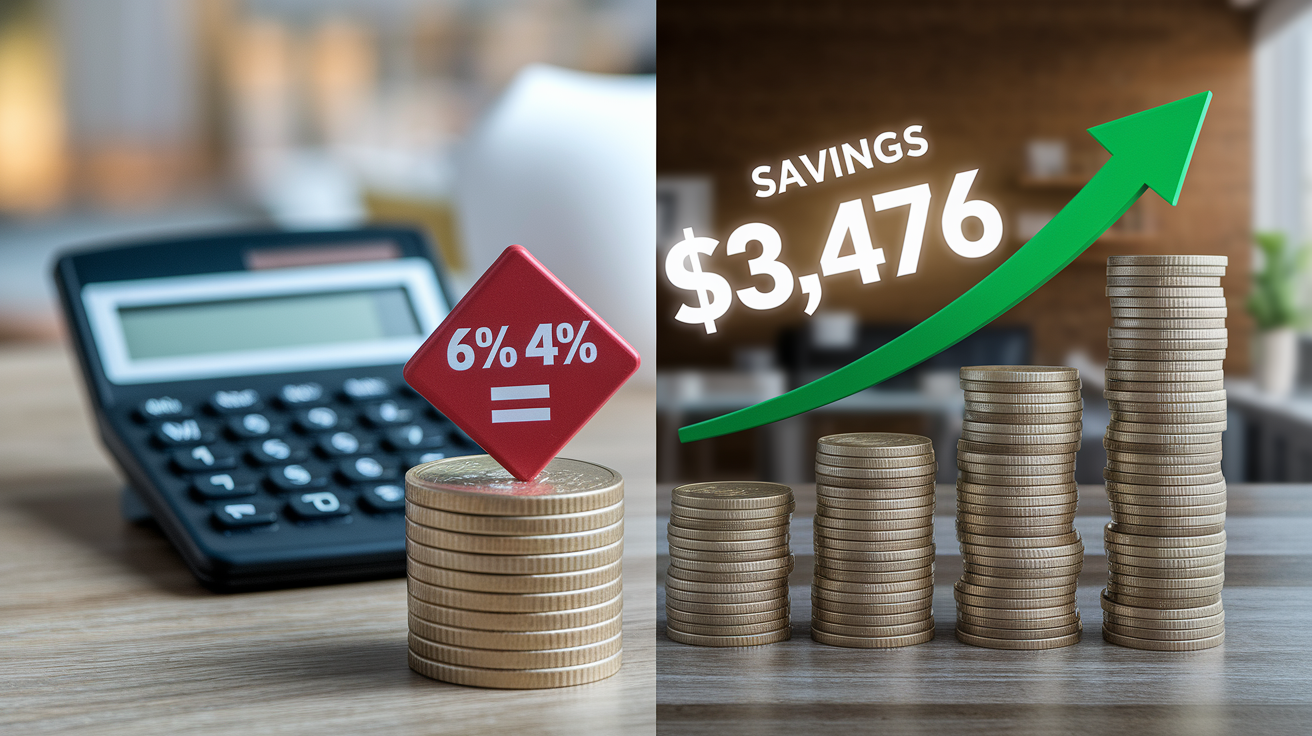
Refinancing a $30,000 federal loan at 6.00% to a private loan at 4.00% over the same 10 year term drops your monthly payment from about $333 to roughly $304 and cuts total interest from approximately $9,976 to around $6,500. The net savings over the life of the loan is about $3,476. You also free up $29 per month that can go toward other goals or faster principal paydown. That scenario works only if you’ve got strong credit and income to qualify for the 4.00% rate, you don’t need federal benefits like income driven repayment or PSLF, and you keep the same 10 year term instead of stretching to 15 or 20 years.
Extending a $50,000 loan at 5.00% from a 10 year term to a 25 year term through federal consolidation lowers your monthly payment from roughly $531 to about $292. That can help if your budget is tight or your income is low. Total interest on the 10 year plan is approximately $13,684, but total interest on the 25 year plan climbs to around $37,630. An increase of roughly $23,946. You pay less each month, but you pay far more over the life of the loan. This trade makes sense only if the monthly relief is essential and you understand that the long term cost will be substantially higher.
Consolidating two loans ($10,000 at 5.00% and $20,000 at 7.00%) into a federal Direct Consolidation Loan produces a weighted average interest rate of about 6.33%, rounded up to 6.375%. Your new single payment may feel simpler. But you lose the ability to target extra payments at the higher rate $20,000 loan to reduce total interest faster. If you’d planned to pay off the 7.00% loan aggressively, consolidation locks both balances into a blended rate and removes that targeted repayment strategy, potentially increasing total interest paid compared to a focused payoff approach.
| Scenario | Monthly Payment | Total Interest | Net Savings / Cost |
|---|---|---|---|
| $30,000 refinanced 6% → 4%, 10 years | $333 → $304 | $9,976 → $6,500 | Saves ~$3,476 |
| $50,000 extended 10 years → 25 years at 5% | $531 → $292 | $13,684 → $37,630 | Costs ~$23,946 more |
| $30,000 consolidation 5% + 7% → 6.375% | Varies | Higher than targeted payoff | Costs more; removes strategy |
Decision Framework: How to Evaluate Whether Consolidating Will Save You Money
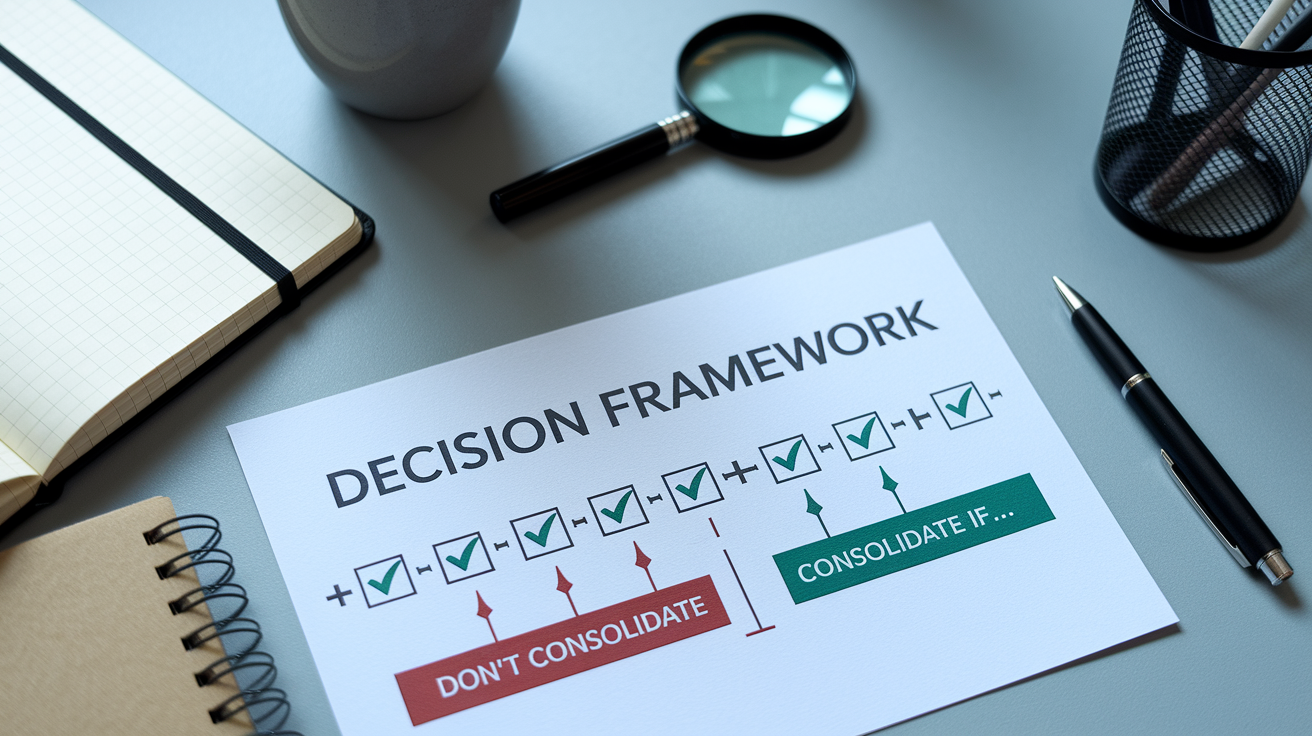
Before you consolidate or refinance, gather complete information about your current loans so you can model the actual financial impact. Start by listing every loan’s current balance, interest rate, loan type, servicer, and any qualifying payments you’ve made toward income driven repayment or Public Service Loan Forgiveness. Calculate your current total monthly payment, total remaining principal, remaining term, and total remaining interest based on your current repayment schedule.
Use this step by step evaluation process:
- Calculate the weighted average interest rate of your current federal loans by multiplying each loan’s balance by its interest rate, summing those products, and dividing by the total balance across all loans.
- Request refinancing quotes from at least two or three private lenders and compare the annual percentage rate, whether the rate is fixed or variable, any fees, and the maximum term offered.
- Model three scenarios side by side: continuing your current repayment plan; refinancing at the quoted lower rate for the same term; and consolidating or refinancing with an extended term and the resulting change in monthly payment and total interest.
- Check whether consolidation will reset any qualifying payments toward income driven repayment forgiveness or PSLF, and calculate the dollar value of the forgiveness you’d lose by consolidating.
- Verify whether you need federal benefits such as income driven repayment, deferment, forbearance, or forgiveness programs, and compare the value of keeping those options against the interest savings offered by refinancing.
- Compare the total interest paid and total amount repaid under each scenario, not just the monthly payment, and choose the option that minimizes total cost while preserving any benefits you actively need.
Apply this framework every time you consider consolidation or refinancing, because the right answer depends on your specific loan mix, income, credit profile, and repayment goals.
Alternatives to Consolidation That May Offer Greater Repayment Savings
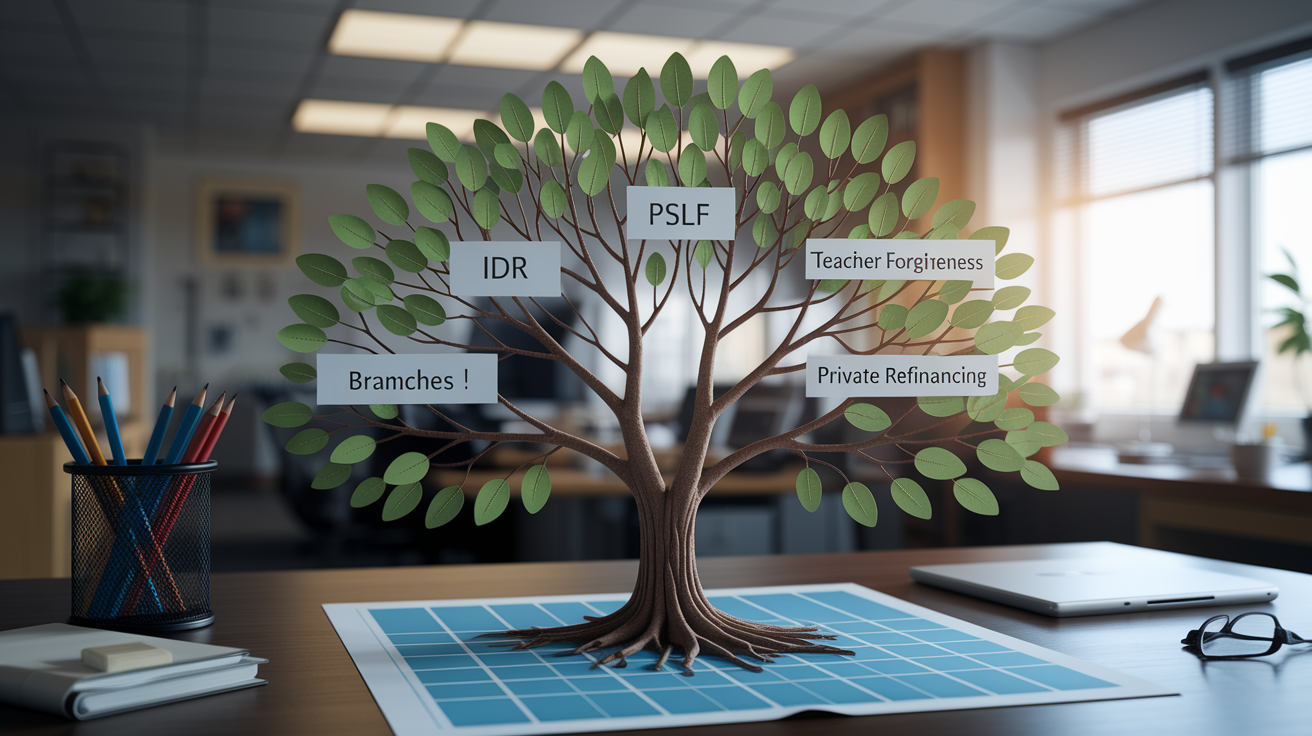
Income driven repayment plans can lower your monthly payment without requiring consolidation if your loans are already Direct Loans. Plans like Income Based Repayment, Pay As You Earn, and Revised Pay As You Earn cap your monthly payment at a percentage of your discretionary income and forgive any remaining balance after 20 or 25 years of payments. If you already hold Direct Loans and your income qualifies you for a lower payment, enrolling in IDR directly can provide immediate monthly relief and preserve your eligibility for Public Service Loan Forgiveness without resetting your qualifying payment count.
Public Service Loan Forgiveness and Teacher Loan Forgiveness offer targeted debt relief for borrowers working in government, nonprofit, or teaching roles. PSLF forgives the remaining balance after 120 qualifying payments, and the forgiven amount isn’t taxable. Teacher Loan Forgiveness can cancel up to $17,500 for eligible teachers who work in low income schools for five consecutive years. Both programs require Direct Loans, so consolidation may be necessary if you hold FFEL or Perkins loans. But if your loans already qualify, pursuing forgiveness without consolidating protects your progress and maximizes the benefit.
If you’ve got a mix of federal and private student loans, consider refinancing only your private loans while leaving your federal loans in the federal system. Private loans don’t offer income driven repayment, forbearance, or forgiveness, so refinancing them to a lower rate through a private lender captures interest savings without sacrificing federal protections. Nonprofit credit counseling agencies can also help you build a repayment strategy and budget that accelerates payoff without consolidation. Their services are typically free or low cost.
Final Words
In the action: this guide showed when consolidation cuts your monthly bill versus when it raises the total interest you pay. We explained how federal consolidation blends rates, how private refinancing can lower your rate, and how changing the term or timing affects results.
Use the decision framework to compare weighted-average rates, model total interest, and check IDR or forgiveness impacts. Also consider IDR, PSLF, or refinancing-only alternatives.
Use these steps to decide when consolidating student loans makes sense for repayment savings — you can pick the option that fits your goals.
FAQ
Q: What is the downside to consolidating student loans and what should I consider?
A: The downside to consolidating student loans and key considerations are higher lifetime interest if you extend the term, loss of federal benefits (grace, forgiveness, subsidized interest), capitalized interest, and whether refinancing lowers your rate.
Q: Why does Dave Ramsey not recommend debt consolidation?
A: Dave Ramsey doesn’t recommend debt consolidation because it often extends repayment, increases total interest, and undermines his snowball method; he prefers paying loans off quickly to build momentum and cut long-term cost.
Q: What is the 7 year rule for student loans?
A: The 7 year rule for student loans means a loan default or other negative record stays on your credit report for seven years, but the debt itself and federal collection actions are not automatically removed.