

Think a HELOC is always the smartest way to pay for home upgrades? Not always.
If you need cash fast, don’t have enough equity, or want a steady monthly bill, a personal loan can be the better pick.
Personal loans fund in days, don’t use your house as collateral, and lock in a fixed rate, which is handy for one-time projects under about $50,000.
This post shows exactly when a personal loan beats a HELOC, and gives quick checks to help you choose the right option.
Key Situations Where a Personal Loan Beats a HELOC

A personal loan for home improvement makes more sense than a HELOC when you need money fast, don’t have much equity built up, or want to keep your monthly payments locked in. Just bought your home? You probably don’t meet the 15–20% equity requirement most lenders ask for with a HELOC. A personal loan doesn’t check your equity at all. You qualify based on your credit score and income.
Funding speed matters too. Personal loans typically land in your account within one to three days after approval, while a HELOC takes two to six weeks because the lender needs to appraise your house.
Personal loans also work better when your project is a known, one-time cost under about $50,000 and you want a fixed monthly payment that won’t change. HELOCs usually carry variable interest rates tied to the prime rate, so your payment can jump if rates rise. If the idea of putting your home on the line makes you uneasy, a personal loan keeps your house out of the equation entirely. It’s unsecured debt, so there’s no foreclosure risk if something goes wrong.
| Factor | Personal Loan Advantage | HELOC Consideration |
|---|---|---|
| Home equity requirement | None, no equity needed | Typically requires 15–20% minimum equity |
| Speed to funds | 1–3 days after approval | 2–6+ weeks (appraisal required) |
| Interest rate structure | Fixed rate, predictable payment | Usually variable; payment can rise |
| Collateral risk | Unsecured, no home at risk | Secured by home; foreclosure risk if you default |
| Best project size | Small to mid-size (typically under $50,000) | Large or phased projects; can exceed $100,000 |
| Closing costs | Origination fee 2–5%; minimal other costs | Closing costs 2–5% of loan amount plus possible annual fees |
Detailed Comparison of Personal Loans and HELOCs for Home Projects

The approval process for a personal loan is straightforward. Lenders look at your credit score, your income, and how much debt you already carry. You fill out an application, upload a few pay stubs or bank statements, and get a decision within hours or a couple of days. No one comes to look at your house.
A HELOC requires a full home appraisal to confirm your property value and verify how much equity you actually have. That appraisal alone can take a week to schedule and complete. Then the lender reviews title documents, checks your mortgage balance, and calculates your loan-to-value ratio before approving the line.
Interest rates tell a similar story of tradeoffs. HELOCs generally offer lower rates because your home backs the debt. Lenders take less risk when they can foreclose if you stop paying. As of early 2025, HELOC rates hovered in the mid-to-high single digits for well-qualified borrowers, while personal loan rates ranged from about 7% to north of 30% depending on credit. But that lower HELOC rate often comes with a variable structure tied to the prime rate, so your monthly payment isn’t fixed. Personal loans lock in a rate at the start, which makes budgeting simpler even if the rate is a few percentage points higher. You also pay interest on the full personal loan balance immediately, while a HELOC only charges interest on the amount you actually draw.
Closing costs and fees add another layer. A HELOC typically comes with upfront closing costs (appraisal fee, title search, recording fees) that can run 2% to 5% of your credit limit. Some lenders also charge annual fees or early-termination fees if you close the line within the first few years. Personal loans usually have an origination fee in the same 2–5% range, but it’s often rolled into the loan balance and there are no ongoing annual fees or appraisal charges.
Here’s a quick summary of the five main comparison points:
Approval process – Personal loan: credit score, income, debt-to-income ratio. HELOC: those items plus home appraisal, title check, and equity calculation.
Collateral – Personal loan: unsecured, no lien on your home. HELOC: secured by your house, creates a second mortgage lien.
Interest structure – Personal loan: fixed rate, interest on full balance from day one. HELOC: often variable rate, interest only on drawn balance.
Funding speed – Personal loan: typically 1–3 days. HELOC: typically 2–6 weeks.
Closing costs – Personal loan: origination fee (2–5%), minimal other charges. HELOC: 2–5% closing costs plus possible annual and early-termination fees.
Situations Best Suited for a Personal Loan

Emergency repairs are a perfect match for personal loans. When your water heater floods the basement or your roof starts leaking into the bedroom, you don’t have six weeks to wait for a HELOC appraisal. You need cash this week to hire a plumber or a roofer. Personal loans fund in days, sometimes same-day if you apply early and your credit is solid, so you can stop the damage and start the repair.
Small projects under about $15,000 also fit personal loans well. Replacing kitchen cabinets, upgrading a bathroom vanity, or installing new flooring in a couple of rooms are one-time expenses where you know the total cost upfront. A personal loan gives you a lump sum and a fixed monthly payment for three, five, or seven years. You don’t need the flexibility of a revolving credit line, and the loan size is well within typical personal-loan maximums of $1,000 to $50,000.
Borrowers with limited equity (maybe you bought your house recently or you’re still rebuilding equity after a refinance) often can’t qualify for a HELOC at all. Lenders want to see at least 15% to 20% equity remaining after they add the HELOC balance to your mortgage. If you don’t meet that threshold, a personal loan is your main option aside from credit cards.
Homeowners who prefer a fixed repayment schedule also lean toward personal loans. You know exactly what you owe each month, and you know the loan will be paid off in a set number of years. There’s no draw period followed by a repayment period, no interest-rate adjustments tied to the Federal Reserve, and no risk that your payment doubles because prime went up two points.
Situations Best Suited for a HELOC

A HELOC shines when you have substantial equity and you’re planning a project that unfolds in stages or might run over budget. Kitchen and bathroom renovations often work this way. You demo first, then discover plumbing issues, then decide to upgrade appliances mid-project.
With a HELOC, you can draw $10,000 today for demo and framing, another $15,000 next month for cabinets and countertops, and a final $8,000 in three months for tile and fixtures. You only pay interest on the amount you’ve actually borrowed, and the line stays open for years in case you need more. That flexibility is worth a lot when the final bill is uncertain or when you’re managing a major renovation that takes six months or a year to complete.
Here are the four situations where a HELOC typically makes the most sense:
Major renovations costing more than $50,000 – whole-house remodels, room additions, or full kitchen-and-bathroom overhauls that push into six figures. Personal loans often cap out around $50,000, and the higher amounts come with steep rates.
Multi-stage projects – any job where you’ll need money at different points over months or years. Opening a HELOC once beats taking out three separate personal loans.
Large funding amounts where you want the lowest rate – if you have excellent credit and 30% or more equity, a HELOC can offer rates several points below an unsecured personal loan.
Borrowers comfortable with variable rates and willing to plan for payment changes – if you can handle the risk that your monthly payment might rise when the Fed raises rates, the initial rate on a HELOC is often attractive.
Pros and Cons of Personal Loans Compared to HELOCs

Personal loans deliver speed and simplicity. You apply online, get approved in hours, and see money in your account within days. There’s no appraisal appointment to schedule, no title company involved, and no lien recorded against your house. The downside is cost. You’ll pay a higher interest rate than you would with a HELOC, sometimes significantly higher if your credit score is below 700. Rates can climb above 20% or even 30% for borrowers with fair credit, which turns a $25,000 project into a much more expensive loan over five years.
HELOCs offer lower rates and massive flexibility, but they come with complexity and risk. The variable-rate structure means your payment can jump when the economy shifts. Closing costs and annual fees add to the upfront and ongoing expense. And because your home secures the debt, missing payments can lead to foreclosure. The approval process is slower and more invasive. Expect paperwork, an appraisal, and a wait measured in weeks, not days.
Four key advantages of personal loans:
No home equity required. Qualify based on credit and income alone.
Fast funding, often within 1–3 days.
Fixed interest rate and predictable monthly payment.
No risk of losing your home if you default.
Four key advantages of HELOCs:
Lower interest rates because the loan is secured by your house.
Borrow only what you need and pay interest on the drawn balance.
Flexible access over a multi-year draw period for staged projects.
Potential tax deduction if funds are used for substantial home improvements (check with a tax advisor).
Qualification Requirements: Personal Loan vs. HELOC

Personal loan approval hinges on your credit score, your income, and your debt-to-income ratio. Most lenders want a score of at least 580 to approve an unsecured loan, but the best rates go to borrowers with scores above 700. You’ll need to show proof of steady income (pay stubs, bank statements, or tax returns) and lenders calculate your DTI by adding up your monthly debt payments and dividing by your gross monthly income. If your DTI is above 40% or 45%, approval gets harder or the rate climbs.
HELOC qualification adds home equity and property value into the mix. Lenders typically require you to keep at least 15% to 20% equity in your home after the HELOC is factored in. For example, if your house is worth $300,000 and you owe $200,000 on your mortgage, you have $100,000 in equity. A lender allowing you to borrow up to 85% of your home’s value would cap your combined mortgage and HELOC at $255,000. Subtract your $200,000 mortgage and you can access up to $55,000 through the HELOC. The lender will order an appraisal to confirm the home’s current value, run a title search, and review your credit and income just like they would for a personal loan.
Because a HELOC puts a lien on your house, lenders scrutinize your ability to repay more closely. They’ll check your employment history, verify your income, and calculate DTI. Your credit score matters. Most HELOC lenders prefer scores above 620, and better scores unlock better rates and higher credit limits. The whole process takes longer because of the appraisal and title work, but the payoff is access to larger amounts at lower rates if you qualify.
| Requirement | Personal Loan | HELOC |
|---|---|---|
| Minimum credit score | Often 580; best rates at 700+ | Typically 620+; better terms at 700+ |
| Home equity needed | None | Usually 15–20% equity remaining after HELOC |
| Appraisal required | No | Yes, lender orders full home appraisal |
| Debt-to-income limit | Commonly max 40–45% | Commonly max 40–43%, varies by lender |
| Collateral / lien | Unsecured, no lien on property | Secured by home; creates second-mortgage lien |
Cost Breakdown: Rates, Fees, and Total Borrowing Cost
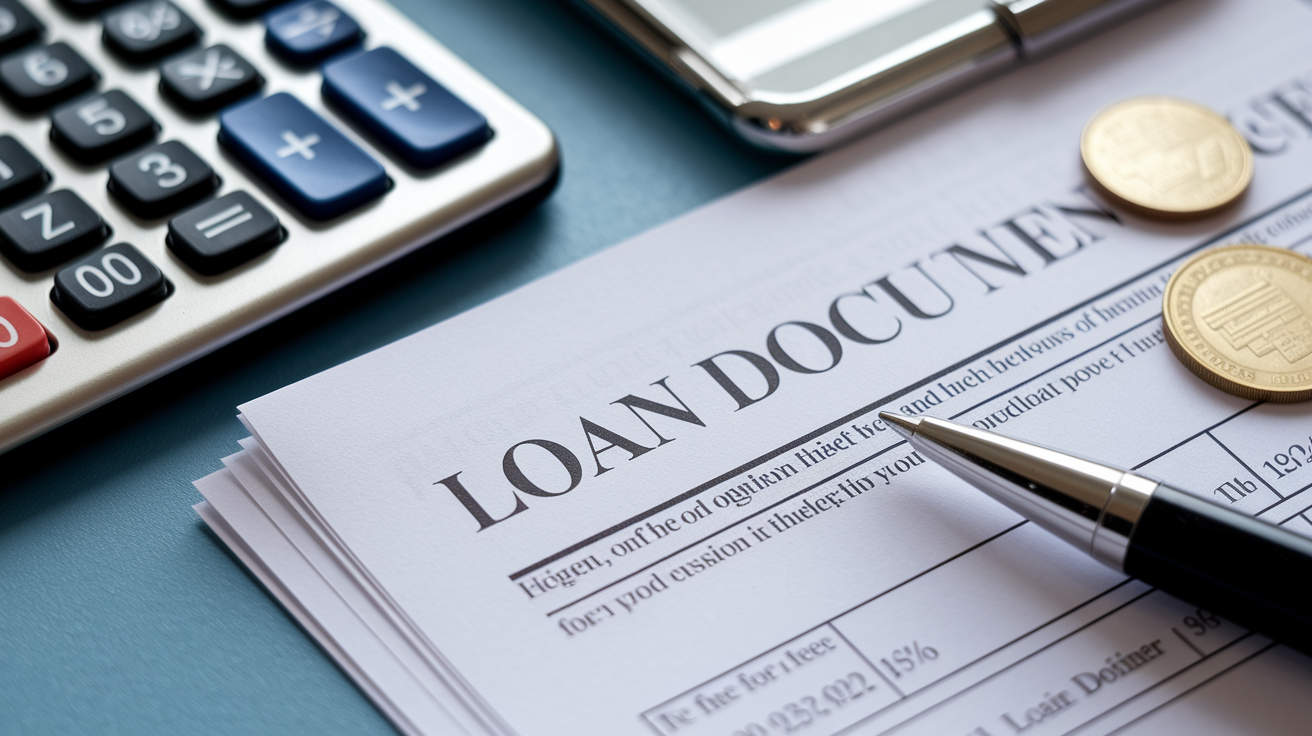
Personal loan APRs span a wide range, from about 7% for excellent credit to 36% or higher for borrowers with lower scores. The Federal Reserve reported an average APR of 11.66% for 24-month personal loans in February 2025, which sits well below the 21.91% average for credit cards but above typical HELOC rates. Most personal loans come with a one-time origination fee of 2% to 5% of the loan amount, and that fee is usually deducted from your loan proceeds or added to your balance. After that, there are no ongoing annual fees or maintenance charges. You just make your fixed monthly payment until the loan is paid off.
HELOC rates are generally lower because the loan is secured. In early 2025, well-qualified borrowers saw HELOC rates in the 6% to 9% range, though rates vary by lender and are often variable. That means your rate (and your payment) can rise or fall with the prime rate. Upfront costs for a HELOC can add up: appraisal fee (usually $300 to $500), title search and recording fees, and sometimes an application or processing fee. All told, closing costs typically run 2% to 5% of your credit limit. Some lenders waive closing costs but charge a higher rate or require you to keep the line open for a minimum period, often three years, or you’ll owe an early-termination fee.
Typical HELOC fees to watch for:
Appraisal fee – $300 to $500, covers the cost of a professional home valuation.
Closing costs – 2% to 5% of the credit limit, includes title search, recording, and processing.
Annual fee – $50 to $100 per year in some cases, charged to keep the line open.
Early-termination fee – often $300 to $500 if you close the HELOC within the first few years.
Inactivity fee – some lenders charge a small fee if you don’t draw from the line for an extended period.
Step-By-Step Decision Framework

Start by matching your project size and urgency to the product. If you need money within a week for an emergency repair or a time-sensitive contractor deal, a personal loan is almost always the faster choice. If your project will unfold over months and you’re not sure of the final cost, a HELOC’s draw-and-repay flexibility is worth the longer approval timeline.
Follow these six steps to figure out which product fits your situation:
Calculate your available home equity – Take your home’s current value, multiply by 0.85 (a common max loan-to-value for HELOCs), then subtract your mortgage balance. If the result is less than what you need or less than about $15,000, a HELOC may not be practical.
Check your credit score – Pull your score and compare it to lender thresholds. If you’re above 700, you’ll qualify for competitive rates on either product. Below 620, a HELOC becomes harder to get and a personal loan may be your only real option.
Estimate the total project cost – If it’s under $15,000 and one-time, lean toward a personal loan. If it’s above $50,000 or multi-phase, lean toward a HELOC.
Decide if you’re comfortable using your home as collateral – If foreclosure risk makes you nervous or you want to keep your home separate from this debt, choose a personal loan.
Compare APRs and fees for both products – Get actual rate quotes from at least two lenders for each type. Factor in origination or closing costs, then calculate your total payment over the life of the loan. Don’t forget to adjust a HELOC comparison for potential rate increases if it’s variable.
Pick the product that gives you the lowest total cost with terms you can handle – If the HELOC saves you thousands in interest and you have the equity and timeline, go with that. If the personal loan keeps your payment fixed and gets you funded this week, that’s your answer.
Final Words
Need cash fast and don’t have enough equity? A personal loan can be the smarter pick for small projects, urgent repairs, or when you want fixed payments and no lien.
This post laid out the key situations where a personal loan beats a HELOC, walked through approvals, costs, fees, pros and cons, and gave a step-by-step decision framework.
Use this guide to figure out when to use a personal loan for home improvements instead of a HELOC, follow the steps, and you’ll be ready to start the project with confidence.
FAQ
Q: Is a HELOC or personal loan better for home improvement?
A: A HELOC or personal loan is better depending on your equity, project size, and whether you want fixed payments. HELOCs suit large, flexible projects if you have equity; personal loans suit small jobs, fast funding, or fixed rates.
Q: Why does Dave Ramsey not like HELOC loans?
A: Dave Ramsey doesn’t like HELOC loans because they borrow against your home, often have variable rates that can rise, and can tempt homeowners to overspend, raising the risk of foreclosure if payments can’t be met.
Q: What is the 80 rule for HELOC?
A: The 80 rule for HELOC is that lenders often limit combined mortgage plus HELOC to about 80% of your home’s value (CLTV), so you can borrow only the equity above that limit.
Q: What is the smartest way to pay for home improvements?
A: The smartest way to pay for home improvements is to match financing to the job: use cash for small work, a personal loan for quick fixed-rate funding, and a HELOC for large, staged projects if you have equity. Compare APRs.